

When Decisions Feel Heavy: A Better Way to Talk as a Family
“The most important thing in communication is hearing what isn’t said.”
~ Peter Drucker
In family enterprises, important discussions can carry weight. Meetings often start carefully: measured language, tightened agendas, and a focus on staying “professional.” The goal is harmony, but emotion doesn’t disappear; it simply shapes how people communicate.
When feelings go unspoken, hesitation can look like prudence, silence like agreement, and delay like planning. Over time, these unaddressed dynamics can turn routine decisions into surprises.
The key is not to eliminate emotion; it’s to create a space where it can be acknowledged, understood, and used to guide thoughtful decisions.
Why “Businesslike” Doesn’t Always Work in Family Systems
A family business is more than a company; it’s a living system shaped by shared history. Around the table, conversations about governance, succession, or strategy unfold alongside memories that influence who speaks, who listens, and how trust is earned.
Subtle patterns, praised for maintaining peace, easing tension, or prioritizing calm, can shape interactions. When families try to remove emotion entirely, people often self-monitor, hold back, and stick to “safe” language. Creating space to acknowledge these dynamics instead allows conversations to be honest, productive, and aligned with the family’s goals.
What Happens When Emotion Has Nowhere To Go
Families usually do not say, “We’re avoiding this.” Avoidance has a polished wardrobe. It often shows up as
● “This isn’t the right time.”
● “Let’s gather more input.”
● “We need more alignment.”
● “We should wait until things settle down.”
Sometimes those statements are wise. Occasionally, it signals that the family has reached its limit and requires a different approach.
When emotion doesn’t have a place in the conversation, it often slips into the process in subtler ways:
Agreement without follow-through – People nod. Everyone sounds aligned. Nothing changes after the meeting.
Side conversations replacing real conversation – The truth gets shared in pairs, not in the room where decisions are meant to happen.
Over-indexing on structure – Families build policies and frameworks while the underlying tension remains untouched.
A pattern of postponement – The same topic returns again and again, each time wearing a new label.
A sudden break – A sudden break can manifest as a resignation, a departure, or a firm boundary. The decision comes late, and it comes fast.
None of these outcomes happen because a family has emotion. These outcomes occur because emotion has no place to go.
Giving Emotion a Place in Family Conversations
Families rarely say, “We’re avoiding this.” Instead, it shows up as:
● “This isn’t the right time.”
● “Let’s gather more input.”
● “We need more alignment.”
● “We should wait until things settle.”
Sometimes these choices are wise. Other times, they signal a need for a different approach.
When emotion isn’t acknowledged, it can show up indirectly: agreements without follow-through, side conversations replacing group discussion, over-reliance on process, recurring topics, or sudden, unexpected decisions.
These outcomes likely arise from the lack of providing emotion a place in the conversation. When families create space for feelings to be acknowledged and shared, discussions become clearer, alignment improves, and decisions are made with greater confidence and trust.
Viewing Emotions as Data vs Disruption
In an enterprising family, emotion usually points to something important:
● fear of destabilizing the family
● grief over letting go of a role
● pride that wants to be recognized
● loyalty that feels tested
● uncertainty that feels unsafe to admit
Ignoring those signals creates a drag. A family doesn’t need to become more emotional in meetings. It needs a way to treat emotion as data that can be listened to without taking over the room.
Many families feel relief when they realize the goal isn’t emotional expression for its own sake. The goal is to make decisions that stay connected to the people who have to live with them.
A Framework for Navigating Emotionally Heavy Conversations in Enterprise Families
Family enterprises often face conversations that carry more than just business implications; they carry history, emotion, and unspoken expectations. Trying to resolve everything in one meeting can create tension or silence. A stronger approach is to create a structured space that allows honesty, clarity, and connection.
1. Prepare the Space Before the Conversation
Do pre-work: Some discussions benefit from one-on-one check-ins. Ask:
“What feels hard to say in the room?”
“What would you want others to understand before we decide?”
Start small: Begin with those most directly involved to build clarity before including the wider group.
Separate decision-making from meaning-making: Give each its space to prevent overwhelm.
Document outcomes: Capture decisions and next steps to reduce ambiguity and prevent repeated debates.
2. Use a Two-Agenda Framework
Planning with two agendas creates a safe and structured environment for honest dialogue:
Agenda A: Decisions – What choices need to be made? Who decides? What is the timeline?
Agenda B: Conditions – What needs to be true for this conversation to go well? What concerns might arise? How do we show respect and navigate challenges together?
Agenda B is a preparation tool; it builds clarity, safety, and trust, allowing families to engage openly. When we acknowledge both decisions and conditions, our conversations become more productive, our relationships remain strong, and participation feels confident rather than pressured.
Closing Thoughts
We hope the insights in this article offer helpful guidance as you navigate important conversations in your family enterprise.
Family enterprises thrive on continuity, and continuity depends on clear, connected decisions. “Leave emotion at the door” may sound wise, but in practice it can create distance. A simpler approach is to give emotion a structured space, listen to what it signals, and then decide.
If your family is preparing for a key conversation and would value support, Beacon Family Office can help explore approaches that preserve both connection and clarity. Schedule a call with us today.

ABOUT THE AUTHOR
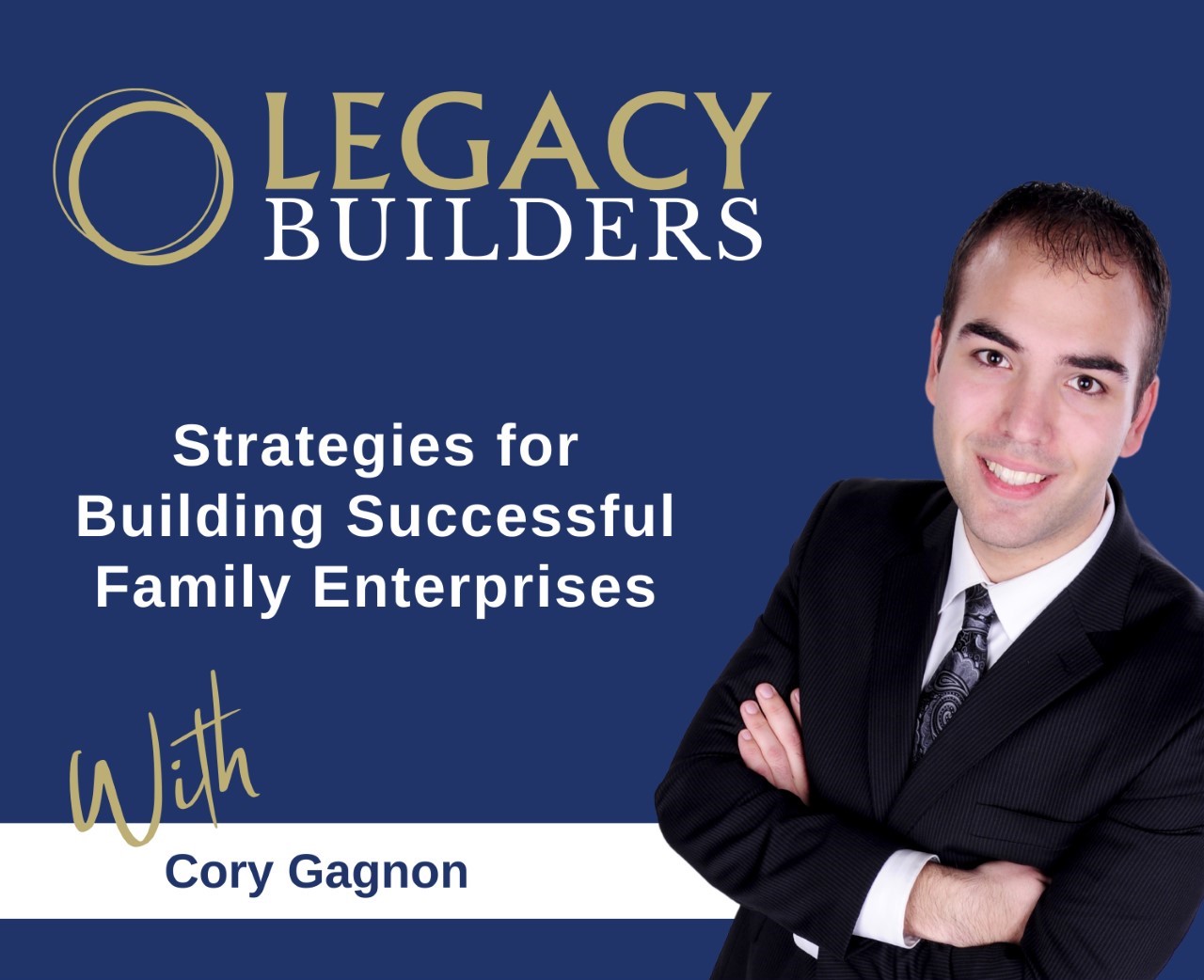
As the Senior Wealth Advisor at Beacon Family Office at CI Assante Wealth Management Ltd., Cory Gagnon has supported successful family enterprises to preserve, protect and transition their wealth since 2011.
Cory’s personal objective as a Wealth Advisor is simple. He is committed to supporting families to take control of the areas of their lives that truly matter to them. This commitment revolves around using specific tools and strategies that enable families to take action with confidence which will support them through life’s critical transitions.
ABOUT THE AUTHOR
As the Senior Wealth Advisor at Beacon Family Office at CI Assante Wealth Management Ltd., Cory Gagnon has supported successful family enterprises to preserve, protect and transition their wealth since 2011.
Cory’s personal objective as a Wealth Advisor is simple. He is committed to supporting families to take control of the areas of their lives that truly matter to them. This commitment revolves around using specific tools and strategies that enable families to take action with confidence which will support them through life’s critical transitions.
Share this post:
KEEP READING?

Beacon Family Office at CI Assante Wealth Management Ltd.
Suite 519, 10333 Southport Road S.W.,
Calgary, AB T2W 3X6
DISCLAIMER
Mutual fund products, investment services and recommendations are offered through Assante Financial Management Ltd. Insurance products and services are provided through Assante Estate and Insurance Services Inc.
Assante Financial Management Ltd. is a member of the Canadian Investment Regulatory Organization.
Wealth planning services may be provided by an accredited Assante advisor or through CI Assante Private Client, a division of CI Private Counsel LP, or a non-affiliated third party.
