

Proximity and Purpose: Rethinking Family Legacy
A recent conversation with my friend Todd Gow about the Sotheby’s International Realty 2026 Luxury Outlook Report stayed with me. The report points to growing demand for multigenerational living across North America, with more buyers seeking homes that can comfortably support more than one generation.
Practical pressures are part of the story. Housing costs have climbed, younger adults are taking longer to establish independent households, and caregiving responsibilities are surfacing earlier than many expected. For some families, proximity is not simply a preference. It is a way of keeping support, time, and capital within reach.
It would be easy to frame these developments as a change in housing taste. It may signal something deeper. For years, luxury was associated with space and distance. Increasingly, it is being reconsidered through the lens of proximity and optionality. Where a family lives influences how they care, how they mentor, and how they remain involved with one another, as proximity can foster stronger relationships and support systems among family members, which in turn can enhance emotional well-being and collective family resilience.
Independence has long been treated as the benchmark of success. Children left early. Careers scattered families. Retirement often meant relocating to expansive “forever homes” designed around lifestyle more than long-term alignment. That approach offered freedom, yet it did not always account for continuity, particularly in maintaining family ties and support systems that are essential for multigenerational living.
The Retirement Home Paradox
Over the past decade, I have seen many Baby Boomers build expansive retirement homes in lifestyle markets. They are often striking and carefully designed, built for enjoyment and hosting. They represent a well-earned reward.
The challenge is that what feels aspirational to one generation does not always match the preferences of the next. Many younger buyers lean toward walkability, lower maintenance, and homes that reflect a different pace of life. A large property can narrow the buyer pool, extend time on the market, or reduce negotiating leverage. When transition becomes necessary, liquidity may not arrive on the timetable the family hoped for, which can lead to financial strain or missed opportunities for reinvestment in more suitable properties.
Many family enterprises can concentrate millions in a single property decision. Yet those decisions receive less scrutiny than business investments, even though they can significantly impact the family’s overall financial health and future investment opportunities. Real estate can quietly become the largest unexamined allocation on the family balance sheet.
This is where a principle I often share becomes relevant: moss doesn’t grow on a rock that moves. Real estate transitions carry visible costs and hidden ones. When capital is tied up in a property that is difficult to reposition, flexibility narrows, making it challenging for investors to adapt to changing market conditions or pursue new opportunities.
Proximity and Continuity
Distance often expresses autonomy across much of North America. The renewed interest in multigenerational living suggests some families are reconsidering that assumption.
For families with cultural roots where multigenerational proximity has always been common, this conversation may feel familiar.
When thoughtfully structured, proximity can preserve dignity without diminishing independence. It allows care to adjust gradually. It supports informal mentorship and everyday exposure to decision-making. Formal sessions usually do not transmit stewardship. It is absorbed through observation, conversation, and shared responsibility. Distance limits that transfer more than many families recognize.
Shared living still requires structure. Clear expectations and thoughtful capital arrangements matter. When addressed early, proximity can reinforce continuity over time, ensuring that residents maintain social connections and support networks that enhance their quality of life.
The Home as a Strategic Asset
A family’s residence is more than a home. It’s a long-term capital decision that influences liquidity, care, and continuity. Thoughtful planning considers how proximity, autonomy, and flexibility interact over time, preserving options as circumstances change, which can help families adapt to evolving needs and maintain their quality of life. By designing with both dignity and adaptability in mind, families can support each generation’s needs while safeguarding the legacy and easing future transitions.
Concluding Thoughts
When families review their balance sheet, they often focus on performance, yield, and diversification. Yet the residence frequently holds a concentration of capital equal to or greater than a business interest or private investment. The home is usually not evaluated strategically. It is chosen emotionally and reviewed infrequently, even though it influences liquidity, governance dynamics, and generational continuity.
Perhaps the deeper shift is this: real estate deserves to be treated as part of the family’s long-term stewardship framework. Not as a lifestyle afterthought, and not only as a symbol of arrival, but as infrastructure that either preserves flexibility or constrains it
Thank you to Todd Gow for sharing the Sotheby’s report and for the conversation that sparked this reflection.
Real estate is often one of the largest allocations on a family balance sheet. Should you wish to reflect on it from a stewardship perspective, we would be delighted to undertake this journey with you. You are welcome to set up a time to talk.

ABOUT THE AUTHOR
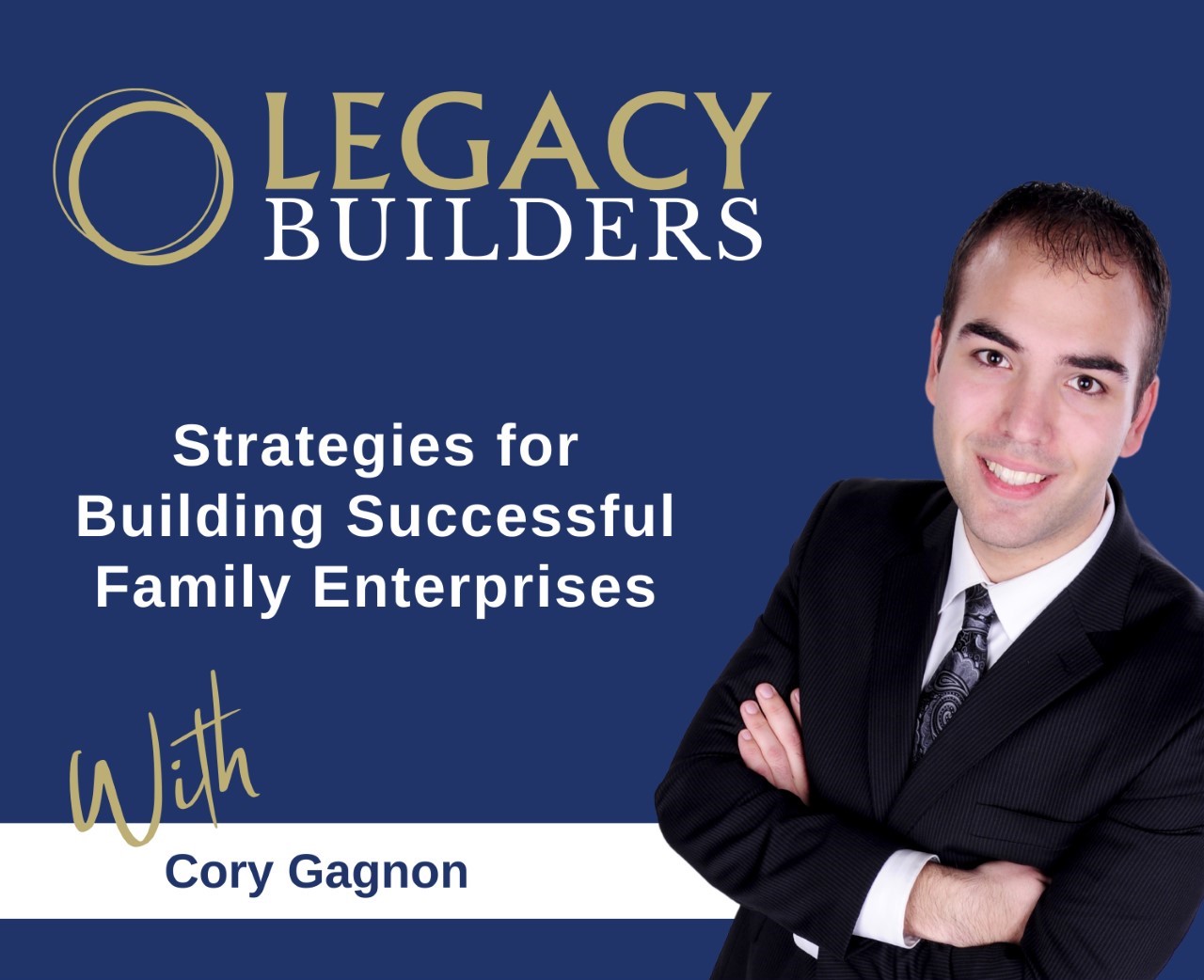
As the Senior Wealth Advisor at Beacon Family Office at CI Assante Wealth Management Ltd., Cory Gagnon has supported successful family enterprises to preserve, protect and transition their wealth since 2011.
Cory’s personal objective as a Wealth Advisor is simple. He is committed to supporting families to take control of the areas of their lives that truly matter to them. This commitment revolves around using specific tools and strategies that enable families to take action with confidence which will support them through life’s critical transitions.
ABOUT THE AUTHOR
As the Senior Wealth Advisor at Beacon Family Office at CI Assante Wealth Management Ltd., Cory Gagnon has supported successful family enterprises to preserve, protect and transition their wealth since 2011.
Cory’s personal objective as a Wealth Advisor is simple. He is committed to supporting families to take control of the areas of their lives that truly matter to them. This commitment revolves around using specific tools and strategies that enable families to take action with confidence which will support them through life’s critical transitions.
Share this post:
KEEP READING?

Beacon Family Office at CI Assante Wealth Management Ltd.
Suite 519, 10333 Southport Road S.W.,
Calgary, AB T2W 3X6
DISCLAIMER
Mutual fund products, investment services and recommendations are offered through Assante Financial Management Ltd. Insurance products and services are provided through Assante Estate and Insurance Services Inc.
Assante Financial Management Ltd. is a member of the Canadian Investment Regulatory Organization.
Wealth planning services may be provided by an accredited Assante advisor or through CI Assante Private Client, a division of CI Private Counsel LP, or a non-affiliated third party.
