
Leading Before the Role: How Family Enterprises Shape Future Leaders
LISTEN ON YOUR FAVOURITE PLATFORM
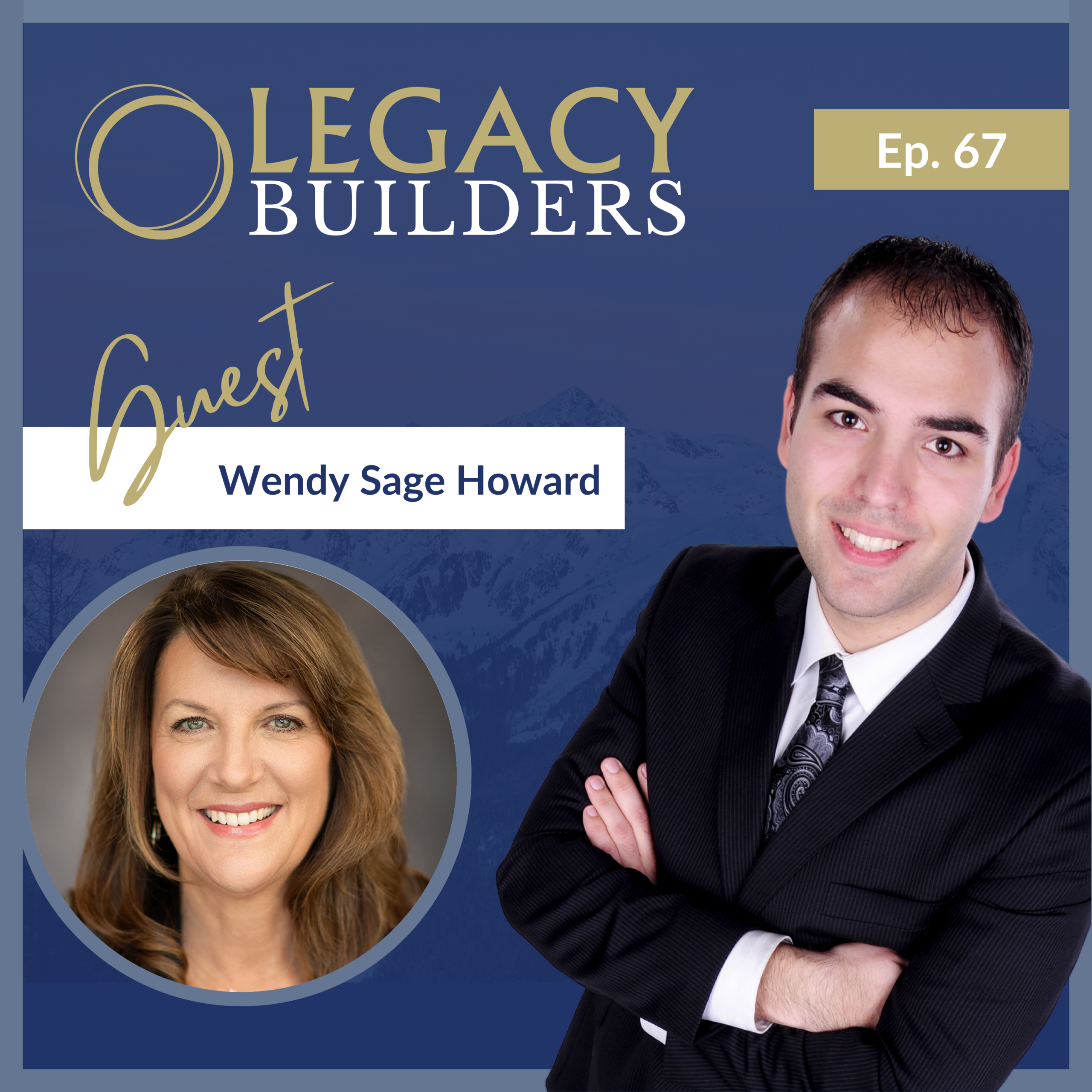
In this episode, we’re joined by Wendy Sage-Hayward, Senior Consultant with The Family Business Consulting Group, where she advises family enterprises, business leaders, and boards on continuity, governance, and generational transition. She is also Academic Director at Family Enterprise Canada, leading the Family Enterprise Advisor program, and co-author of Own It!, bringing both practical and research-based insight to how families prepare the next generation and work through the questions that continuity raises across generations.
Our conversation explores how families navigate expectations that are often left unspoken, why learning together matters, and what helps create more honest and mature conversations across generations. We also look at where tension can quietly build over time and how greater trust and clarity can help families move forward well.
About Wendy Sage-Hayward
Wendy is a senior consultant with The Family Business Consulting Group, where she advises business leaders, family enterprises, and boards around the world on how to navigate the complexities of continuity, governance, and generational transition. What makes Wendy’s perspective unique is that she doesn’t just advise family businesses. She lives it. She’s an owner of Sage Hayward Vineyards, her family’s winery on British Columbia’s Southern Gulf Islands, and previously served as a partner and director in her family’s five-generation U.S. business.
Wendy is also the Academic Director at Family Enterprise Canada, where she leads the Family Enterprise Advisor program, and she teaches in the Family Shift program at Ivey Business School. She’s the co-founder of mGen Education and co-author of ‘Human Resources in Family Business’ and ‘Own It!’, bringing both practical and research-based insights to her work. She’s based in Vancouver and is passionate about helping families build strong businesses and even stronger relationships across generations.
Resources discussed in this episode:
- Jay Hughes
- David York
- University of Alberta
- Alexander Saunders
- John Ward – Unconventional Wisdom
- Own It! How to Develop Family Enterprise Ownership Skills At Every Age
Contact Cory Gagnon | Beacon Family Office at CI Assante Financial Management Ltd.
- Website: BeaconFamilyOffice.com
- LinkedIn: Cory Gagnon
- LinkedIn: Beacon Family Office
- Email: beaconfamilyoffice@assante.com
Contact Wendy Sage-Hayward | The Family Business Consulting Group:
- Website: mgeneducation.com | thefbcg.com | familyenterprise.ca | sagehaywardvineyards.com
- LinkedIn: Wendy Sage Hayward
- Email: wsagehayward@gmail.com
- Phone: (604) 803 7420
We’re bringing together leading experts to tackle some of the most pressing challenges facing family businesses today from succession planning and governance structures to preparing the next generation for leadership roles. You’ll walk away with actionable strategies and fresh perspectives on building resilient family enterprises.
Haven’t caught one of our webcasts yet? No problem. All previous sessions are archived and ready to stream whenever you’re ready to dive in. Simply head over to legacybuilderswebcast.com to register for our upcoming session or explore our growing library of past conversations.
Welcome to Legacy Builders, strategies for building successful family enterprises. Brought to you by Beacon Family Office at CI Assante Wealth Management Limited. I’m your host, Cory Gagnon, Senior Wealth Advisor. And on this show, we explore global ideas, concepts, and models that help family enterprises better navigate the complexities of family wealth.
Today, we welcome Wendy Sage-Hayward, senior consultant with The Family Business Consulting Group, where she advises business leaders, family enterprises, and boards around the world on navigating the complexities of continuity, governance, and generational transition. Wendy is also the Academic Director at Family Enterprise Canada, where she leads the Family Enterprise Advisor program, and she teaches in the Family Shift program at Ivey Business School. She is the co-founder of mGen Education and co-author of Human Resources in Family Business and Own It!, bringing both practical and research-based insight to her work.
My goal is to be the most curious person in today’s conversation with Wendy, as we sit with some of the deeper questions families face around continuity: how to prepare the next generation, how to navigate expectations that are often unspoken, and how to make room for more honest and mature conversations across generations. This is a conversation about learning, trust, and the kind of clarity families need if they want to move forward together.
Now, let’s dive in!
Cory: Welcome, Wendy. We’re excited to have you here today to share your wealth of knowledge and experiences with us. Let’s dive in, shall we?
Wendy: Absolutely. And thanks for having me. It’s great to be here with you, Cory.
Cory: Wendy, imagine you’re delivering the commencement speech to the graduating class of 2026, and you have the chance to inspire them with your story. How would you begin your speech to convey the incredible lessons and expertise you’ve gained along your career?
Wendy: Well, I think if I was standing in front of a graduating class and I imagined sort of my children, for example, who are in their twenties and when they were graduating, what would I actually say? Because hearing sort of some of their angst, and some of their questions and their curiosities, I probably would start by saying you don’t need to have it all figured out, and I think sometimes we think we do.
I’ve spent my entire career working with leaders, families, and boards, and one thing that I’ve learned is that the most meaningful work, or the most important decisions often happen when people are uncertain. And I think the people who do this well are not the people who think that they have all the answers. It’s actually people who stay curious, who keep learning, who actually are willing to engage in real deep thought and conversation so that they try to understand something before they solve it, step back, and really not have to be in that fix it mode, but really be able to understand something at a very deep level so that they can unpack the complexity, especially as we’re thinking about family businesses.
Family businesses are the most common form of business around the world, but they are also the most complex form of business, or certainly one of the most complex forms of business. And so, I think staying curious and not feeling like you need to have all the answers and you need to know what your path is, for example, because that’s going to unfold over time. Just stay curious, keep learning, and think deeply and be thoughtful about where you’re going, what you’re trying to do in the world.
Cory: Amazing. I absolutely love the consideration of the people who are in front of you and the angst and curiosity. And so as you think of the families that you’ve worked with, where have you seen that curiosity and angst show up?
Wendy: Well, I think the angst shows up when they’re thinking about succession and continuity, and their own sort of next path. There’s lots of layers to that succession piece. Is the rising generation ready? Am I ready to let go of my identity? Do I have enough financial savings and assets to live my life in a way that I want to live it in the next generation, or in the next phase of my life? So I think it definitely shows up there. I think the angst does for sure. I’d like to see more curiosity show up there. Certainly when they start thinking about how to do it. I think that they often don’t know how to do it.
I think sometimes the relationships between generations sometimes prevents conversations from happening, from development from happening. And so I think being curious and asking the questions, not just of themselves, but of the family. How do we do this well? Who do we want to be as a family at this stage? That curiosity of co-designing the future, it’s not all on the shoulders of the senior generation. And I think from the rising generation, thinking about angst and curiosity, I see that. One is, how do I fill the shoes of the senior generation? My dad or my mom, they’re iconic people. They’ve done amazing things. How do I fill their shoes? The angst is when do I get to put my stamp on things? When do I get my chance to really make a difference? So that’s, I think, some of the angst in the rising generation.
I think the more that they can stay curious and hopefully have the conversation. Again, I think the conversation is the hard part. How do we get them to have those curious conversations as a family? Because conversation sometimes is very difficult between generations. It’s really interesting. I teach in a program at Ivy called Family Shift, which is for rising generation family members. And often, what the challenge is they are learning all these amazing things about continuity, how to be a great leader in a family enterprise, and some of the challenges, governance, things like that. And they have trouble going back and having the conversation with their parents because their parents aren’t always curious and asking those curious questions about what did you learn in that program that we can sort of apply here in our family business.
Now, I’m not saying all families do that, but often what they say in the class is how do you teach the stuff to my parents? Because it’s hard for them to come. They can’t come as kind of, I’ve got all this new knowledge sometimes because they’re maybe not seen that way in their family, or they’re not viewed that way in their family and aren’t able to bring stuff to the table because maybe that curiosity isn’t part of the family culture. So those are some places where I see it, and where I’d love to see more of it. There’s opportunity for more curiosity for sure everywhere in the world, but certainly in family businesses.
Cory: The relationships between generations, where do you see those sticking points? You just mentioned one that I really think is amazing, around that identity component. But where do you see some of those sticking points?
Wendy: Sometimes it’s around how do we get the rising generation to be more engaged, to be more involved, to show up in a more powerful way? That’s the senior generation view sometimes, that there’s generational differences around how work happens. I see that even with my own kids. They look at my husband, and I and think we’re crazy because we work so much and they don’t value that in the same way that our generation did. And so there’s different values. That’s one of the sticking points. There’s different views of the way work happens or work should happen. In the senior generation, sometimes we grow up in a, hey, you go to an office and you work this way, and this is how work gets done. And they do work everywhere. They go to a coffee shop, they work in their bedroom, they work at the kitchen table. And I think we’re getting better at that in the senior generation, or we were understanding that more since the pandemic.
I think there are a lot of generational differences around values, around how work is done. I think sometimes we get stuck in a parent-child relationship, rather than an adult-to-adult relationship. And we still maintain that you’re my kids, and you’re always going to be my kids, and I’m always going to see you as a kid instead of really recognizing the importance of evolving into an adult-to-adult relationship with your kids. And that’s hard. I mean, when my kids were sort of in their late teens, early twenties, I remember my oldest son in particular, he was a hockey player and we would drive, he played hockey all over North America. And several of those drives to drop him off somewhere, we’d be in this conversation. He’d say to me, mom, treat me like an adult. I want you to treat me like an adult. And honestly, I was really trying to. And it was just really interesting to me how difficult it is to do that, to see your children differently.
And they need to see you differently too. They need to see you, not as parents, but as human beings. My kids are 28 and 26, and we’re much better at that now. But I think it’s been through a lot of conversation. I still think we have ways to go to build that adult-to-adult conversation and relationship that we need to have. So I think those are some of the sticking points.
I think it’s also sometimes we might not have the culture of really being honest, open, and transparent with one another. I often hear parents say, I don’t want my kids to be entitled, or not grateful enough. I had one rising generation family member say to me one time when we were planning a family meeting, and I just loved what he said. He came to me, and we were designing what the agenda was going to be. And he said, Wendy, when are we going to get out from underneath the entitlement cloud? I said, tell me more about that. What does that mean? He said, you know, we all work hard. We all have our degrees. We have done everything we feel like, in this case, dad has asked us to do, and yet he still holds this cloud of that we’re entitled over us. And how do we get out of that?
And so we actually designed a session around that conversation with the parents. What does it mean to not be entitled? How do you see your children? What do they need to be doing to be seen not to be entitled? So those perceptions can also be sticking points between the generations. There’s so many layers. And there’s so many different angles that cause that breakdown. It’s going to be different in each family in terms of what that could be.
Cory: I really appreciate the honest, open, and transparent. You brought transactional analysis in. You did a good job. I don’t want to go too far down that road. But I think listeners will understand that adult-to-adult and what that means. You did a great job there. What does it look like to have just modeling the honest, open, and transparent between family members?
Wendy: I think it’s about setting the groundwork around that to say, this is the kind of family we want to be. And we still might be hung up on some of our parent-child relationship dynamics where sometimes kids aren’t transparent with their parents about everything that’s going on, because their parents have a lot of power, or they have judgment over them, and they don’t want to be continued to be judged as they are in their twenties. And so those might be hangovers that happen.
I think first, it’s about designing and really declaring who we want to be as a family, getting everybody aligned around that, and having that conversation around why we want that. What does it create for us as a family, and how do we go about doing that? And maybe the next question is, why do we still have a lack of transparency? What are we not transparent about with one another? Really trying to dig in again before we try to fix it, really understand what’s happening in our family dynamic that might be preventing us from being transparent, open, honest, and frank. That example of entitlement is a perfect example. If you feel like your parents are judging you, you’re not going to be open and frank.
Sometimes that transparency might be that the kids feel that their parents are the founders, want them to take over the business, and they don’t want to take over the business. And they can’t have that conversation. So sometimes it might need a neutral outsider to really support the ability for them to have a different kind of conversation. Because for a kid, a rising generation family member to share with their parent that they don’t want to take over the business, that can be, in some families, a really big thing.
And I think when I’ve had that situation before with some of my clients, I like to have families kind of mentally shift. You have a family business, and that business has a history and a legacy, and a really significant importance for the senior generation or the previous generations. But maybe we can shift it and think about, you have an asset or set of assets. And how do you want to use those assets going forward? How do those assets actually support the rising generation and the legacy of the family beyond it being a business? It’s really a very different way of thinking about your family business or your assets, your family enterprise.
Sometimes families sell the operating company, and they pass on wealth, or they pass on land that is income-producing, or they pass on other kinds of investments. They pass on heirloom assets. Really not just thinking about the business, but really thinking about the set of assets. And truly, I think, appreciating that the founders dream, as Jay Hughes talks about it being the black hole, doesn’t become that, that it actually becomes something that lifts up the rising generation, helps them achieve their best selves, their biggest dreams, and really be thinking of it that way, rather than hunkering on, hey, we’ve got a business, and we have to pass that business along.
But sometimes you might need the outside influence to help shift some of that thinking, or to help have some of those really tough conversations, because they’re difficult to have. I mean, families are our most precious thing in life often. And so we’re worried about having truthful conversations because we don’t want to damage those relationships in a way that’s beyond repair. People are tender when it comes to their families. We need to respect and honor that, but at the same time, nudge them towards that bigger vision that they want to accomplish around who they want to be as a family.
Cory: I love bringing Jay Hughes into the conversation. David York and I talked about stewardship, not having the asset own us, and how we can make that shift. Wendy, I want to go back, you made two comments, one about the entitlement and going away getting the degrees. And then you also talked about the experience with the family shift program at Ivy, and that rising gen member coming back to the family. What does that education and learning, going away and gathering this information and bringing it back, what are some of those habits that families maybe could develop to actually harness that education of the individual to benefit the collective?
Wendy: I love that question. And I think that you’re really talking in my view about a learning family, and really understands the importance of learning, not just at the individual level, but at the collective level. Because I think sometimes when we think we’ve got to train the rising generation, we think of the individuals in that they need to go get an MBA, or they need to go get an engineering degree, or whatever it happens to be. And I think that valuing that education and saying, hey, you know, we want to bring that back in, because that’s going to strengthen us as a family business, and strengthen us as a family. It’s going to bring new knowledge. And knowledge can be both learning in the traditional sense of getting a degree, but it can also be going out and getting knowledge of other companies in the industry or other industries, and bring that back for learning.
So I think it comes down, to some degree, identifying as a learning family, and recognizing that learning needs to happen both at the individual level, encouraging that, celebrating that, even if it’s not, maybe it’s they want to go and they want to get a degree in winemaking, or they want to do something that’s outside of the traditional sort of family business kind of domain. I mean, some families are winery families, but not all of them are. But I’m just trying to say that you can go out and get learning outside of that too. And how does that create value for that individual and celebrating that? And how can that also support the family and the family business? So I think that’s one thing.
I think another thing is going on and learning as a family. I’m a huge advocate of that because I will say that, you know, we used to run a program, I think you and I were talking about this a little while ago, called Roadmap, which was from the Business Families Foundation. And that was an amazing program that is actually being revived by University of Alberta. The ABFI is actually reviving that program, and I would highly recommend that people learn together in a family because you learn the same frameworks, you learn the same language. You then can have more meaningful dialogue because you’re leveling the playing field. Everybody’s got sort of the same information, the same thinking frameworks that help the dialogue, help the thinking along with regard to the complexity of continuity.
I think learning as a sibling group, to be great sibling owners or cousin owners. How do you make decisions? How do you communicate together? How do you resolve conflict? How do you share information? And really doing that collectively. Have I answered your question?
Cory: You did. Yeah. And good shout-out to Matt Knight for picking that up and running with it. And definitely, there is a need to allow families to learn together, because we’ve got all these systems set up in this world that are really geared towards individuals. And we are part of systems. So how do we get the system learning together?
Wendy: Exactly. And even when you go to a conference in a family, maybe a couple of siblings or a couple of family members go to a conference, bring it back, and share that learning with the family. I’ve had a family where we’ve had a book club before, and we will use a little family business leadership series or whatever is on top of their minds in terms of being a great family business and having a great legacy. Whatever that topic was, we would pull out a book and use it as a way of, again, learning together, having conversation together, figuring out what the future was together, because it’s complex.
Cory: I want to go back to your comment of when can I put my own stamp on it. And as I was thinking about that, thinking of the British monarch and how long somebody sat in that seat, and I think of some politicians these days making radical shifts. And then I think of some systems where it’s such a long-term view on things. And so how do we support putting my mark on it versus the thinking of things in a multi-generational view?
Wendy: I think it’s incredibly complex. I think that the challenge is that families sometimes will say, well, this is all going to be yours someday. And so when you say that, you create an expectation. And you might even create a whole dream that’s happening for that rising generation family member who might be eager and ready to jump in and do something. The challenge is that the senior generation doesn’t always know when they’re ready to leave. We call it the three-to-five-year revolving window. I’ll talk to a senior generation founder or whatever. Well, what is your timeline? Do you think, probably three to five years, and then of course in a couple of years, what does he say? Three to five years or what does she say? Because they don’t know. And we have to appreciate the complexity of not knowing too. It’s their baby, or they’re enjoying it still, or maybe they feel like they don’t have enough money yet to do it, or they don’t feel like the rising generation’s ready. That readiness question is a big one. So I think, appreciating that.
But then if the window is long or you don’t really know what the timeline’s like, how do we start inviting them to actually participate in a meaningful way in decision-making so that their voices are heard and being heard in a meaningful way? I think really the nuance is that where can we start their development process, and their involvement and engagement in meaningful conversations, in meaningful decisions, and a meaningful vision and direction of where the organization is going? So I think that the balance is that we’re not going to know always. And I think that’s okay. I mean, some people do, but many, many people don’t know when they’re ready to step back. And I think the more you can involve them, and engage them, and keep them learning, because that’s a developmental trajectory too, that when you are ready, that they’re ready too. And being willing to really sort of reflect on yourself that you’re ready to step out.
I have one family, and I just love the dad. He’s turning 80 this year. And he said, it’s time for me to step aside. I’m going to be chair emeritus, and my daughter we’re having her step in as the chair now. And I just think his willingness to be reflective on where he’s at, and where she’s at, and she’s been in that role probably for about five years now. It’s been a good developmental process, and there’s been a lot of great mentoring, and just more and more, the rope is going to her. You’re letting the rope out, and she’s ready, and he’s seeing that, and he’s willing to, even though he loves being involved, he still gets a lot of energy from it. And he’s got so much to offer, so much wisdom, and he’s not going to go anywhere. He’ll still be there. But he’s allowing her to really step in and take that role in a much bigger way, which I think is very cool.
Cory: And a great demonstration of honest, open, and transparent as well.
Wendy: Exactly. It’s a great mobile family.
Cory: Wendy, thinking of it as you were talking about, this will be yours one day. I thought of The Lion King, and thinking of the tour of the kingdom, how can we change our language?
And also, I think a little bit of the other side pulling, of my parents wanting me to take over the business, but I don’t want to. So how do we instill that sense of pride, the “this is a legacy thing,” as well as setting expectations appropriately?
Wendy: I think that’s a really good question. I think it’s very nuanced. You’re talking about two dynamics here. One, maybe someone does really want to be involved and be involved more, versus someone who maybe doesn’t really want to be that engaged in an operational role. And I think there the conversation, especially on the second one, is about understanding that there’s so many ways that someone can be involved, that they don’t have to be in a heavy-duty operational role. And maybe that’s not best for them. Maybe it’s not best for the sibling group.
I have a family where there were three siblings, and I think that the father really wanted one of the sons to take his place. And the son was very clear. I do not want to be in charge of my siblings. I don’t want to have that role. And so I think part of it is, again, conversation. I mean, some of the things that what we’ve said is transparency, openness, trying to have the really tough conversations, but also for the senior generation to be more open to different roles that someone can play, so they can be a governing owner and sit on a board, or run the family council, or run the ownership system. Be the leader of the ownership system. That doesn’t mean you’re making all the decisions. It means you’re making sure that things happen. You’re in a leadership role to make sure the ownership things happen.
So I think being flexible around the type of role, because you can be a governing owner, you can be an operating owner, you can be a passive owner. And so, really being flexible and thinking about what kind of ownership might happen in the rising generation, and trying to separate that from leadership in the business, because so often those things are intertwined, or they’re thought of as being the same thing. And they are in generation one. Ownership and leadership are the same thing often in generation one. But most often in gen two and beyond, they vary quite significantly. And so, really appreciating the different roles and being open to the different roles that someone might play. And I think that can open up a lot of relief for the rising generation if they don’t want to be part of the operating team.
And then in terms of the other side, around changing language, I think that’s such an opportunity without the pressure. And I think that’s what we want to do, we want to say there is the potential here for so much, and it’s got to be something that matches with your dream or your sibling’s dream, your cousin’s dreams, and we need to make sure that it matches. So, not instead of, because I think the “this one day will be yours,” there’s an assumption that there’s going to be someone on the other side who wants it.
Cory: And also going back to your comment about entitlement, it’s created on both sides.
Wendy: It is. Entitlement is 100% created on both sides. And sometimes the senior generation doesn’t realize that. I’ll hear them say, I had it so tough when I was younger, and I don’t want my kids to suffer in the same way that I did. And so then they make everything easy, but then they don’t like the result, which is we have our hands out, sort of as the rising generation going, okay, well, I’ve had all this given to me. Why are you now accusing me of being entitled? So yes, I agree. And how do we check ourselves in the senior generation to make sure that we’re not creating that entitlement, or that we’re at least talking about it in a way that helps sort of understand the expectations. Yes, it’s going to be yours, but that doesn’t mean that you don’t have to work hard, and I have expectations around how this gets managed. Now the rising generation may say, sorry, I don’t want that, and I don’t want your expectations. And that’s got to be part of the negotiation. So I’m not saying it’s easy. I do think if we look at ourselves as a senior generation, we definitely have had a hand in creating entitlement.
And the other thing I want to say about entitlement is, there are some things that are okay to be entitled about. We always think that you can never be entitled, but I don’t think that’s true. I think that we can have some expectations around certain things, around fairness or whatever. And, again, make that part of the conversation, rather than sort of being so negative about that terminology.
Cory: Absolutely. And Wendy, I think back to a recent episode with Alexander Saunders, and we talked about the dangers of having a role created for us as a rising gen member. And I think about some of the roles that you mentioned as an owner. And so what can a listener be thinking about, I didn’t know that a governing owner was a thing? How can they go about being curious of what those options are, as well as being cautious of “do we actually need this role, or are we creating it just because we want somebody to stick around?”
Wendy: Again, I feel like it’s so nuanced. I wouldn’t land on the side of never creating something, or always creating something. I’m going to give you the typical consultant answer, which is that it totally depends on the situation. It depends on the dynamic and the culture, because sometimes you can create a role for somebody, and they work their butt off, and they do a fantastic job. And it was the right thing to do in that family at that time, in that dynamic, whatever it was.
I just sort of had a case competition recently in one of the universities, a family business case competition. The family had broken a rule, which is that all the kids always have to go work somewhere else before they work in the family. And when they got to the fourth child, COVID hit, job market had completely shifted, and the business was in a state where it really actually needed someone to support a particular part of the business. And so it was the right thing to do to have this fourth break that rule and have that person come in. So I think it’s not so much whether or not they should or shouldn’t do that. I think it’s about how you do it. Is it the right thing for that person at that time, and for the business at the stage that it’s in? And how do they make sure that they put the accountability and the responsibility, and that it’s meaningful? I mean, I’m not a big fan of creating a meaningless role just to pay somebody money. I don’t think that’s going to land very well. But I think if you design a meaningful role, and it matches what the need is, and the person, in terms of what they can offer, can be successful, then I think it makes sense.
So, again, designing for that moment, for that situation, for that person, for the time of the business, makes sense to me if all of those things line up. And make sure that you put in the accountability. That’s important. Without accountability, I think you’re going down a path that has a lot of risk associated with it.
Cory: I think back to when Shauna Trainer and I were talking, she mentioned a book where this family did everything against the recommended. I love that word, “it depends,” because as long as you’re being thoughtful and having the conversations as a family, there is no one rule of this is the way you need to do it. It really depends on the situation.
Wendy: Totally. I’m not always good at it, but I try to avoid using the language “best practices,” because what is the best practice in one family is not necessarily the best practice in another family. I remember when dad said to me one time, when we were talking about a best practice being going and learning, going and working outside of the business for three to five years. And he said, why would I have my kids do that? I have hired the best, the brightest, the most sophisticated professionals to work in my business so that they can be the mentors for my kids. Why would I have them go somewhere else? Now, of course, there’s an argument for having them do that. There are lots of reasons why they might want to go work somewhere else. But, again, best practices, they’re good practices, but they’re not necessarily always things that you might want to do.
Now, I want to point to another resource. John Ward has a book called Unconventional Wisdom. And that book, again, sort of outlines some of these things that are “it depends,” and we need to be creative in this space because of the complexity. I want to keep pointing. Maybe I’m flogging a horse here too much, but I think families are super complex. Continuity is so complex. And each family faces the same challenges. But they do it so differently and so creatively because of their unique dynamic. And so I think we need to be creative.
Cory: And, Wendy, thinking of the family that is, where the father said, I’ve hired the best to teach my kids. What a great form of education. How can we design that curriculum in a way that really benefits the individuals in the system?
Wendy: Again, I think it’s about thinking what you want them to learn, and being clear about that. If we’re thinking about designing a curriculum, you’re speaking to you’re speaking my language, because curriculum and education is probably my deepest passion, my deepest love of what I do in my work. And I think I was telling you this recently that I would love to have families actually go through a program that teaches them how to be great owners. I mean, that doesn’t exist anywhere. And I’ve even had young people say, I guess I am an owner. I don’t even think of myself in that way. And what does that mean? And what does it mean for our family? And so some of it is you ask, how do we design that? I mean, part of it is just understanding generically what ownership is in a family business, the different roles, and what it means to be inside as an owner, versus outside not working in the business as an owner, and some of the complexities and governance.
But I think there’s another piece, which is about designing it for your family. What does it actually mean in our family? At our stage, what does it mean to be a sibling ownership group in our family, or a cousin consortium in our family? And what do we expect of one another? And so designing it internally, as well as there’s some external, I think, learning that can happen that’s more generic. But it’s also about, again, thinking about having conversation about what ownership means in our family and, what are the opportunities and expectations around that.
Cory: And just thinking of how often that comes from the family’s counsel or CFO, and how they’re teaching it through the lens in which they’ve learned, versus the lens of which will benefit the individuals.
Wendy: Thinking about designing curriculum again and helping younger people understand the complexity, I know AI will probably be helpful, someone was suggesting. I was in a session recently where, give AI your board package and ask it to create a comic book for the rising generation. Now I have not tried that yet. I don’t know what it would come up with. But I guess it’s not really about that particular example. It’s more about how we can be creative and use some of the resources that we have at our fingertips to help put things in a language that the rising generation can understand and can feel informed, because that’s what we want to do.
And all along the journey, I think the other piece I would say around that learning and that curriculum is that it takes a long time. It takes decades. It’s not something that happens overnight. So you want to start early. And the earlier you start, the better, because even when you think you don’t need it, start it because you won’t be sad later on. There’s not one family I’ve ever worked with that doesn’t say to me, I wish that I just started now. They always say, I wish I started early. They always say, I wish I started earlier. It takes a long time.
Cory: One of the things you mentioned, in the founding generation, the owner and the operator are the same. And so, we often talk about the transition to something. And I think what a great opportunity as a founder in your what’s next for me as I’m giving up some of my operating responsibilities and role is just as important to learn at any point than it is at maybe in your thirties or forties.
Wendy: Absolutely. If you think about Own It, which is the book that I wrote with Gaia and with Barb, it is all about learning at every stage of life. Because when you’re in your senior generation, you still have a lot to learn. You’ve got to learn how to be a great mentor. You have to learn how to let go. You have to learn exactly what you’re saying. What’s next for me? And how do I shift my responsibilities to the rising generation and move on to something new and exciting that’s going to be something different for me? So I agree. I think at every stage of life. But we do get tripped up, and we’ve got to train the rising generation for sure.
Cory: Wendy, as we near the end of our conversation today, there’s a few questions that I ask each guest before we wrap up. Are you ready for the top ones?
Wendy: I am indeed.
Cory: What is one key strategy you believe is most essential for building a successful family enterprise?
Wendy: Well, I think that one pattern I see a lot in families is, and it’s worked for a long time as informal conversations, because there’s a lot of trust and a sense of that we’re aligned because we’re a family. I think that can work for a while, but I think where families are having all these side conversations, whoever happens to be in the room gets to hear what the conversation’s about. I think after a while, that can really create a challenging dynamic, because you’re going to have some people who feel they don’t know, they’re feeling excluded. Other people might feel they’re included, and all sorts of other things that go on in terms of triangulation may be happening. So I think it’s about being more intentional.
And I think, again, sort of a theme of what we’ve been talking about is don’t wait for things to get messy before you put in governance. And governance doesn’t have to be heavy or formal. It can start off as being informal, but be intentional about it, and be intentional about it so that you’re protecting the relational part of your family business, and you’re being clear about who’s involved in what decision. You’re having regular opportunities to talk about things, to share information, to make decisions, and to resolve conflict. So I would say do that early because it protects relationships, where instead you’re going to be repairing them later on if you don’t do that. So I think that one thing I would suggest is don’t wait until things get messy before you start formalizing your governance.
And, again, don’t think of governance as being a big thing. I’m sure those who have done the PHEAA program hear me say this all the time, but in my family, when I introduced it, my family had called it the g word because my uncle stood up and he pounded his fist on the table, and he said, we don’t do governance in this family. That’s for Wall Street families. I’m from a farming family, so the word governance did not fit very well with the culture of my family. It was a phenomenal learning for me in terms of just really understanding the receptivity around language. And so don’t call it governance. It’s decision-making and communication. It’s formalizing that and putting some structure in. So that’s one strategy.
Cory: I love that you bring the farming into it, because I was thinking of instead of, it’s saying the decision was made on our way to the barn, wait until you get to the barn, or maybe repeat yourself once you get there. Everyone could hear.
Wendy: That’s a great saying.
Cory: And what is the most common challenge you see family enterprises encountering when it comes to wealth transition and generational continuity?
Wendy: Well, I think one of the most common challenges is the quiet assumption that the next generation is ready, or will be ready when the time comes. And I think that the challenge is that development then gets pushed because operations are so demanding. I see it even in my own family. It’s just so easy to focus on the demand of the business, and not on the intentional development of the rising generation. To me, that’s one of the things that I think is really important, is that you sit down and you focus on how you are developing the rising generation, and that they get real exposure.
I’ve got one family where all of the rising generation and generation three have ownership, but none of them have a voice in it, which doesn’t mean anything to them. It’s a piece of paper. Except for one. And so, how do we actually create meaningful development for them, meaningful understanding of moving from when do we start preparing them, to how we do this every step of the way? And along the way, how are we informing them, creating really great owners, great operators, great leaders in our family business, and constantly asking that question and being intentional about it?
Cory: Absolutely. And in your experience, what are the top three key qualities that successful family enterprise leaders possess?
Wendy: As I mentioned earlier, I think that they don’t have all the answers, and they know that they don’t have all the answers. It’s really about how they show up, especially when things are complex. So I’d say there are three kinds of qualities.
One is self-awareness and being in a family system, understanding how you’re viewed in that system, because you’re not just a leader. You are a brother, a father, a sister, an uncle, an aunt, a cousin, whatever role you are. You’ve got many hats that you’re putting on, and being aware of how you are perceived and the political landscape of that, and your ability to influence and connect in that political landscape of your family.
The second is the ability to stay steady in complexity. We’ve talked a lot about complexity in this conversation, and the environments are layered. They’re layered with business, family history, and emotions. There are so many layers, and I think the best leaders don’t rush again to simplify that. They sit with it, they understand it, and they navigate it thoughtfully.
And then the last piece is, again, a theme that we’ve talked about through the conversation, which is a commitment to learning, and to not not thinking that you have all the answers, but staying curious and keep keep evolving, keep learning, keep asking those important questions that help you understand things better, and it helps everybody understand things better, so that you can make great decisions together.
Cory: Absolutely. Wendy, before we conclude our discussion, I’d like to highlight where our listeners can engage in more of the conversations you’re having. Please remind us of the book that you and Gaia and Barb wrote, as well as any other resources that might be helpful to our conversation today.
Wendy: Sure. So we, Barb, Gaia, and I, wrote a book called Own It! How to Develop Family Enterprise Ownership Skills At Every Age. And so we talked a little bit about that today. For example, the last chapter is all about the learning family. So, it’s developmentally, what do we ask? What are we trying to do at each stage of life? What are the objectives? What are we asking them to develop? And then some ideas on how to do that.
One of the things that I’m really excited about is Amgen Education, which is a new business that I’m launching. It’s a startup. We have some curriculum for families. It’s not all online, but so far, that’s where we’re we’re trying to go, and we can design custom programs for families, but we want to be a gateway for families to take some education online, self-directed, that starts building their understanding and knowledge, so that when they go and to take programs out in universities and other family business associations and things like that, that they have a baseline, that they’ve started to build their knowledge and understanding, and it gives some overview of some great frameworks. And we have one for advisors, which is called Working With Family Businesses Beyond Transactions.
Those are some resources that I’m passionate and excited about, and continuing to work on. So thanks for giving me the opportunity to share that.
Cory: Absolutely. And I wanted to make sure we covered everything today. Is there anything else that you’d like to share with our audience that we didn’t get a chance to touch on?
Wendy: I don’t think so. I appreciated the conversation, Cory, and the opportunity to kind of just think thoughtfully about this environment, which is so incredible. I mean, families do amazing things for this country. Family businesses, they, contribute significantly. And so being thoughtful about how they manage continuity, I appreciate what you’re doing and the messages that you’re bringing to families and their advisers to help them navigate this really complex environment, because our families are our most precious things, and our businesses help us put food on the table, and all other sorts of things that we want to do in our life contribute to our communities and, contribute to the world. So I appreciate what you’re doing. Thank you.
Cory: Amazing. I do have to say that contribution to the community, there’s no better system than family businesses in employment, philanthropic. That’s really why I do this. Supporting them to be able to allow our communities to thrive.
Wendy: Exactly. They are really the heartbeat of not only the Canadian economy, but most economies around the world. So a really important entity for us to be paying attention to and taking care of.
Cory: Absolutely. Thank you for taking the time to share your expertise, your experiences, and those great stories that you shared with us today. Your insights have been incredibly valuable to me, and I know that the audience will be grateful for your contribution to the episode as well.
Wendy: Well, it was a pleasure to be with you, Cory. Thank you for the opportunity.
As we wrap up this episode, we invite you to reflect on Wendy’s reminder that continuity is rarely a straight path. It asks families to navigate change across generations with more curiosity, more flexibility, and a deeper willingness to understand what this moment requires of them.
Whether you’re part of a family enterprise or walk alongside one, this conversation points to the value of learning together. When families make room for honest dialogue and shared understanding, it becomes easier to navigate transitions in ways that fit their people, their values, and the future they are trying to build.
Throughout our conversation, Wendy helped bring forward the questions families often carry quietly for years, when to step in, when to let go, how to talk across generations, and how to create roles that genuinely fit the people involved. Her perspective leaves us with a clearer sense that these moments deserve patience, honesty, and a willingness to keep working toward what fits the family best.
If this conversation sparked a few next steps for your own family or clients, Wendy and The Family Business Consulting Group support families and advisors as they work through continuity, governance, and generational transition. She is also the co-author of Own It! and the founder of mGen Education, a new venture creating learning opportunities for families and advisors. You’ll find more about Wendy’s work and ways to connect in the show notes.
Disclaimer:
This program was prepared by Cory Gagnon, who is a Senior Wealth Advisor with Beacon Family Office at CI Assante Wealth Management Ltd. This is not an official program of CI Assante Wealth Management Ltd, and the statements and opinions expressed during this podcast are not necessarily those of CI Assante Wealth Management Ltd. This show is intended for general information only and may not apply to all listeners or investors; please obtain professional financial advice or contact us at BeaconFamilyOffice@Assante.com or visit BeaconFamilyOffice.com to discuss your particular circumstances before acting on the information presented.
