

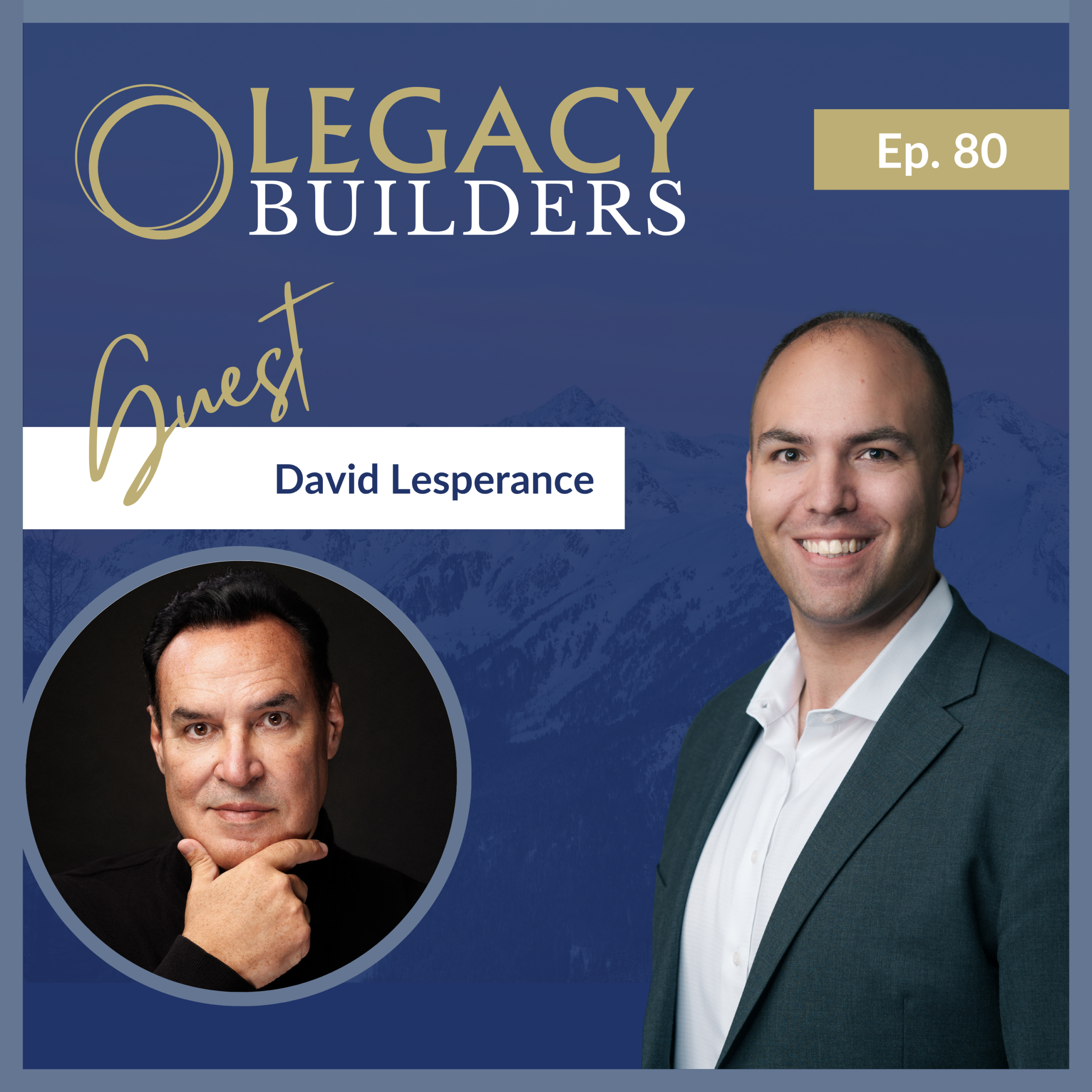
The Breakfast Table Test: When Tax Planning Meets Family Life
LISTEN ON YOUR FAVOURITE PLATFORM
In this episode, we’re joined by David Lesperance, Managing Director at Lesperance & Associates. With over 30 years of experience advising high-net-worth and ultra-high-net-worth individuals and their families, David brings an international tax, residency, and citizenship planning perspective to the decisions families face across borders. Our conversation looks at how changing tax policies can prompt families to rethink where they live and hold their assets, the options available to them, and the obligations that accompany a move.
David also addresses how these choices affect everyday family life. A financially sound move needs to work for the people making it, and understanding their wishes is an important part of planning for a future in another country.
About David Lesperance
David Lesperance is Managing Director at Lesperance & Associates, where he advises high-net-worth and ultra-high-net-worth individuals and their families on citizenship, residency, and domicile planning. His career spans more than 30 years, including work with major law firms, running his own law firm, and serving as an independent advisor. Supported by a longstanding team of professionals, he develops bespoke Back-Up Plans© that bring together citizenship, residency, tax, and family law considerations. These plans reflect each family’s circumstances, business interests, and long-term goals, while integrating with existing tax structures and estate planning. He also provides pro bono advice to governments on citizenship-by-investment and residence-by-investment programs.
Resources discussed in this episode:
- The Flight of the Golden Geese: How the 1% Matter to the 99%
- Myth of a Billionaire, a Millionaire Flight
Contact Cory Gagnon | Beacon Family Office at CI Assante Wealth Management Ltd.
- Website: BeaconFamilyOffice.com
- LinkedIn: Cory Gagnon
- LinkedIn: Beacon Family Office
- Email: beaconfamilyoffice@assante.com
- Podcast: Legacy Builders Strategies for Building Successful Family Enterprise
Contact David Lesperance | Lesperance & Associates
- Website: lesperanceassociates.com
- LinkedIn: linkedin.com/in/davidslesperance-residency-citizenship-taxation-lawyer
- Phone: +1 (415) 685 4308
- Email: david@lesperanceassociates.com
Welcome to Legacy Builders, strategies for building successful family enterprises. Brought to you by Beacon Family Office at CI Assante Wealth Management Limited. I’m your host, Cory Gagnon, Senior Wealth Advisor. And on this show, we explore global ideas, concepts, and models that help family enterprises better navigate the complexities of family wealth.
Today, we welcome David Lesperance, Managing Director at Lesperance & Associates. David brings over 30 years of experience across major law firms, his own practice, and his current work as an independent advisor to high-net-worth and ultra-high-net-worth individuals and their families. His work centres on international tax, residency, and citizenship planning, helping clients understand their options and how those decisions will affect their lives. Guided by intellectual curiosity and supported by a longstanding team of professionals, David builds trusted relationships with families facing changing circumstances across borders.
My goal is to be the most curious person in today’s conversation with David as we consider how changing tax policies and global mobility shape decisions about where families live and how they plan for the future. When does a financially sound decision also make sense for the people who will live with it? David shares his experience with the choices available across borders, the obligations that come with them, and the family conversations needed to move forward.
Now, let’s dive in!
Cory: Welcome, David. We’re excited to have you here today to share your wealth of knowledge and experiences with us. Let’s dive in, shall we?
David: Thank you for inviting me, Cory.
Cory: David, imagine you’re delivering the commencement speech to the graduating class of 2026, and you have the chance to inspire them with your story. How would you begin your speech to convey the incredible lessons and expertise you’ve gained along your career?
David: Well, my grandfather had a saying which is, successful people are those who are willing to do what unsuccessful people will not try. And there will be lots of failures, but those are learning experiences. So don’t be afraid to fail, and don’t be afraid to kind of get out of your comfort zone. You’re doing a lot of things.
My particular area of expertise, I did a lot of global travel, meeting a lot of people, putting myself into a lot of different situations which were scary and uncomfortable, but quite frankly, it’s usually the anticipation which is worse than the actual event.
Cory: And David, when you think of those things that successful people are willing to do, to what degree do we know, hey, this is what success means to me, versus what it means to others. What have you seen in the people you’ve worked with and the travels around the world?
David: Well, it’s when I say, doing things that unsuccessful people are not. Usually people do not do things because they fear failure or ridicule. And if you can kind of get over that and realize most people aren’t watching you as closely as you’re watching you, and really try to get outside of that comfort zone, as I said, and really explore and challenge yourself constantly.
We all tend to fall into comfortable situations, and it’s forcing yourself to kind of do something new, always pushing yourself, and always trying something else. Some things you’ll enjoy, some things you won’t. I remember going through law school and taking some courses which I thought I had no interest in, but you’re kind of forced to take them. And I either decided, yeah, no, I definitely don’t have an interest in that, or this is kind of interesting. And I didn’t think I’d like it, but I do like it. May not necessarily want to practice it, but really kind of.
One of my early mentors once told me, because we were doing a lot of traveling, said when you walk into an airport bookshop, buy a book or a magazine in an area that you know nothing about, from archery, to cars or whatever, and be curious, because you’ll never know. You’ll meet somebody and you’ll be able to strike up a conversation with them because you’ve kind of found out enough about a subject to be able to ask some meaningful questions.
Cory: I’m sure there’s a few discussions you’ve had as a result of that that wouldn’t have otherwise happened.
David: Yes. I mean, one of the things is I have spent a lot of time in airport lounges, and you’re kind of starting out, and young and single, and have lots of energy. You look forward to it. And I’m going to put a little bit of time. And I was going through London, for example, so much. I’d arrive in the morning, would leave until the evening, and so I actually made a list of all the things I wanted to see, and I would knock off one on each trip. But in these lounges, you see people in gold cards, and at first, you were envious. That’s so cool. Now you realize, no, I know, my friend, how much pain you’ve had to go through in order to qualify for gold card status or sapphire or whatever, depending on which airline you’re in.
Cory: Absolutely. And, David, as you talk of the anticipation not being, or being worse than the actual event, the work that you do and some of that planning around tax and residents, I think of what it means to plan your future here, to maybe avoid some tax or to get out of a situation. How do you help people determine, not only the facts and really what’s there, but how do they make those decisions to act based on those facts?
David: Well, tax is always going to be present. One of the things I learned, whether you’re practicing family law or obviously, corporate tax has an impact on things. One of the things you have to really take into account is not to let the tax kind of tail wag the lifestyle dog.
I occasionally will have clients who will say, okay, I’ve been sued, I’ve been audited. Move me somewhere where there’s no lawyers and no taxes. And my kind of glib answer is, well, we can move into Pitcairn Island. Only 37 people on Earth have decided that’s where they want to live.
And so one of the kind of answers I always tell clients in planning is, you’ve got to sell this at the breakfast table. You’ve got to have whoever. Family members that need to buy in and live the plan. As I say, tax is a percentage of income, divorce is a percentage of capital. So not only do you want the financial hit of a divorce, but just the emotional hit of it. So it’s really understanding actual impact, actual have a definite touch to life, is an important thing to manage and to look at. But you’ve got to be able to live your life. And just getting debt equal to gross is oftentimes, yes, you can do that if you live on Pitcairn Island. But you and the 36 other people will be waiting for the twice a year delivery of food to the island.
So how do you balance family life? How do you balance the things that you personally need or business need? And it’s quite an exercise. But in today’s world, I’m talking to you from literally the other side of the world. I’m currently in Thailand. I’m a Canadian, but I lived in the UK. I lived in Europe for 10 years. Traveled a bit, and with things like Zoom and Slack, modern technologies, and the pandemic made people kind of get over this “we have to see you face to face.” When the pandemic hit, it kind of was saying to clients, welcome to my world. So it went from the next time you’re in town we’ll have dinner, to send to your calendar program and let’s book a call.
Cory: Right. And David, as you speak of the globe becoming a smaller place with the presence of technology, and we’ve seen ways of life become quite similar in different countries, borders are still a very important thing. And today with some of the geopolitical turmoil, we’re seeing borders really be something that people are paying more attention to. So how do we navigate the world in consideration that there are times, or there have been times where it’s easier to travel and live and experience different countries, and then there are times that maybe it’s not so easy? How do we navigate that?
David: Someone once told me, she said, David, you look at the world like Mr. Spock from Star Trek. She meant it as an insult that I don’t have emotion. I took it as untrue but aspirational that I try to look at the world as it is, not how I wish it was, and kind of anticipate how it will be, not how I wish it was going to be.
On the one side in today’s world, you have everything from pandemics that restrict mobility. You have immigration, which is a mass migration of people across borders that will continue as we see just really the impact of climate change, the impact of technology. You have people in places which may be suffering economically who can have internet access, and they can see, kind of the lifestyle of the well-to-do Westerner, and things are looking bleak at home. So that’s an enormous drive for them to come, and that’s going to be there, and it’s something we manage. On the other hand, you have some liberating options.
Now it’s quite common for people to kind of try to get membership in as many clubs as they can. So people are exploring alternative residences and citizenships. And one of the things that you first learn as a lawyer is who’s my client? Well, my client is the individual. It’s not some fund manager in Portugal, or some island in the Caribbean, or some real estate developer in Greece. So I actually do not take any commissions from third parties. So I’m agnostic and unconflicted. But many people, particularly in what were immigration destination countries in the 19th and 20th century, have claims to lineage citizenship. And people may say, well, I don’t want to live in the old country where my grandfather went through. But if that’s a European country, they don’t have to go back to the old country. Citizenship in that club gives them access to 27 different countries.
I always have to preface this personal disclosure with my siblings, and I didn’t go nightclubbing looking for Europeans to dance with. But my older sister married a Latin and a German. My brother married an Italian, I married a Scots woman, then a Pole. My younger sister married an Irishman. I’m the only one of the four of us who actually picked up and lived in Europe. I can tell you all the nieces and nephews in that next generation. And now they’re getting on to the generation beyond that. I had a niece that lived in Brussels for 10 years under an Italian passport.
It does give you lots of opportunity, not only to travel, but if you get a job offer, you can pick up and move. And Canadians for example, you can take advantage of things. It’s not universal as it is in Europe, but you have the opportunity to qualify for US or Mexican visas in a certain way. So leveraging, particularly when you’re young and you can leverage your education and your attractiveness to other jurisdictions, so take advantage of any family claims that you may have and pursue those. But also, everything from, I’m going to do my master’s degree here, that may be an entree, to having a residence, and eventually a citizenship. Effectively the world is becoming a series of trading blocks. We can think of Mercosur in South America. We can think of New Zealand and Australia.
You want to be a member of the club. But what you want to do is look at what are the good things and the bad things. For example, what are some of the negatives? Well, some countries don’t allow multiple citizenships. Most people just have dual citizenship. But you can have, I had a client once who had nine citizenships. It was a great thing. It went beyond belt and suspenders to a hobby and things. But it was overkill. But it was wonderful to be slower. That’s where that curiosity really fits in well, and it’s quite common now for clients if they’ve got the means to do it. Argentina just announced that they were going to introduce a program, I will of course look at. I will make sure that when we have a proposal, what’s it actually going to be like? So we’re looking what’s the processing time, sort of those things.
New Zealand residents, for some clients, it’s just an asset reallocation and a couple of vacations. For other countries, is military service an issue? Do they allow dual citizenship? I mean, Singapore is a wonderful place. It’s a great place to have residence. It’s got a lot of things. But if you want to take out Singaporean citizenship, you have to give up every other citizenship you have. They don’t allow dual citizenship.
So it’s understanding all these different rules. Military service, will that be an impact? Maybe not for you, but will be for the next generations. So it’s just understanding those. And the US is quite unique in having citizenship-based taxation and actually even an immigration status of residents. Once you have a green card you are what’s called a US Person for Tax Purposes. I actually have some Eritrean clients. The only time as an Eritrean you would ever need to get the tax clearance certificate is if you’re going to take on some land there, and it’s about $2,000. Again, that’s what you’re going to pay your accountant or enrolled agent to file in the US.
I have to confess I have citizenship, citizens, and clients from many countries, but I’ve never had a North Korean client yet. And so I think if you’re in North Korea, the last thing you’re worried about is maintaining your North Korean citizenship.
Cory: Well, from the outside, that is our perception. Haven’t been there, so don’t know.
David: I may, now that we’re in just moved to Asia, so that may be on the, you know, take the tour and those potential village tours that they give to North Korea.
Cory: So there you go off the list. David, what sort of things do countries do to attract people? You mentioned as far as education and bringing skills. You touched a little bit on Singapore, and they’ve done an incredible job at attracting wealth to their country. How does tax law influence the migration of wealth and talent?
David: Well, over a decade ago, I co-authored a book, The Flight of the Golden Geese: How the 1% Matter to the 99%. We’re actually just in the process of doing an update to that book. The world, or jurisdictions I should say, are dividing between trying to squeeze more out of their existing golden geese, and other jurisdictions are saying we’re going to try to attract more golden geese. So let’s look at two current examples of that.
So the United Kingdom decided to change what they call their remittance basis or non-dom system, and also change the inheritance tax to move it from only UK property to global property. And when that happened, I had a client who said, okay, labor’s going to get in. What does this mean to me? I said, well, you’re going to move from being taxed on UK source to global. So I don’t get generic income capital gains from the global. I don’t sell anything, I just borrow against it and inheritance tax 40% from just UK to worldwide. To which she gave me the great quote, London’s nice. It isn’t that nice? In other jurisdictions, even within the region of Europe, from Ireland, to Malta and Cyprus, the remittance basis jurisdictions, to the lump sum jurisdictions of Greece, Italy, Switzerland and Poland, to those who brought in or had regimes, or still have versions of regimes like Portugal.
So jurisdictions are saying, so let’s look at for example Italy, they started off at €100,000, €200,000, they’re now at €300,000. Well, to an ultra high net worth person, that’s what they’re going to pay their account number year to do a filing in the UK. It becomes a line item. So you’re not paying Price Waterhouse or Deloitte’s. You’re also not having any compliance anxiety when they hand you this 48 page return in a pen and you’re saying, I hope you got this right. There’s no compliance. Why would a country like Italy have a lump sum deal of 300,000 whether you make 10 million or 100 million? Well, because if you look at it from Italy’s point of view, that’s the equivalent of the tax contribution of about 30 Italians.
So you’re being a super contributor, you’re being attractive, and there’s no marginal cost. Italy, it’s not like they need to pay another kilometer road or hire another police officer. And guess what, you’re going to be paying 23% VAT when you have that espresso biscotti for breakfast. You’re probably going to be hiring people. High-end tourists. Consumption, the direct and indirect. So it’s a win-win situation. The same thing is happening in the United States. For example, right now California is, we’re going to end just a little less than a month from now. There’ll be a vote in the US, not only in the US midterms, but also what’s called Proposition 40, the California Wealth Tax.
And as a Canadian, when this got proposed, I moved seven multi-billionaires out of California. I do a lot of press and they all go, don’t you think healthcare is an important thing? I go, look, I’m a Canadian, I lived in the UK, I lived in Poland for 10 years. I’ve always lived in a country with some type of universal healthcare coverage. I may have decided to spend some of my disposable income on private health care, but I kind of like the idea that my Uber driver or the person serving me a pizza is one health event away from bankruptcy. So I get it. That’s good stuff. And you need golden eggs to pay for good stuff and whatever. Let’s say 75% of the population doesn’t have an extra dollar to kind of throw in the kitty. So you’ve got to get the golden geese. I don’t have a problem with the need. I don’t have the problem with recognizing you got to go get the golden eggs from the golden geese. The problem is with the mechanism. It doesn’t work. And calling them billionaires bad names, or wealthy people bad names doesn’t magically fix it.
And so let’s look at California. So California is proposing a 5% tax on the amount of wealth that you have. So let’s use Mark Zuckerberg as an example. So he owns 13% of Meta shares, publicly traded shares, but he owns 60% of the voting shares. Well, it’s 5% out of 13, but of 50. And none of my clients are Scrooge McDuck. He’s going to have to sell shares in order to pay that wealth tax bill. Combined California and federal rates at 37.1%. So that 5% all of a sudden jumped over 40%. And that’s on global wealth. And they say it’s a one-time tax. My clients are assuming it’s not a one time, it’s the first time. And if you look at the history of tax, the United States brought in a temporary income tax to pay for World War I, that was over a century ago and not going anywhere, and either the legislature can do it, or the union go, that was pretty good, let’s do that again. It’s always a question of who will move.
So if we look at the target of whether that was my ultra high net worth person in the UK, or, Sergey Brin and Larry Page, the wealthier you are, the less you tend to have life inertia. It’s not like Larry and Sergey are going into Alphabet’s headquarters every night and double checking the coding. They don’t need to be in California to make and maintain their wealth. If they want to be supervisors, you’ve got Slack, Zoom, you’ve got lots of other ways of doing that. So they have little life inertia. And I just gave you that in Zuckerberg, you’ve got a huge push that will move people, and you also have to have a place that they move to all in the United States. I had seven clients, seven multi billionaires, that left. Four went to Florida, two went to Texas, and one went to Nevada.
And again, when I said, well, not only do you have to satisfy the California franchise board, that’s the state taxing authority that will do the audit, you also have to sell it at the breakfast table. So I have one client who said, well, I’ve got kids and my wife doesn’t ski. So they ended up moving to Florida because that worked at the breakfast table and things. So it’s understanding that now the US and Bernie Sanders is, as we speak, kind of doing rallies on this and the Democrats in, and again, I’m not an American, so I don’t have a dog in this fight, but I’m just being Mr. Spock and looking at it and saying, well, estate wealth tax is very easy to avoid. You don’t need a new immigration status to move to Texas. So that’s why Gavin Newsom said, well, this is suicide, because not only, I mean, there’s a whole bunch of constitutional reasons and implementation reasons, if it passes, it’ll be six to eight years before there’s the first golden egg. It’s to pay for that shortfall caused by the big beautiful bill. So this is not, you know, never going to be affected. And in fact, because in the US, here in California, depending on capital gains for a given year, the top 1% contribute anywhere from one third to one half of the total revenue. And these are not the 1%. These are.001%. And so they have an asymmetric. We’re not talking about millionaires. We think of it in crude terms. The tax contribution from a billionaire is a thousand times that of a millionaire.
Cory: A little different than Italy, where we’re talking about a few Italians.
David: And so, not only are my clients not going to be paying the wealth tax, they’re not going to be paying their annual contribution to the state coffers in 26 and 27 in the future. So Gavin Newsom recognized it’s easy to avoid. It’s going to hurt the current take. We get in golden eggs. But he’s supporting a federal wealth tax. And that’s everybody from Elizabeth Warren and Jai Paul at 50 million, to Gavin Newsom proposing at 100 million, to Ro Khanna and Bernie Sanders at a billion, and everything from, Elizabeth Warren is only 2 cents. Calculate capital gains tax.
And the other thing is, of course, if somebody like Mark Zuckerberg is selling a big chunk of shares of Meta, what impact is that going to have on the value of Meta shares? Well, that’s going to have a negative impact on all those federal, and all those pensions and everybody else on the cap table. And when you look federally, they’re not even trying to do the one time. They’re making it annual, because they understand it’s a stickier wicket to leave the US system than it is to leave a state system and things.
So I’ve got lots of clients who say, well, you know, will there be a federal wealth tax? Well, okay, what has to happen in order for that to happen? Well, the Democrats have to get the trifecta in November of 2028. And if they do, then the Democrats have to adopt a wealth tax. So clients ask me, well, what do you think the chances of happening? And so quite frankly, the most volatile time I’ve ever seen in my life, so I couldn’t tell you what the headlines are going to be next Tuesday. So I don’t know, but they put it back on the clients. What do you think? Oh, 25% chance they want the trifecta. Okay. And what do you think the chances if they do that they’ll actually pass a little about 50-50? Okay. So there’s a 12.5% chance that this event is going to happen each and every year to your total wealth. That’s your damage to your fiscal house fire damage. Would you spend this much on getting fire insurance and the fire escape plan, hoping you never need it, but you don’t be calling me the second week in November 28th and you go, oh my God, they hit the trifecta.
Cory: David, when these politicians come up with these ideas, I’m guessing that there’s some sort of economist who’s paid to look at some of the effects of what we’re going to bring in, but also what we’re going to lose. And this is my non-Spock brain saying that maybe that does exist. And there’s smart enough bureaucrats out there to understand that we do need to measure the possibility that we’re going to lose something, as we hope we’re going to gain something. Where do they get this wrong? Because we see this and then people flee and then it doesn’t work. Why do they keep trying? And it seems a little bit like insanity chasing things around that haven’t worked in the past.
David: Well, because the world doesn’t act logically. Tax the rich fits in a bumper sticker. With all due respect, Cory, more people are going to listen to Bernie Sanders tonight than they’re probably going to watch this podcast. So am I saying Bernie isn’t earnest? Maybe he is. Is he being extraordinarily naive? Yes. Can somebody explain all of this stuff? And when you bring up these arguments, and I do kind of, just let’s anticipate the utterly predictable be all, it doesn’t really happen. And one person said, well, we don’t know that. They don’t make public announcements. Well, they weren’t obligated to put up a billboard when they were leaving saying, I’m out of here. They just leave. I mean, you can look at the tea leaves and see things like where people set up family offices, and where they sold things, and where they set up structures and things like that. But they’re going to do it, filing as required to the tax authorities when that’s required. And so it’s a big vote-getter. If you look at, for example, it was Michael Smerconage who kind of does this centerish type of thing. He did a poll just last week, and 67% of the voting public said we should tax the billionaires. Well, I think you should tax the golden geese also. But you can do it in the US effectively a number of different ways.
One of the big mantras out there is “buy, borrow, and die.” Okay, now that’s the way they’re avoiding tax. Well, okay, let’s look at it from the golden goose’s point of view. If I want money for something you may deem frivolous or something you may think is quite useful, but I’m making a decision. I can sell it, I will pay the capital gains tax. Oh, but you can avoid the tax by borrowing. Yes, but I still have to pay the lender interest, and I’m working out, eating well, and I’m hoping I’m going to survive for a way. So at some point when it’s money out of my pocket, whether it goes to the IRS or to Morgan Stanley, it’s still money out of my pocket. And at some point I’m going to figure out it would be better off to just have sold it and got the net. That’s a more logical financial choice.
And the other is in the US, unlike, for example, Canada, death is not a capital gains event. They have something called a step-up. So if you wanted to get a long term sustainable way of having more revenue, tax revenue in a modern world, and we’ll talk about what that is, then doing things like, okay, then imposing a tax on borrowing, it’s easy to figure out the value, because the lender is going to figure out the loan to value. Okay, so you can figure that on an actual sale. FMV is whenever somebody else is willing to write a check for it. And you’ve just got to do the valuation once and it’s done. The problem with the wealth tax is you have to do the valuation every year. And, you know, how much is Cory AI worth while you’re saying EBITDA is this, and maybe the multiple of this and tax story, the multiple of that; there are arguments. And if Cory AI drops next year in value, you’re going to be seeking a refund. Whereas an exit tax, whether that’s when you leave the jurisdiction or you shuffle off this morning coil, is a one-and-done. And if it drops them down next year, that’s your problem, not the tax authorities’ problem. So those are kind of some of the things viable. But in a modern world, people say, well, we should have a flat tax and income tax.
Most extreme wealth right now is not income. So let’s use Jeff Bezos as an example. Jeff Bezos only makes 88,000 a year in income. How he got wealthy was his asset appreciated value. So let’s tax that with a wealth tax. Well, I just showed you, wealth tax doesn’t work.
Cory: But if you say, okay, this trust owns those assets too, it’s not him that owns it, it’s his trust.
David: What you want to do is how do you get at the growth in that. For example capital gains exist already. You can impose a capital gain event, for example, borrowing. You can impose capital gains events on getting rid of step-ups. That’s probably logical. If you look at Ron Wyden for example, he’s looking to close things like GRAT, all these different tools. What are our look-throughs? There are a number of different ways that you can do it that would be effective, ways of getting more golden eggs. The wealth tax, I don’t have a problem with wanting more golden eggs for a good cause. I question your mechanism, and when I bring up one of the practical issues I just hear magical thinking. First-hand knowledge. They left. I saw this in the UK.
There’s a character in the UK called Gary Stevenson who got with making the rounds, of pushing a wealth tax, but never thought about it. Okay, that’s all very nice. Does this method you propose actually work in the real world? Not in an academic world of Berkeley and Gabriel Zachman or Emanuel Suez or Thomas Buetti. And some of this stuff again is dead on arrival. I mean, Gabriel Zuckman went to Brazil and said, oh we’re going to have a global billionaire tax.
Let me introduce you to a gaming theory called Prisoner’s Dilemma. You would have to have a universal acceptance of this. You can’t even get universal acceptance within the States. You can’t even get universal acceptance within Europe. And in order for this to work, you have to have universal acceptance. I grew up in a family of engineers. So my father used to tell the story, saying there’s an engineer and an economist on a desert island, and they’ve got a tin of beans, and they’re starting to start. And the engineer spends about an hour trying to figure out if I was going to hit it off a rock to like pop off the top and stuff. Congress says step aside, I’ll deal with this. Okay, start off with assume we have a caner. So that’s the problem, your assumptions don’t work in the California wealth taxes. Took the Forbes top billionaires at 200 and said 5% of that will generate this kind of income. Well, that kind of static analysis forgot we live in a dynamic world. Your targets have agency. They’re not going to be there.
And so the problem in designing tax is you want to try to get as much as possible logic to have a sustainable, you want to attract golden geese, not scare them away. You want to engage in the art of taxation, which is “getting the maximum number of feathers with the minimum amount of hissing,” quote a French finance minister from a couple centuries ago.
And so you bring in smarter policies like a lump sum or remittance basis. Italy is doing quite well. Enormous revenue. The United Kingdom is losing. California is losing. Florida, Texas are gaining. If they bring in a federal wealth tax, will that mean that people will leave? Well, the people who leave are not going to be millionaires. They’re going to be 50, 100, 500 billion.
People often quote another Canadian named Cristobal Young. When we did Flight of the Golden Geese, he wrote a book called Myth of a Billionaire, a Millionaire Flight. Well, he quoted a Massachusetts study, 2011. Well, first of all, that was a decade and a half ago. Lots of change from Slack and Zoom and things and remote working. And he said, well, they don’t really. Millionaires don’t leave. Well, first off, okay, who did you study? We studied people who earn a million dollars or more a year in Massachusetts. Well, who owns that? Well, doctors and lawyers and dentists and small business people. Well, if I’m a dentist in Brookline, all of my patients live within five miles of that building I own. I’ve got a lot of life inertia. I can’t just pick up and move to Miami and reproduce my lifestyle and my income there. So I’ve got a lot of life inertia. And so a couple of points more of income tax. It’s not going to be enough to move. But when we look at Zuckerberg, he doesn’t need to be in California and that enormous hit, and lots of other places he can move to. Of course they move. And even Christopher Young is now saying, well, the California Wealth Tax is a completely different animal. But he’s cited by all the people engaging in magical thinking, but that this is going to work because they’re so blinded by “tax the rich.” Okay. The rich have too much political power. Well, if that was true, we would have had President Bloomberg and Governor Steyer. But okay, we’ll say it has influence. Wealth tax is not going to impact that. You want to impact that? Legislate against Citizens United. The billionaires gained a lot of wealth. Okay. But you’re thinking zero sum game. They didn’t take a bigger piece of what’s a finite pile. They expanded the pie.
But again, Cory asked a good question. Why all of this is completely logical, but politicians, their earnestness that they’re trying to do their best for their constituents, but they have to get and stay elected, and they deal with an emotional electorate. And sometimes that’s like, I know this is a good tax policy, but this will get me elected. So I can either keep out the really bad guys or do a couple of good things. That’s the real world we live in.
Cory: Absolutely. David, there’s so much more that I’d love to ask. You mentioned around just that compliance, cost, and reporting. You touched on FATCA and just even countries that don’t require that level of reporting. And we’ve seen that globally where countries have come together and said, we’re all going to force reporting, and we’re all going to share data. And the world that we live in seems so technologically advanced. And then we realize, oh wait, no, it’s not as advanced as we thought. And whether people are hiding things illegally, I’m not saying that they are, but legally there are many ways that people do move things around. Why is it that we’re assuming that everybody’s going to comply? And when I say everybody, all these countries, it seems as though the world is trying to get to this place that everyone complies.
David: There’s a couple of different things. So if you’re looking at tax evasion, for example, tax evasion requires enablers. Those would be financial institutions, whether there’s a bank or broker trust. I remember I used to trot around Switzerland kind of prior to 2006, and I’d tell people, you’re Americans. You can get out of US taxation by expatriating and getting another citizenship and limiting your time. Oh, no. I met this guy from UBS at Art Basel Miami. I’m just going to open up a bank account. And it worked until it stopped working. Guy named Brad Birkenfeld went off on the USB key back then, just transferred to Dropbox or some other file-sharing software. So I tell clients, okay, hiding is unethical, and I’m going to help you. It’s also foolish. Not a question of will you get caught, it’s when will you get caught? And do you really want to not only pay the price, but have your children look at why are you going to jail or what happened? So secrecy, planning, evasion, along with being unethical, is stupid.
How do you volunteer? How do you look at the different tools and the legal tax avoidance toolbox and exercise that? And it is a complex world. The United States, what happened in the late 1990s was somebody near certain, hey, we’re the world reserve currency and we have 35 to 40% of the world’s equity markets here. Every financial institution in the world wants to deal with us, so we’re going to stop negotiating with Switzerland. And they’ll say, well, bank secrecy. What are you going to do? Who are the tariffs on cuckoo clocks and chocolate? Well, no, we’re going to deal with the financial institutions. We’re going to say, oh, financial institution. You want access to the US, you went through the SWIFT system or to US corresponding banking relationships. Oh, you want access to the US equity markets for any of your clients. You, the institution, are going to sign directly with us, the US Treasury. And that was the QI Regime. Many banks thought they’d be cute and say, well, we’ve signed this thing, but we’re not really going to comply. And then the banking scandal, mid-2000s came out, and that brought in something called FATCA, which was, you can think of the QI Regime on steroids.
And then other countries started saying, oh, well, that’s a good idea. Let’s bring in something called the report, the common reporting standard. The problem is there isn’t another currency. I mean, if Canada said that could be some bank, and another country’s going to say, maybe we can’t have Canadian dollar corresponding bank relationships or access the Canadian market for our savvy plans. Okay, we’re not going to sign this. And so some countries, most notably the United States, have not signed on.
So it’s again, understanding all these different regimes. Right now, for example, in China, we look at world trends. Property market dropped off a cliff there. So that was a big revenue generator. So the Chinese government said, okay, we need tax revenue. What are we going to do? Oh, well, we suspect that there’s been lots of Chinese that should have been paying Chinese tax on their international investments. We’ve got QI. So we’re going to move the goalposts on the trust rules, and we’re going to say to them, we want you to justify everything back 15 years. Well, China doesn’t send you kind of a nice letter from the tax authority saying, we’d like clarification on schedule C. They put in exit fans and they remove you to the Jack Ma Memorial undisposed location in Central China. They play hardball. And the conviction rate for fraud and tax evasion is over 99%. So I had one client who said, look, I think I’ve been compliant, but Dave, can you provide all the documentation for your transactions for the last 15 years ago? No. Well, I live a more complex life. I’m not going to hang around. I’m. I’m just going to take myself off the playing field because there’s a Chinese saying, kill the chicken to scare the monkeys. What that means is they’ll take a poster child. They’ll do the thing they just did, for example, to the guy in Evergrande. And so people are scrambling.
So these are all kinds of things that are happening in the world that you have to be aware of. But ultimately, you’ve got to say, okay, I want to do this right, but I also want to recognize sometimes the playing field is just unfair, and I just need to leave the playing field. I don’t know if I can, if this is considered swearing, but, you know, I’m going to take my ass and my assets out of the line of fire.
Cory: Well, I feel like we’ve covered the motivation on a positive legal perspective. We’ve now covered what it means to be compliant. And on that, David, as we near the end of our conversation, there’s a few questions that I ask each guest before we wrap up. Are you ready for the tough ones?
David: All right.
Cory: Now, what do you believe is the most essential strategy for building a successful family enterprise?
David: Understanding what wealthy means. Wealthy is not simply a financial element. It is everything from family harmony and thriving, to passing on ethos and really trying to instill in the next generation that we live in a different world. I mean, when I was growing up, if I asked my father how much money he had, it’s like, why is that any business of yours? Or how much did that car cost? I don’t know. Well, my children can Google the price of things right now if I’ve done a company, Glass Bronze Incorporated. They can fire up the equivalent of Bloomberg and find out what the share price is about. They can probably even do an AI Google of what’s David Les Brown’s worth. It may not be accurate, but it will give them some sense. So it’s trying to teach them they have access to information. So passing on, you need to have not just information. You have to have context. You have to understand what this means. You have to have perspective, passing on ethos.
Now, as the father of four individuals, you can only make suggestions and give examples, and they will each interpret that. And there’ll be individuals that will strike their own way. But at least if you give them good food to eat, or good information, or good ethos, there’s a better chance that they’ll be healthy at the end.
And that’s for successful family enterprises, is really understanding and trying to accept who the individuals are. I’ve seen over the years that the founders were very passionate about whatever their business or their own interests were, and their children just were not right, and taking them as not trying to put a square peg in a round hole. I’ve seen several next generations that may have been good at running the family business, but just didn’t enjoy it or have the passion, or felt this was an obligation, as opposed to something they really wanted to do. And it ultimately was unsuccessful, because what happened was while the controlling founder passed on the next private equity person that knocked on the door, they sold it. They didn’t want to run the business. Yeah. So understanding those, understanding your children, and accepting them for what they are, would be something I think that people should be aware of.
Cory: And what is the most common challenge that you see family enterprises, family offices, and family businesses encountering when it comes to wealth transition and generational continuity?
David: Transparency. What tends to happen is that people don’t want to tell, because either they want to control information, or they’re afraid of the reaction. And so the transparency and honesty, and being prepared to be disappointed. Or not just disappointed. You’re not going to have the reaction you hoped for, but it may actually be a better reaction. It’s going to be their reaction.
I had a client, he has two siblings with their families and very much controlling things. And I know one family would be great stewards. The other, I just can’t wait for grandpa to die so they can get their piece. And I remember I was with him and trying to talk to him. I said, look, you don’t want to be a feature story in Vanity Fair. And I was showing him the Hyatt, the Pritzker family story, and how that blew up when Jay Pritzker died. I showed him this thing and he goes, and that was the lesson I was trying to impart, manage this transition. And he buried his head in the sand. He goes, we bought some of those assets when that blew up. Not the lesson I give you by sharing this article.
Some clients just don’t want to, absolutely brilliant global trainer, business person, but ran away from recognizing that you will pass. It’s an event certain with an uncertain event date that it will happen. And what do you want to have happen the day, the month, the year, the decade after you passed?
Cory: Absolutely. And in your experience, what are the top three key qualities that successful family enterprise leaders possess?
David: Curiosity, perseverance, and willing to do what unsuccessful people are not.
Cory: Fantastic. Before we conclude, I’d like to highlight where our listeners can engage in more of the conversations you’re having. Please let us know the reissue of the book, when that might be expected. And I know you speak all over the world. When and how do people hear from you?
David: Well, probably the best thing is on LinkedIn. I publish something almost every day under my own name. We also have the firm’s page there. They can also go to the website. We do eight papers. I do podcasts and webinars. I’m in a lot of media, and a blog, so that’s probably the best way. And if people have questions and want to reach out, quite frankly, I get most of my referrals from centers of influence. So I’ll be talking to their lawyer, their banker, their accountant, or their family office. But I do get effectively cold call entries. Do get a lot. We do oftentimes request a consultation fee. Not that I’m going to retire on the consultation fees, but at least what’s, some of skin in the game for the person. If I’m going to give you an hour of my time, that’s an hour I’m not doing for somebody else. So I would ask for some token of appreciation, because too often, people pay for advice, get free advice. It’s worth exactly what they paid for.
Cory: Yes. And I wanted to make sure that we covered everything today. Is there anything else that you’d like to share with our audience that we didn’t get a chance to touch on?
David: Well, it is certainly volatile, and the rate of change and your ability to adapt is kind of one of your key things. I mean, you used to be able to train for a particular skill, and in my father’s generation, they could. He worked for the world’s largest corporation, General Motors, from graduating from high school, all through university. At the end, you work for electronic data systems. Whether it’s a government or a company, there is no entity right now I can think of that you can hope to work your entire career on. And so embrace that reality. And you’re going to be your own. You’re going to be an amalgamation of all these different things, from working for other people, to solo, to entrepreneurs, and that’s going to be in all fields. And knowing that the world’s going to change. I mean, we’re this extraordinary period of time. I tell clients, look, the future is going to happen, whether it’s AI or whatever, the sun’s going to rise in the morning. You have no control over that. What you have 100% control over is your reaction to it. So you can vote for people who say, I’m going to stop the sun from coming up. You’re going to be disappointed. You get sun shield and you can protect yourself for a period of time, or you can choose to make solar panels.
Cory: Fantastic. Well, David, thank you so much for taking your time to share your expertise, your experiences. I know, joining me from the other side of this world we live on, you join me later in your day. So thank you so much for doing that. I very much appreciated our time, and I know that our listeners will appreciate your comments and some of the learnings that you dripped along the way. I think that it was fantastic. So thank you so much.
David: Well, thanks. I just noticed over your shoulder you’ve got a globe there, which is, I’m staring right at Thailand, where I’m talking from.
Cory: The world forgets that there are more than one continent or two. And I think that you live in such a beautiful part of the world that is often forgotten by others, and is extremely influential. And when you talk about the future, there’s something to be said about that area as well.
David: Absolutely. Thank you again.
As we wrap up this episode, we invite you to reflect on David’s reminder that a plan needs to work at the breakfast table. Decisions about tax, residency, and citizenship affect where a family lives, the opportunities they have, and the everyday lives of the people involved.
Whether you’re part of a family enterprise or walk alongside one, these decisions call for honest conversations about what each person wants for their future. Those conversations may bring unexpected answers, giving families a fuller understanding of what they are ready to commit to together.
Throughout our conversation, David described how changing tax rules can lead wealthy families to rethink where they live and hold their assets. Moving brings its own obligations, and the financial benefits need to be weighed alongside the effect on everyday family life. He also addressed the cost and uncertainty of compliance, the risks of secrecy, and the difficulty of preparing for succession when important conversations are postponed. Together, these issues show why families need to understand their options and speak openly about the future they want.
To learn more about David’s work, you’ll find links and details on how to connect with him in the show notes.
Disclaimer:
This program was prepared by Cory Gagnon, who is a Senior Wealth Advisor with Beacon Family Office at CI Assante Wealth Management Ltd. This is not an official program of CI Assante Wealth Management Ltd, and the statements and opinions expressed during this podcast are not necessarily those of CI Assante Wealth Management Ltd. This show is intended for general information only and may not apply to all listeners or investors; please obtain professional financial advice or contact us at BeaconFamilyOffice@Assante.com or visit BeaconFamilyOffice.com to discuss your particular circumstances before acting on the information presented.
