

Keeping It in the Family: Why Internal Transitions Require Just as Much Planning as a Sale
A family business owner preparing to sell will often invest months, sometimes years, in detailed planning: assembling advisors, managing valuations, navigating due diligence, and finalizing legal structures. The process is intense, and rightly so the stakes are high.
Yet when that same owner decides to transition the business to the next generation, the approach is often far more informal.
“We’ll figure it out.”
“The kids understand the business.”
“It’s a family matter.”
This belief that internal transitions are somehow simpler than external sales is one of the most common reasons family business successions falter.
The truth is, keeping the business in the family demands planning that is just as intentional and rigorous. The structures may differ in governance frameworks, leadership succession, and financial stewardship, but they don’t fall into place on goodwill or a shared last name alone.
Too often, families realize their situation only when challenges arise. With the right foresight, it doesn’t have to be that way.
When the Business Must Fund the Transition
One of the biggest planning oversights in family transitions occurs when there is no external buyer, causing the business itself to become the funding source for the exit.
Unlike a sale that creates a lump-sum payout, internal transitions mean the company must continue generating enough cash flow to support:
● The retiring generation’s lifestyle and financial needs
● Reinvestment and growth under new leadership
● Competitive compensation for rising-generation leaders
● Reserves for unexpected challenges and market shifts
This creates a fundamentally different financial dynamic. The business must be profitable enough to support multiple generations simultaneously, often for years or decades.
Many families don’t recognize such challenges until mid-transition, when the next generation feels pressured to deliver immediate returns while the senior generation feels anxious about financial security. The solution is planning these realities upfront, making dividend policies, ownership structures, and cash flow projections just as rigorous as any external sale would require.
Why Informal Handoffs Fail
Even families who plan the financials often stumble on structure. Without a sale’s definitive closing date and legal documentation, family transitions tend to unfold gradually and informally. Titles shift before responsibilities do. Decision-making authority remains unclear.
When transitions lack structure, they default to assumption and assumptions have a tendency to create conflict.
The underlying issue is deeply personal. Those stepping back wonder, “What’s my role now?” How do I stay connected without overstepping? Those stepping in face different questions: How do I earn trust inside and outside the family? How can I honour the past while building for the future?
These identity questions shape behaviour in subtle but powerful ways. Families who address them openly create smoother transitions. Those who avoid them often face resistance that feels personal but is really structural. The solution lies in providing intentional clarity regarding roles, authority, and expectations, even if timelines are flexible.
Building Beyond Founder Dependency
Clear roles and expectations are just the beginning. Too many family businesses remain deeply reliant on their founder’s relationships, decision-making style, or institutional knowledge. The next generation inherits a business that can’t function without them operating exactly like their predecessor.
True generational strength requires the same systematic development any buyer would demand: documented processes, governance structures, professional management systems, and leadership development programs.
Effective family transitions require structure;
● Defined timelines and roles, even if they evolve
● Clear decision-making authority at every level
● Regular communication rhythms between generations
● Aligned expectations for performance, compensation, and control
“Sustained success often requires evolving beyond founder-led decision-making.”
Concluding Thoughts
Families who choose continuity over sale are choosing legacy over liquidity. However, the establishment of a legacy requires the same deliberate planning as any major transaction.
Strong businesses, clear plans, capable successors, and honest conversations are essential for building a legacy. Bringing clarity to roles and emotions helps unlock your family’s full potential. Consider approaching your transition with the same care and clarity you’d bring to any important sale. Family business transitions are among the most complex wealth planning challenges we see.
If you're navigating or preparing for a generational handoff, we'd welcome the opportunity to discuss your specific situation. Beacon Family Office at Assante Financial Management Ltd. works with families to structure transitions that preserve both wealth and relationships. Reach out to explore how we can support your family's transition planning.

ABOUT THE AUTHOR
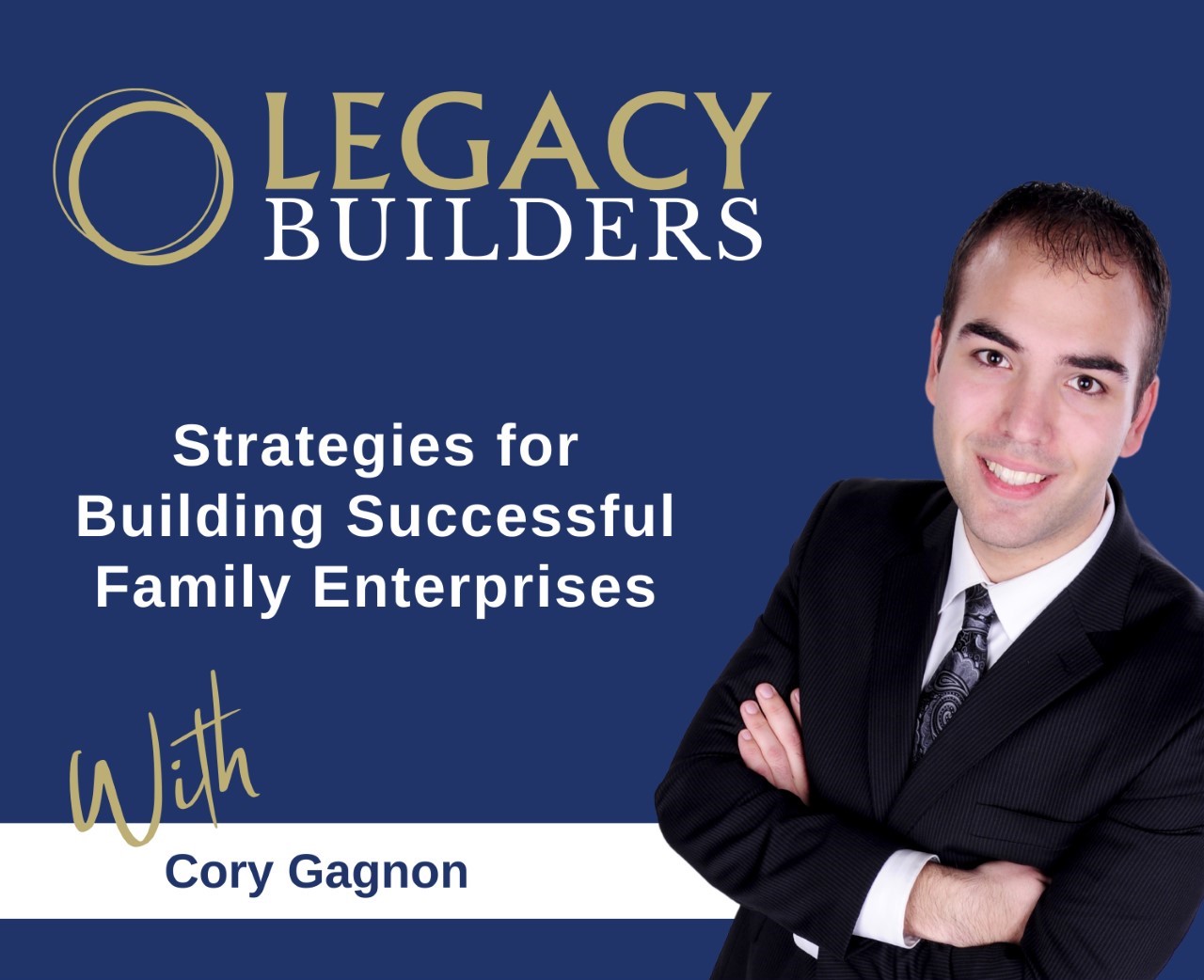
As the Senior Wealth Advisor at Beacon Family Office at Assante, Cory Gagnon has supported successful family enterprises to preserve, protect and transition their wealth since 2011.
Cory’s personal objective as a Wealth Advisor is simple. He is committed to supporting families to take control of the areas of their lives that truly matter to them. This commitment revolves around using specific tools and strategies that enable families to take action with confidence which will support them through life’s critical transitions.
ABOUT THE AUTHOR
As the Senior Wealth Advisor at Beacon Family Office at Assante, Cory Gagnon has supported successful family enterprises to preserve, protect and transition their wealth since 2011.
Cory’s personal objective as a Wealth Advisor is simple. He is committed to supporting families to take control of the areas of their lives that truly matter to them. This commitment revolves around using specific tools and strategies that enable families to take action with confidence which will support them through life’s critical transitions.
Share this post:
KEEP READING?

Beacon Family Office at CI Assante Wealth Management Ltd.
Suite 519, 10333 Southport Road S.W.,
Calgary, AB T2W 3X6
DISCLAIMER
Mutual fund products, investment services and recommendations are offered through Assante Financial Management Ltd. Insurance products and services are provided through Assante Estate and Insurance Services Inc.
Assante Financial Management Ltd. is a member of the Canadian Investment Regulatory Organization.
Wealth planning services may be provided by an accredited Assante advisor or through CI Assante Private Client, a division of CI Private Counsel LP, or a non-affiliated third party.
