
Inherited Vision, Unwritten Future: How the Next Generation Shapes What Comes Next
LISTEN ON YOUR FAVOURITE PLATFORM
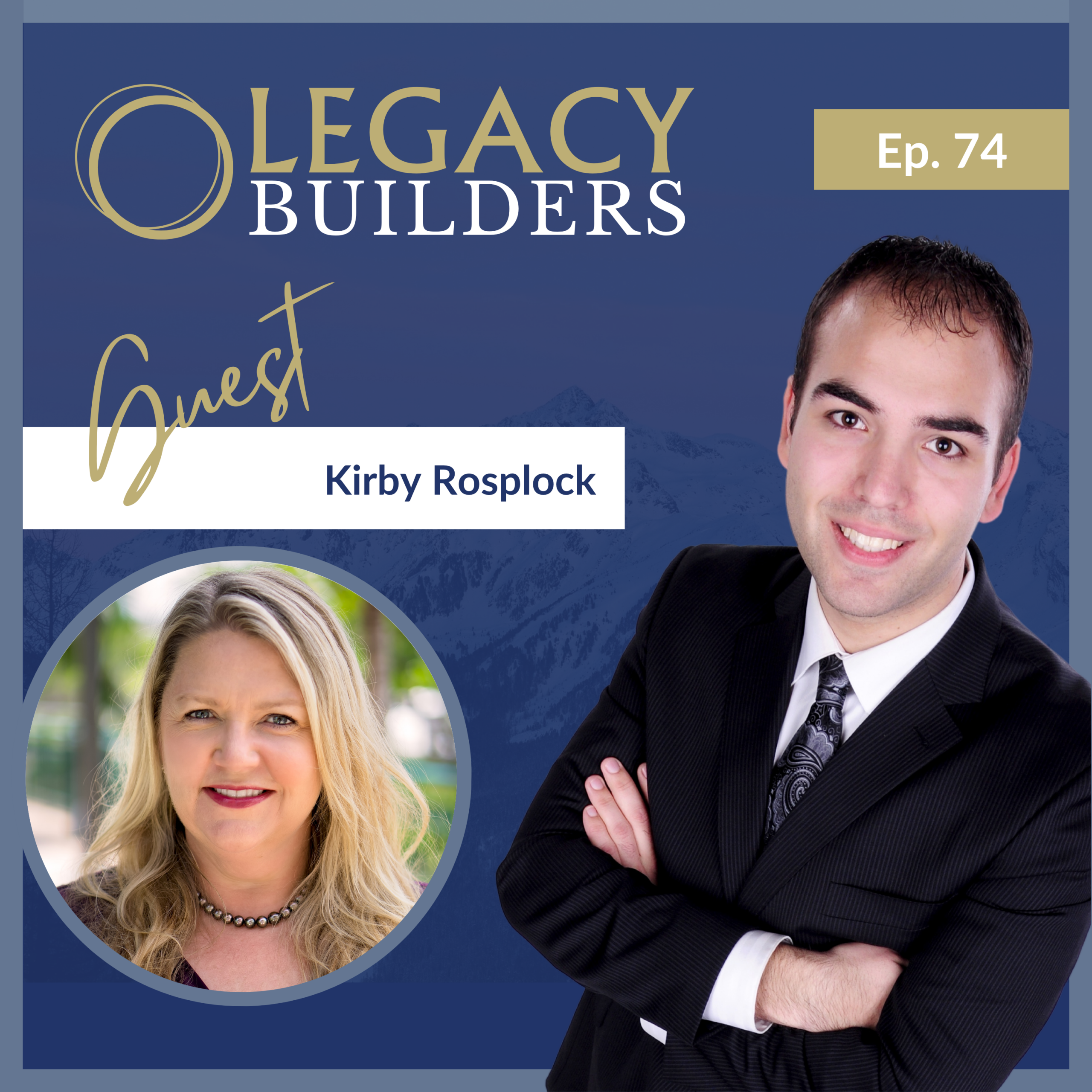
In this episode, we’re joined by Kirby Rosplock, PhD, Chief Executive Officer and Founder of Tamarind Learning. With more than 25 years of experience across family wealth, family business, and family office education, Kirby brings the perspective of an advisor, researcher, author, educator, and family member. Our conversation explores the often unspoken work of succession, including what happens when a founder has long been the final yes-or-no, how families prepare for decisions to be shared differently, and why the next generation needs a genuine invitation before responsibility begins to change hands.
Kirby brings forward the human side of succession, reminding us that readiness is shaped not only by experience, but by trust, opportunity, and the space to grow beyond a founder’s shadow. Her perspective leaves us with a deeper understanding of why future leaders need more than a title before they are ready to carry responsibility.
About Kirby Rosplock
Kirby Rosplock, PhD, is the founder of Tamarind Partners, Inc. and Chief Executive Officer and co-founder of Tamarind Learning, an online education platform for families, beneficiaries, and their advisors. With more than 25 years of experience across finance, family wealth, family business, and family offices, Kirby is recognized as an advisor, educator, researcher, author, and speaker. Her perspective is also personal: born into a complex enterprising family, she understands firsthand the responsibilities of being a beneficial owner, inheritor, fiduciary, board member, and operator.
Kirby is the author of *The Complete Family Office Handbook* and *The Complete Direct Investing Handbook*, as well as numerous articles and research studies. Her work has received recognition from Family Wealth Report, the Family Wealth Alliance, and the Family Firm Institute. She holds degrees from Middlebury College, Marquette University, and Saybrook University, and continues to contribute to family office and family enterprise education through several faculty, board, and advisory roles.
Contact Cory Gagnon | Beacon Family Office at CI Assante Wealth Management Ltd.
- Website: BeaconFamilyOffice.com
- LinkedIn: Cory Gagnon
- LinkedIn: Beacon Family Office
- Email: beaconfamilyoffice@assante.com
Contact Kirby Rosplock | Tamarind Learning
- Website: TamarindLearning.com | TamarindPartners.com
- LinkedIn: Kirby Rosplock
- Email: Kirby@TamarindPartners.com
- Phone: 561-427-1330
We’re bringing together leading experts to tackle some of the most pressing challenges facing family businesses today from succession planning and governance structures to preparing the next generation for leadership roles. You’ll walk away with actionable strategies and fresh perspectives on building resilient family enterprises.
Haven’t caught one of our webcasts yet? No problem. All previous sessions are archived and ready to stream whenever you’re ready to dive in. Simply head over to legacybuilderswebcast.com to register for our upcoming session or explore our growing library of past conversations.
Welcome to Legacy Builders, strategies for building successful family enterprises. Brought to you by Beacon Family Office at CI Assante Wealth Management Limited. I’m your host, Cory Gagnon, Senior Wealth Advisor. And on this show, we explore global ideas, concepts, and models that help family enterprises better navigate the complexities of family wealth.
Today, we welcome Kirby Rosplock, PhD, Chief Executive Officer and Founder of Tamarind Learning. With more than 25 years of experience across finance, family wealth, family business, and family office education, Kirby brings the perspective of an advisor, researcher, author, educator, and family member. She is also the founder of Tamarind Partners, the author of The Complete Family Office Handbook and The Complete Direct Investing Handbook, and a recognized voice in family office education, governance, and wealth stewardship.
My goal is to be the most curious person in today’s conversation with Kirby, as we explore the often unspoken work of succession. We’ll talk about what happens when a founder has spent years being the final yes-or-no, and how families begin preparing for decisions to be shared differently. This brings us into questions of vision, readiness, control, and the importance of creating a real invitation for the next generation before the moment of transition arrives.
Now, let’s dive in!
Cory: Welcome, Kirby. We’re excited to have you here today to share your wealth of knowledge and experiences with us. Let’s dive in, shall we?
Kirby: I love it. Let’s do it.
Cory: Kirby, imagine you’re delivering a commencement speech to the graduating class of 2026, and you have the chance to inspire them with your story. How would you begin your speech to convey the incredible lessons and expertise you’ve gained along your career?
Kirby: Well, I would try to convey the importance of curiosity and patience, and that’s sort of an interesting tension, because one of the things I think I’ve learned in life is that what you think you’re born to do, or what somebody tells you you’re going to be great at may not be what inspires you.
And it’s really important in life to recognize that we are the master of a lot of what happens to us, and being curious, being inquisitive, asking questions, and also never cutting yourself short. The world will tell you you can’t do this. Maybe you have parents or grandparents that can’t tell you you’re not good enough, or I don’t expect you to do very much. But it’s really what you think you’re capable of. And it’s that curiosity, patience to know that it takes time, work, and energy, and only good things come with persistence.
And so I think in my life, the diversity of experiences from one of my earliest days, I was a short order breakfast cook, thank you very much, to another very influential part of my life where I worked in a lobster pound, and I don’t want to tell you how many Maine lobsters I killed that summer, but I could eye a lobster and tell you if it was one and a half pounds or one pound, or a male or a female. So actually, some of those earliest experiences build the muscle of perseverance, grit, and curiosity.
And so, fast forward to too many master’s degrees later, I look back and I think, wow, I’m so glad that I never just sold myself short and said, I guess I’ll just do this because that’s what’s expected.
So those would be some of the things I would say in a commencement speech, to motivate people to find their greatness, and that’s really what our job is, to be the best that we can, and to contribute, and to find meaning with the work that we love.
Cory: Kirby, I love the stories of jobs that you’ve done. And just looking at the things that I’ve watched you and your team do over the last few years, you don’t sit still. So I don’t imagine those jobs lasted very long. And getting to be a little bit more entrepreneurial allows you to make those shifts without having to completely change careers.
Kirby: Well, at least in those early years, a summer was a great amount of time to put your toe literally in the water and recognize, working on a dude ranch, changing laundry and bed sheets, mopping floors and setting tables. I mean, the diversity of work, I think, really helped me get to see the other side of entrepreneurship, working for entrepreneurs, but also recognize that I wasn’t going to be happy with a job that was always doing the same thing over and over again, especially sort of no-thinking kind of work. I knew I needed to be inspired and innovative and creative, and I think that’s what’s led me to write books, to feel very comfortable speaking on stage, to just working with families as well, because I can relate on all of those different levels. And that to me brings so much meaning and so much fulfillment, and that’s kind of why I love what I do.
Cory: Right. And working with those entrepreneurs, and you used the word persistence. I think of entrepreneurship, and I think of that persistence that people embody as they go through and create something themselves. And I’m wondering, as you’ve worked with founders and very successful families financially, what is it that that persistence does, and how does that show up in different ways as a strength, and maybe the other side of that sword as well?
Kirby: Well, I’m glad you acknowledge that it’s a strength and can turn into, like maybe not so much of a strength. I won’t say weakness, but it creates vulnerabilities. And, I mean, I recognize it in myself. Like when someone says no, I’m going to keep saying yes. I can get to yes. I’m going to find the yes. And so with some of the founders that I work with, it helps them very directionally achieve things. That type of, I’m not going to let down until it’s achieved. And so you see it translate into their work ethic. You see it translate into their motivation, their drive, their expectation for success, the highest bar of persistence around we don’t settle. Average is not okay. So those are all admirable attributes. Those are all wonderful things.
At the same time, when you have a patriarch or a matriarch who’s like that, if you’re their child or their grandchild, it can feel like I’m never good enough, like I can’t work hard enough. I will never actually have the success and the achievement as so and so. So then we get into that academic discussion of founder syndrome and the shadow that’s cast from these larger-than-life characters.
And so sometimes the persistence and the drive can demotivate subsequent generations who feel like, boy, this I was born into, the A-plus-plus club, and I feel like a C-minus right now. And that can be very difficult. And it’s also hard because a lot of times they never see the vulnerabilities of that driver, that super successful entrepreneur, founder, whatever that archetype is.
And so it actually makes sometimes everyone else around them feel more vulnerable because they’re like, I have to have a Teflon shield. I have to look like I got all my stuff together. I have to appear like I’m tracked to be like so and so. And oftentimes, we all know. We come out differently, and then we’re cultured and nurtured to become who we are.
And so, again, I think the drive and success of entrepreneurs is not always something that translates down to that next generation.
Cory: Yes. Are we thinking of the systems that are designed around somebody who’s hardwired to find solutions no matter what? What is it that needs to happen? And we had a conversation about this ahead of time around that governance and those systems that these founders have put in place and the teams around them. And now we’re seeing the shift of how do we adjust?
Kirby: It’s a great question, Cory. I mean, founders oftentimes are the decision-making structure. They are the ultimate yes or no. And that’s interesting because when we think about the 50 shades of gray of how a decision could get made, or should we do this, should we not do this, it’s very different when one or just say a couple makes decisions for the greater good. And then when that founder is not there anymore, or that generation is no longer in control and making decisions anymore, and it shifts to a more dispersed decision-making governance framework where cousins or siblings have to weigh in, or different stakeholders. There’s usually not a road map to follow, and that’s where things start to feel unclear, uncomfortable. Well, so and so just made this decision like that, and we knew we’d just go ask him or her, and they would tell us yes, no, or this is what you need to do.
Now you put it in the stakeholder hands of, say, three or five controlling parties, and you have different personality styles. Maybe some are like the founder. Maybe some are more introverted. Maybe some are more combative. Some are peacemakers. So we have all of this social-emotional dynamic merging with newfound leadership and not clear guidance of how we get to a decision? And to peel it back even further, what is the type of decision that we’re actually facing?
And this is where, again, I think from founder to second and third gen, we have a lot of leakage of not having built the skills, not having the knowledge that we’re actually not actually deciding on an issue today. We’re brainstorming. We should be labeling our conversation as brainstorming, and make everyone’s voice heard, and know that we’re not getting to a vote. So it doesn’t matter if we have non-decision-makers at the table. We want to make this feel inclusive. So if families know where they are in the decision-making process, who needs to be around the table, and then how to achieve effective decisions, it’s a game-changer. But founders rarely teach these fundamental decision-making skills.
Cory: Do you think that the founder has those skills?
Kirby: Many of them do, because many of them, well, at least several I’ve worked with have sat on different boards, and in different other capacities where they’ve had to work together and respect different voices. So, yes, there are founders that don’t have boards or don’t have board experience or committee experience. I would say that’s the minority when you’re dealing with ultra-high-net-worth individuals and very successful entrepreneurs. It’s different with their adult children. Some may have sat on a committee. Some may have had some governance exposure.
But, again, it starts to change a lot when it’s your family that’s sitting around the board table. They might have been on that x y z company, and they saw independent board members come together, and they weighed in as another independent board member or an advisory board. And everyone was very professional, and everything was good. But, again, that is not a replica experience of many family enterprises and family office owners.
Cory: And, Kirby, thinking of the the people that, and you mentioned the family office, we have those people who are professionals maybe working in the family office and thinking about the founder and those people that the founder put in place around them, how, without saying that we need to throw the whole thing out with, you know, the baby out with the bathwater, how do we adapt the professionals to accommodate to the new individuals that they’re serving?
Kirby: So I want to give many founders a shout out who actually pick their leadership teams and their management teams with their family in mind. And what do I mean by that? They already know that they’re not the mentor, meaning the founder’s not the mentor, not going to be the one to inculcate guidance and cuddle them along, or groom them along. And so they might actually pick management and leadership that has skills that aren’t like themselves if that’s not their nature.
On the flip side, I’ve been in situations where founders have very close leadership teams that follow their guidance to and they will not diverge. And oftentimes, it’s because they fear the founder coming down hard on them and saying, hey, this is what I told you to do. This is not what you’re doing. This is a problem.
So those founders who align management and leadership very closely to follow a very strict mandate and don’t say want to have transparency to the rising gen, don’t want them to fully know everything that’s happening, or not giving them enough guidance on terms of what’s to come, tend to have the bigger challenges when the founder’s no longer there. Because then they’re saying, who how do I build allegiance? How do I build an on-ramp for family owners, and will they want me to stay? And so this is what’s interesting in those two polar situations.
I sometimes talk about the role of the family office head who’s non-family, or the role of the family enterprise who’s non-head, has to think also about how do they inspire that founder to understand the role that they want to work themselves out of, and what the roles they want, either family or non-family, to work into and have the intention, not just in their estate plan, but in their lifetime, to actualize some of those building blocks.
And so those are really powerful types of leaders who can motivate, who can inspire, and who can also help bridge some of these difficult situations where family owners don’t feel like they have an on-ramp, don’t know where they fit, don’t feel like they’ve been trained or have the capacity yet. And so this is really where that non-family or that key leadership role can start to shape and say, hey, in the next phase of this family and this family enterprise or family office, we’re going to actually have to operate differently than the founder level. And that’s okay. And we don’t necessarily want the founder just to not be here anymore. It would be much more impactful if we’re brainstorming and we’re actually thinking about this together.
So there’s alignment, and there’s a nice baton pass over time. And it’s not like one month or six weeks. Succession is years, and this is another founder failing; oftentimes they think I’m just going to retire next year, so it’s good. We have plenty of time. And I’m like, no. Actually, we don’t have plenty of time. And you might not be retiring in a year. It might be much longer than you think.
Cory: Kirby, when you think of that vision of what it will look like in five to ten years, where have you seen the most success from where that vision is derived from, and who owns that vision?
Kirby: That’s an interesting question. So vision is sort of like a photograph. It’s like a snapshot in time, and it’s where people are in the moment that they’re shaping, and they’re sort of seeing that vision. I think vision is a lot like a mission. You actually need to revisit it frequently and make sure that it’s still relevant. And the vision of a founder when they’re building a business, building a family office, whatever that looks like, is usually not the vision of those who are the recipients or the future owners or the future beneficiaries of what that might be. So the vision process actually has to continually be realigned, and you have to really look at who the stakeholders are, because what the founder built in his or her vision actually may not resonate with those it’s supposed to impact.
I’m a big believer that we don’t all look the same in our baby pictures as we do when we’re 20, 30, or 80. So we have to think about visioning and missions and all that, almost like we need to take more snapshots and make sure we’re bringing them current, and aligning them to what the goals and objectives are, what are we trying to achieve, how have things shifted, what’s our macro environment doing to our micro environment of our family, our enterprise. And those things are super relevant because very often we focus on the tactical strategic plan and those working operational parts, but we don’t focus on the strategic visioning mission, all those things that really drive the tactical.
And so I think it’s it’s an interesting discussion about bridging visioning processes, because the vision of the rising gen or future family members, even the process of how to get there, might look completely different than how a founder sits down with a pad of paper and jot some stuff down and says, this is kind of what I’m hoping to achieve. The rising gen might be like, we’re using Claude. We’re using ChatGPT, Grok. We’re using all this AI. We’re going to use that first. We’re going to use a funnel, then we’re going to come back. I think we even have to look to the process that it could be so different.
Cory: I love that. That’s exactly what I was thinking, is how diverse can the way in which people derive vision be? And giving our listeners something to say, you know what? There isn’t one way. And look at all these amazing tools that have come out in the last four years that we can use today to help us get to some level of brainstorming faster.
Kirby: I mean, it’s pretty awesome, the power. And I’ll give you an example of a client that is trying to explain to many of the stakeholders in their family office their current state of how they run, say, like a distribution request through the office, how it hits the fiduciary or the trustee, how that decision gets made, you know, a to b to c to d to e to f. And then they’re contemplating a shift in their fiduciary structure in the future. So thanks to things like AI, we’re thinking about how to project a future state using this generic situation, but then helping the family sort of see what this same distribution request would look like if we operated in a private trust company structure. How would it work? How divergent would it be from today? Would it still have the intimacy and the involvement of certain people in the family or family office? What does it mean to get away from having independent family trustees to committee structures? Does that become impersonal and informal, or does it actually create more opportunities for more family to be involved?
So this is also why I love things like AI, because this is a great example of the family needs to vision what the future state could feel like, and of course, we know it’s not exactly right. But what it does is it socializes them, familiarizes them, and it’s going to help them back to the decision-making process and know how they think they’ll feel about that.
So those types of opportunities, and that’s a great example of we’re not talking just about a written vision. We’re actually projecting what this could feel like in the future to help them to make the decision.
Cory: Absolutely. And I even think of different learning styles, and what is it that we can do to bring people to that same level of understanding, or get to comfort and confidence. And a thing like notebook LM, can you have it create a video or a podcast for me, or some sort of mind map, and such great opportunities for us to look at the recipient of that knowledge and say, how can we learn together in our own way?
Kirby: You’re speaking my language.
Cory: You used the word control earlier in our conversation. I want to explore that a little bit, and where that fits in with our conversation of succession or continuity, and how we can see control from a place of giving and receiving. And what have you seen? We’ve talked a lot about founder succession. What have you seen around that feeling of loss of control? How can we support somebody through that, as well as understand that gradual shift versus, all right, I’m retiring next year and you get to make all the decisions, here’s a lot of extra weight on your shoulders?
Kirby: Well, I don’t think anyone wants that scenario. So we’ll try to avoid that one. But it does happen. And there are real reasons why entrepreneurs and founders have a deep need for control, because their business, their operating companies, their family office, sometimes that’s their baby. It’s their figurative baby. and it’s super scary to give up control. I’m thinking less about family, but I’m also thinking about where a private equity company or venture capitalist wants to come in. They want to drive a different sort of outcome, or typically an exit strategy, you’ve got to grow by two x, five x, whatever in three to five years, and then we want to harvest this. So we want you to roll it up. We want you to sell it. And this is such a difficult thing, and I can relate as an entrepreneur about the fear of losing control.
I think with succession, it’s less about fear of losing control. It’s often more about the right intentions of who’s going to be making decisions aligned with the spirit of, like, what I built, why I built it, where I wanted this to go. And so the control question is more about, is the next generation or the next leaders of this company ready to assume the stress? The “keep me awake at night” issues that make my heart pitter-patter, to understand how much was sacrificed. I mean, founders and entrepreneurs sacrifice their loved ones, their spouses, their children, their vacation time. There’s a lot that is not discussed about the founder reality. And the founder reality is all-consuming. Go work a nine-to-five job if you don’t want to worry about if the lights go on tomorrow, or something horrific happens and there’s a lawsuit, or something that happens against your firm.
So I think the continuity and the control piece is more about, will the next generation of leaders, managers, owners understand the sacrifice to get here, but also the sacrifice and the liability that they may shoulder, that they might have to carry on, that they may have to make really tough decisions. And I think that’s oftentimes what, you know, everyone’s like, I’m an owner. I get some shares from whatever. But there’s a lot of difficult conversations, many difficult decisions, and it’s not always easy-breezy, like it’s sunshine and roses and rainbows in the boardroom.
So I think that’s also a big piece of the control baton pass, is really being equipped to know how to manage discourse, whether it’s family, board, employee. I mean, you name it. There’s a lot of that that has to be dealt with.
Cory: And, Kirby, if we’re thinking about the next generation coming in and learning how to make decisions, what is it that they can demonstrate to say, I understand the sacrifice that’s been made, and I will honor that in my decisions? And it is okay. We’re at this place. We’re doing this. We will take care of your baby as we go through and make these important decisions going forward.
Kirby: Well, I mean, let’s be honest. A best practice in this succession process is not one day that the founder just vacated the office and never shows up again. In fact, I think the most successful successions I’ve witnessed are those who’ve been really thoughtful and are very clear. They’ve made the invitation, so this is a big mistake founders make. They fail to actually say, I would really like for you to think about the road map and the on-ramp to lead or own this company one day. And then they make an assumption that everybody’s waiting in line or has an interest, but they actually don’t make the official invitation.
And I do think, it’s important in families that there’s a recognition that not everybody leads. Maybe there’s only one CEO. Maybe there’s a COO or a president, or maybe you’re a vice chair of the board or in other capacities of leadership, but there has to be a recognition of who you want to do what, how you’re communicating it, and then also how you’re preparing an on-ramp.
People, like I said, don’t just all of a sudden start making decisions. They learn. They follow. They are coached and mentored, and oftentimes, they shadow. So the irony is living in the founder’s shadow, but actually shadowing the leadership is a really valuable part of this. And I’ve also seen founders who say, don’t shadow me because there’s too many ties. There’s too much stuff. So they’ll shadow a board member. They’ll shadow a non-family exec or a trustee.
And so the reality is there’s a lot to be learned before having all the high-stakes decision-making, being party to, being an observer on a board, sitting on different committees. This is why doing is so important, participating, before you have to be the one saying yes or no, or you’re the one who has the tie vote that’s going to break the decision.
So those would be some best practices, I think, to get someone, have a really legitimate on-ramp. And, certainly, we always talk about going somewhere else. Get out of your family business. Demonstrate that you’ve built. You’ve taken some knocks. You’ve had some non-family bosses. You’ve worked your way up in other organizations so that you can demonstrate that you’ve got the competency, the capability, and the confidence, to now come in and work in your own family’s operating company.
Cory: Right. Kirby, what would consist of a good invitation?
Kirby: I’ve seen families and founders literally announce, I would like to retire in the next five years. And when I think about what’s coming in our family, these are the types of qualities, experiences, and skills that the next generation family member leader should aspire to. If they don’t have them today, that’s okay. But they should be prepared to build capacity around. And I would love to know if there are family members who are excited by what we do as a family company, what we have as a family office, and have an interest again, let me back up a little bit. Many families have their employment policies. Many families have the rules of the road. You’ve got to do x y z before you can be considered. So assuming you have that kind of policy in place, great. If you don’t have that policy in place, that’s okay too. This whole invitation process is kind of making the announcement that, like, this is what my intention is for me. And what I’d really like to have conversations with you as family members is where do you see yourself in five years? Do you see yourself in a servant leadership role like myself operating an x y z company or family office, or do you see yourself doing something wildly different? Let’s talk about that.
And the invitation is first a discovery conversation of what drives them, what motivates them. Do they have aligned values? Do they demonstrate the decision-making capacity, the maturity? These are all early stages of the invitation. And then if we’re starting to see the two sides connect and there’s alignment, then there’s motivating, inspiring sorts of comments like, I’m really excited by what you see as what drives you, what makes you most passionate. And it sounds like once you finish this job at this investment bank, or maybe once you have decided to leave x y z role, maybe there’s a space here where we can talk about what a leadership track would look like for you.
So I think it’s exploratory. It feels inviting. It feels safe, and it allows them a place to have questions, but also to say, back to visioning, I can see myself some in this future picture. I feel like this might be a good natural role that I can play.
I’ll give you an example of a young woman. We’ll call her Rachel. And Rachel is a professional musician. She had some things happen in her family which required her to go back and get a lot more knowledge around finance, tax, investing, estate planning and trust, all the good stuff. The backbone of our wealth management industry. And Rachel never really thought about her operating company and its board or anything like that, because she was a professional musician. She was like, “I’m good.” But she needed to do this because she had some personal stuff happening. And so after she demonstrated capacity, learning all this stuff, being able to apply it, members of the management and the leadership of her family business were like, wow, Rachel is incredibly shrewd. She’s very smart. She’s super articulate, and, no, she doesn’t have a finance degree and investment background, but what she has is actually more important. She knows all these different branches of the family super well. She’s super respected. People stop and listen when she has something to say, and she’s a super strong communicator. And we don’t need her to have a finance background. We don’t need her to have an investment degree. And what they recognize is once she had these other skills and competencies built into her kind of repertoire, she became the strongest board candidate of her whole family, and she was an outlier. Nobody was looking at Rachel as the next board member. Why would they? She was this musician, where it’s easy to discount.
I tell this story because sometimes the artistic one, the creative one, is sort of passed over, because they don’t really demonstrate that moxie and charisma and the boardroom and whatever. But I think this should inspire folks to say that sometimes you you actually can be tracked to do things that you didn’t even think were in your wheelhouse, back to sort of what would I say at a graduation speech, is to be curious and to be fearless sometimes, and to try things that you are really scared of and don’t think you’ll ever master, because you you’ll never know unless you try.
Cory: And Kirby, beyond the education and development that you mentioned, I wonder what it is when Rachel gets to that board seat or is saying, I think I would accept that. What is it around that decision-making that an individual and a collective need to consider and maybe up their skills in?
Kirby: So one thing that sometimes does not translate, we think decision is what the decision is in the middle of the table. Governance is in everything if we really think about it. It’s not just in our constitution. It’s in everything. It’s in those trust documents. It’s in that operating agreement. It’s in the rules of how the board operates, in the decorum of a board, committee structures, all of it. So one of the most important things to understand is what is the governance of all these other tentacles feeding into the decision on your table today? Do you have the right people in that room to make the decision?
Another big one, the legal folks listening will appreciate, is do you need to recuse yourself? Do you have a conflict of interest? Are you somehow going to benefit one way or another based on how a decision is made? That’s when you know I should not be if I’m going to win because we make a-decision versus b-decision, and of course, I’m going to make the a-decision, then you need to recuse yourself. You need to tell that governing body, I need to step away from this decision because I’m too close to it, or I’m influenced by it, or I’m going to benefit from. So those are really important things to recognize when you start to get to that board table.
And I also really want folks to understand that when you’re coming to a decision, you’re party to a decision, it’s not always great to be embedded with your vote before you walk in the door. And why do I bring this up? A lot of times, there’s an important process, a Socratic method to really weigh both sides of an argument and to advocate very strongly. Think about debate. How many times, if you’ve ever been in a debate class, they say, well, you should be able to argue both sides of the issue. It’s the same in a decision. The board and all the parties on the board should be ready to argue and have a strong defensible position for the yes or the no.
Cory: How about going back to your word curiosity? Yes. We’re curious. What else is available?
Kirby: And sometimes, it may not be binary. Maybe it’s like we need to think and have a deeper process to explore more deeply if there needs to be more options than just yes or no.
Cory: Yes. We might not have brainstormed. We might not have come up with everything that’s available.
Kirby: Absolutely.
Cory: Kirby, as we near the end of our conversation today, there are a few questions I ask each guest before we wrap up. Are you ready for the tough ones?
Kirby: I’m ready for the tough ones. Bring them on.
Cory: Alright. What is one key strategy that you believe is most essential for building a successful family enterprise?
Kirby: Well, there are many important strategies, but one that I believe at my heart of hearts is the importance of building capacity, competence, and also a deep respect for disagreement. And I bring this up because so many families only hear yes or only hear this is the way we do it, particularly from founders. And they don’t know how to disagree in a productive way, and reason and challenge one another, and challenge in the best kind of way, not to be like, no, you’re wrong. Rather, is this the right path for us? Can we think a lot more consequentially of, like, where this one decision may start setting us in motion? And so intentionality doesn’t necessarily come in the form of agreeing all the time with, yeah, that’s great.
So that is a that’s an interesting strategy to continuity, which is like building in the capacity to disagree, to bring diverse opinions to the table, and to really honor the fact that when we are really intentional about where we want to get to, we don’t all disagree because it’s a popular thing, or it’s what so and so said, therefore, we should do it. So that’s a big part, I think, of family success as well, is being able to productively disagree.
Cory: I really like that, building the capacity. Because you can say, all right, let’s learn to disagree. We actually have to have the space to be able to do that. We have to be able to give something away to say, I don’t need to worry about that. We’re doing this. And to be able to focus there, going back to your strategic versus tactical, when it’s so often, what fire do we need to put out? Or how do we achieve the thing of the day, not build capacity to be able to disagree, which is so, so important.
Kirby: I mean, it’s different. I’m not going to lie because people just think, well, I can disagree at any time. And I’m like, yes, you can. But how does it land on your point in a space where we don’t have room for no? Like, I don’t really care that you don’t like it. We’re doing it this way. And that I see a lot. I see that very frequently in small, closely held businesses and families who are like, we don’t have capacity, time, energy, or space to have anyone who’s not all on the same page. And I’m always like, tell me how that’s going to work out in like a decade or so. Because when you repeatedly discount and you repeatedly shut down voices, what ends up happening is that they’re the ones that decide we’re not doing this anymore, or they litigate, or they’ll throw poison pills into things.
So this is kind of where it’s so important to honor and respect, and really hear differences of opinion, and create the space that it’s okay, that we might have to go through this two or three times or more, or take a pause and come back before you just railroad and push decisions.
Cory: Absolutely. I love that you defined what healthy disagreement looks like, because it’s very important, and unfortunately litigation is so common these days.
Kirby: It’s too common, yes.
Cory: Kirby, what is the most common challenge that you see family enterprises encountering when it comes to wealth transition and generational continuity?
Kirby: Well, this is another big one for me, but readiness. I mean, I think nobody feels prepared or ready. And I’ll put the founder in that camp, and I’ll put the rising gen and the adulting family members, is that they don’t define what readiness looks like. It’s almost like it’s a feeling. I think I’m ready. Well, ready for what? And so, defining what they want future family members be it stakeholders, be it owners, be it beneficiaries, married ends, they don’t really define readiness to participate, readiness to handle crisis, readiness to handle disappointment. Not everyone’s going to get the same inheritance or same ownership state.
And so I really think that one of the biggest challenges is that families, one, don’t define it, two, don’t prepare for it, and three, don’t keep enough space and time. So they don’t recognize that it takes time for people to get skills, to get capacity, to build confidence, and it takes time for someone to let go and let somebody start to practice and demonstrate they can do this. So I think I can’t harp enough about readiness. It’s why I’m so passionate around the learning side.
Cory: And, Kirby, if I think of ready, willing, and able, and we’ve talked about that competence and ability, we’ve talked about that invitation and willingness, what have you seen when thinking of defining readiness as a family? What have you seen work?
Kirby: Well, first, I think it’s having very clear learning objectives and skill and mastery areas of what it is you need to know, be able to do in these different domains. So, it’s very hard to be, I’ll say, a trust beneficiary, for example, and not know who your trustee is or what the role of the trustee is to not know what a trust document says, and why it’s in trust? Why didn’t you just set up an account and give me the money?
I mean, again, I don’t want to harp on the wealth management industry, but we focus on let’s teach you about stocks and bonds. Let’s tell you about financial planning and budgeting. And it’s like, at the end of the day, the money is going to move 90% of the time in a trust, but we don’t prepare readiness for beneficiaries to their role, their responsibilities, to know the duties and responsibilities of their trustee, the decorum of how this money arrived here, and the spirit of that gift. And so this is where I’m like, okay, nobody gives you this script. Nobody gives you this road map. This is education. You have to go seek and find and be intentional, and then you have to practice. Like, how do I come prepared for that first meeting with my trustee? How do I have conversations with my wealth adviser about my investment statement for my trust? How do I understand how the fees get paid for my trustee or for that investment adviser? These are the kinds of things that readiness really requires preparation, intention, skill-building, and knowledge acquisition.
Cory: Amazing. And, Kirby, in your experience, what are the top three key qualities that successful family enterprise leaders possess?
Kirby: Well, I think there is a sense of nurture, a sense of intention, and the capacity to want to create on-ramps. So those to me are some of the most important elements of really nurturing the family system to be the great individuals that they can be in any capacity. And then these are the things that pull family forward. And I really see there’s so many families that struggle because maybe they don’t feel the love. They just feel the reality, the crush of, like, this is my lot in life. This is what I need to rise up and deal with. And that’s why I bring in that nurture element, because oftentimes, family leaders are seen as these epic, not always approachable. And so I think that inspiration also has to come from the family leaders and a sense of empowerment to help drive the path that they’re hoping these family members will rise and succeed. It doesn’t happen overnight. And it won’t happen by accident. It happens with nurture and intention.
Cory: I think that’s such an important part. I don’t know that I’ve heard that nurture. And my goodness, we’re in this together as a family. And how do we demonstrate that we love each other and those basic human needs that we all have. And why would we not share that and have that as a foundation?
Kirby: For sure.
Cory: Kirby, before we conclude our discussion, I’d like to highlight where our listeners can engage in more of the conversations you’re having, as well as resources that you think are important to share with our audience.
Kirby: So, tamarindlearning.com and tamarindlearning.ca if you’re in Canada. There’s a whole wealth of different types of education resources. I have a podcast called the Tamarind Learning Podcast that I hope, Cory, you’re going to come join me on very soon.
Cory: I will.
Kirby: And those are all accessible on Spotify, Amazon, YouTube, Apple. Also, you can go to our website, and you can decide where you want to listen to it from. A lot of them are video-based, and many of them are connected to a skill or connected to an activity. So that’s also kind of fun if that piques your curiosity and on a whole diversity of topics.
Tamarind Learning has a whole suite of education, and we just recently rolled out a family governance course. I know we talked a lot about that today. And so this is a great foundational course, particularly for families that are really trying to define it for the first time, really trying to understand the mechanics and the anatomy of a decision. So this is probably not for the super formalized family that has everything figured out. It might be relevant though because you can probably learn about how culture informs your decision-making process, where you are in terms of age and stage of your family, even how you define family. That’s an interesting one when we think about a decision being made. So those are fun and exciting things.
We also have our new family office rising gen leadership institute that’s available for families and family office executives, to really hear other stories. It’s a closed community because we actually have many family members telling their inside stories of transition. We, again, talked a lot about succession today, so that might also be of interest. We have a newsletter. If you want that, you can get that for free. So there’s lots of free stuff at Tamarind in addition to our coursework that’s really geared towards adult owners, beneficiaries, family office professionals.
Cory: Amazing. I subscribed to it all and can’t say enough about it. We’ll make sure that we have links in the show notes to make it easy for everyone to find those resources. And, Kirby, I wanted to make sure that we covered everything today. Is there anything that you’d like to share with our audience that we didn’t get a chance to touch on?
Kirby: I just need to share my gratitude. I think this was a super fun conversation. Lots of good insights. You’re a pro at the questions. So I don’t. I don’t really have anything more to add, but I want to just say how grateful I am to this time, because it was a treasure to be able to talk to you today.
Cory: Amazing. Well, thank you for taking your time. It’s amazing the amount that you give to the world, through your writing, through your books, through your association memberships. And I want to say thank you for spending the hour with us, and I found it valuable. Thank you so much for all the stories, and I know that our audience will very much appreciate your contribution.
Kirby: Thanks, Cory. Appreciate it.
As we wrap up this episode, we invite you to reflect on Kirby’s reminder that succession is a gradual process of preparing people, clarifying vision, and understanding how decision-making needs to evolve as a family moves from one generation to the next.
Whether you’re part of a family enterprise or walk alongside one, this conversation points to the value of creating room for honest conversations before transition becomes urgent. With clearer vision, readiness, and invitation, families can give the next generation a better path into responsibility.
Throughout our conversation, Kirby helped bring forward the human side of succession. She invited us to consider what it feels like to live in the shadow of a founder, how persistence can inspire and overwhelm, and why future leaders need more than a title before they are ready to carry responsibility. Her work reminds us that continuity is shaped over time, through exposure, practice, and the kind of honest conversations that help the next generation find a real place in the future of the family enterprise.
If you’d like to learn more about Kirby’s work, you’ll find more about Tamarind Learning in the show notes, along with ways to connect and explore her books, research, and resources.
Disclaimer:
This program was prepared by Cory Gagnon, who is a Senior Wealth Advisor with Beacon Family Office at CI Assante Wealth Management Ltd. This is not an official program of CI Assante Wealth Management Ltd, and the statements and opinions expressed during this podcast are not necessarily those of CI Assante Wealth Management Ltd. This show is intended for general information only and may not apply to all listeners or investors; please obtain professional financial advice or contact us at BeaconFamilyOffice@Assante.com or visit BeaconFamilyOffice.com to discuss your particular circumstances before acting on the information presented.
