
Rethinking Ownership: The Hidden Forces Shaping Family Wealth
LISTEN ON YOUR FAVOURITE PLATFORM
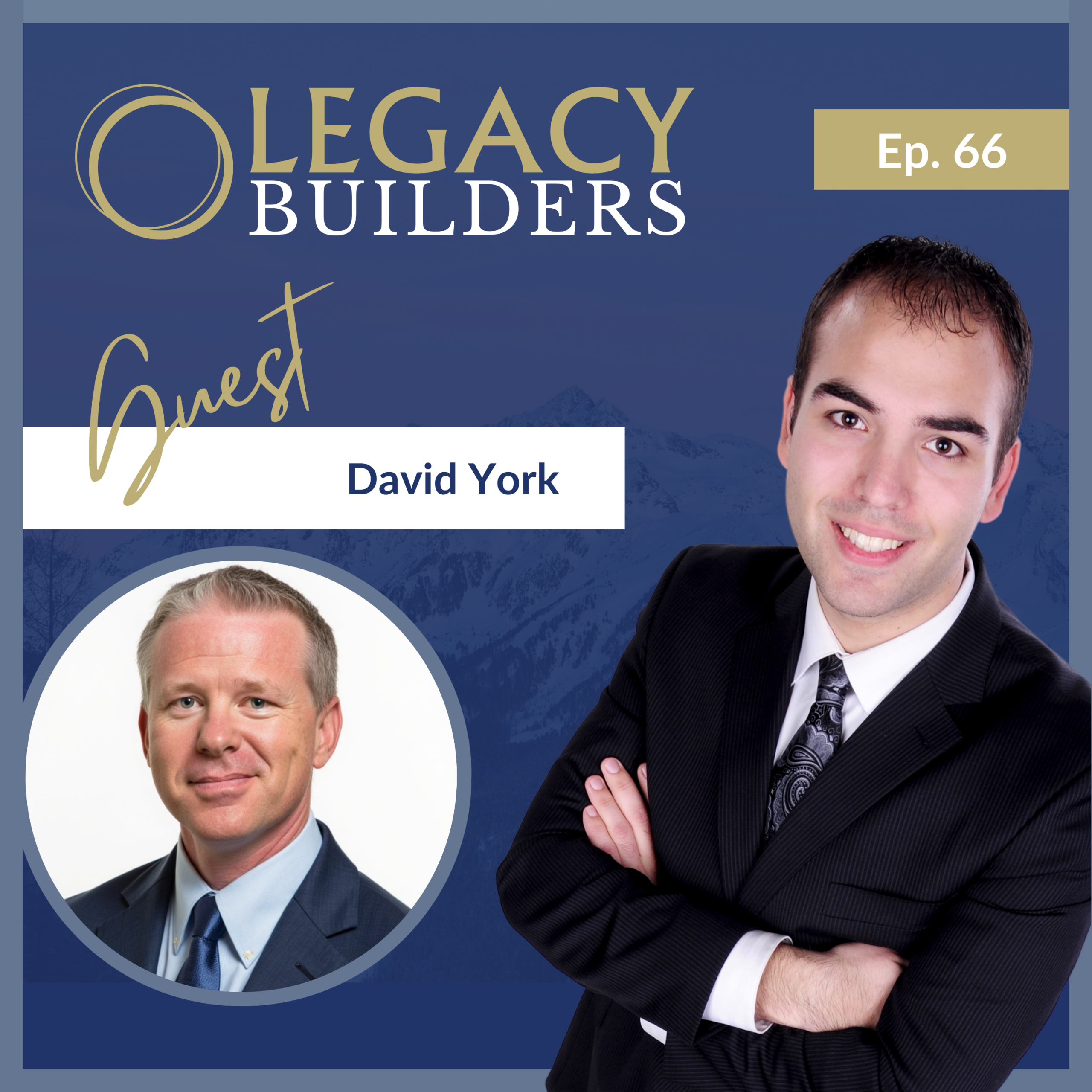
In this episode, we’re joined by David York, director at York Howell. David practices law in the areas of estate planning, tax, business planning, and non-profit entities. He is a fellow of the American College of Trust and Estate Counsel and a dean with the Purposeful Planning Institute. Chambers and Partners has recognized him in Estate Planning, a distinction awarded to approximately the top 2% of attorneys in the field. He is also the author of The Gift of Lift: Harnessing the Power of Stewardship to Elevate the World, Entrusted, and the children’s book Dudley’s Castle. Our conversation focuses on what it means to approach wealth, legacy, and family with deeper self-awareness and on how humility, curiosity, and stewardship can shape the way families prepare for responsibility, continuity, and long-term impact.
We talk about why humility matters in the way we learn, lead, and prepare the next generation, some of the fears that can quietly shape family decisions over time, and the shift from simply owning wealth to stewarding it with greater purpose. Together, we explore what may be happening beneath the surface before families ever make the big decisions and how greater self-awareness can help families lead, relate, and navigate complexity with more intention across generations.
About David York
David R. York is an attorney, Certified Public Accountant, and Managing Partner at York Howell. He practices in the areas of estate planning, tax, business planning, and nonprofit entities and is widely recognized for his work with ultra-high-net-worth families. He is a Fellow of the American College of Trust and Estate Counsel, a Dean with the Purposeful Planning Institute, and has been recognized by Chambers and Partners in estate planning.
David is also the author of The Gift of Lift, Dudley’s Castle and the co-author of Entrusted and Riveted. In addition to his legal work, he speaks and teaches on stewardship, purpose, and legacy and co-founded Corenology™, a platform designed to help people connect their values with planning. He serves on the Board of Directors of Healing Nations and lives in the Salt Lake City area with his wife, Mindy, and their five children.
Resources discussed in this episode:
- David’s Ted Talk
- Entrusted: Building a Legacy That Lasts
- The Gift of Lift: Harnessing the Power of Stewardship to Elevate the World
- Dudley’s Castle
- Think Again by Adam Grant
- Simon Sinek
- Charles Eckhart
- The Art of Spending Money by Morgan Housel
Contact Cory Gagnon | Beacon Family Office at CI Assante Wealth Management Ltd.
- Website: BeaconFamilyOffice.com
- LinkedIn: Cory Gagnon
- LinkedIn: Beacon Family Office
- Email: beaconfamilyoffice@assante.com
Contact David York | York Howell
- Website: davidyork.com | yorkhowell.com
- LinkedIn: David York
- Phone: (801) 527-1040
We’re bringing together leading experts to tackle some of the most pressing challenges facing family businesses today from succession planning and governance structures to preparing the next generation for leadership roles. You’ll walk away with actionable strategies and fresh perspectives on building resilient family enterprises.
Haven’t caught one of our webcasts yet? No problem. All previous sessions are archived and ready to stream whenever you’re ready to dive in. Simply head over to legacybuilderswebcast.com to register for our upcoming session or explore our growing library of past conversations.
Welcome to Legacy Builders, strategies for building successful family enterprises. Brought to you by Beacon Family Office at CI Assante Wealth Management Limited. I’m your host, Cory Gagnon, Senior Wealth Advisor. And on this show, we explore global ideas, concepts, and models that help family enterprises better navigate the complexities of family wealth.
Today, we welcome David York, Director at York Howell. David practices law in the areas of estate planning, tax, business planning, and non-profit entities. He is a Fellow of the American College of Trust and Estate Counsel and a Dean with the Purposeful Planning Institute. Chambers and Partners has recognized him in Estate Planning, a distinction awarded to approximately the top 2% of attorneys in the field. He is also the author of The Gift of Lift: Harnessing the Power of Stewardship to Elevate the World, Entrusted, and the children’s book Dudley’s Castle.
My goal is to be the most curious person in today’s conversation with David, as we explore what it means to approach wealth, legacy, and family with deeper self-awareness. We talk about why humility matters in the way we learn, lead, and prepare the next generation, some of the fears that can quietly shape family decisions over time, and the shift from simply owning wealth to stewarding it with greater purpose. It’s a conversation about what is happening beneath the surface before families ever make the big decisions.
Now, let’s dive in!
Cory: Welcome, David. We’re excited to have you here today to share your wealth of knowledge and expertise with us. Shall we dive in?
David: Absolutely. Looking forward to it.
Cory: David, imagine you’re delivering the commencement speech to the graduating class of 2026, and you have the chance to inspire them with your story. How would you begin your story to convey the incredible lessons and expertise you’ve gained along your career?
David: Well, I don’t know how inspiring my story is, but I will tell you this. I’ve been fortunate enough to be around and learn from a lot of great people, some really talented and accomplished people, and that’s not just financial; that’s in all areas or phases of life. And the thing I’ve learned is that the secret to impact, to making a difference, and to really living the most engaged life is to have clarity on why and a focus on who. And I think that purpose and people should drive everything that we do. I think so often we focus on what we need to do in life or how we need to go about doing it, and we don’t focus enough on the why and the who. And I always think that “why” and “who” should drive “what” and “how.”
And so the thing that I’ve found very uniform among the most impactful people is that they know who they are. They know what they value. They know what they believe. They have an elevator speech for their life. They can give you absolute clarity on that. And then they surround themselves with great people. And that’s true across fields, across interests, across business organizations. That’s the difference.
And especially if you look at graduates, they’re heading out into the world. They’re going on a journey. If you’re going to go on a journey, you need to know where you want to go, and then you need to know where you are. And I think so often we get so anxious to start going. We don’t actually think about those two questions. So that’s what I would say, be clear on your why, be clear on your who, and then the rest is just simply the mechanisms to effectuate those two things.
Cory: Amazing. David, I think of when somebody says I have a secret, I love that you started with the secret of impact. And as you’ve interacted with many people who the masses would consider successful, and I say that because it’s an outside perspective. We’re talking about an inside perspective here. And so when you get down to that understanding of who somebody is, knowing myself, where do you find that that journey begins, for somebody? They show up, and you can tell that they know themselves. But have you noticed the journey that they’ve been on to get there?
David: Yes. They have a couple of things in common. One of my favorite books is Think Again by Adam Grant. And in there, he talks about this concept of confident humility. And what he means by that is people who’ve spent enough time and effort to get an understanding of themselves, the world, to develop knowledge, wisdom, experience, character, and yet they approach life from a sense of humility, not pride. In fact, all of those things that they do, lead them to a curiosity, and lead them to humility. And we live in a world that is oftentimes about confidence and pride, or it’s about saying that we know everything. And, when we do that, pride is probably the biggest roadblock to self-awareness. And humility is a path towards understanding ourselves and understanding others.
But you need a level of confidence, one, to be humble, but two, to have this sufficient ability to learn and process. And so to be able to say, I think I understand this, but I’m going to hold it very loosely. I’m going to hold who I think I am loosely, and I’m going to compare it to how I act. I’m going to hold my opinions of others loosely. I’m going to hold loosely, things that I think are true. People that I’ve seen who’ve been the most successful, are those who carry both a level of confidence and a level of humility. And those don’t compete with each other. They complete each other. And so often, we think we have to be one or the other, but they’re not opposing forces. They’re complementary forces. It’s salt and sweet. I love salted caramel ice cream. Well, is it salty, or is it sweet? It’s both. And one enhances the other.
So that’s what I would say, is some of the most successful people I’ve ever seen, walk very humbly. And it’s a large part of what’s made them successful.
Cory: Absolutely. And you mentioned Adam Grant, and there’s so much that he’s written that is impactful. Thinking about, you used the word why, starting with why, and Simon Sinek does a great job at explaining that. David, when you think about the why and that purpose in people’s lives, I’m thinking more of the purpose of a collective, that relationship with my individual why, but how do we focus on the people around us? And what have you found really connects people well in such a world that we’ve become much more disconnected?
David: I agree. I think we’ve really gotten a focus on where we disagree, and where we’re not aligned, and we’ve created a lot of tribalism around that. And I’m a huge believer in unity and diversity. I think we tend to overesteem, whether it’s in a family, whether it’s in a business, or an organization. Anywhere you have two or more people, you have culture. And just take a family. There’s a lot of focus on conformity, and conformity in political beliefs, religious beliefs, skills and abilities, interests, those kinds of things. And so you have this notion of I conform, or I don’t conform. I am a huge believer in unity and diversity, in saying, okay, we’re all unique. That’s what makes us the same. But in that Venn diagram of the uniqueness of the family, where can we agree? And sometimes that means we need to go from 500 feet to 5,000 or to 50,000. But what are those shared core values that we can agree on, and how do we focus on those?
So it’s not a matter of how we vote politically, what we do on Sunday or Saturday or Friday. It’s about what we can agree upon as a family, at a core level, and how do we work around that? So I think that’s the key, to recognize that it’s not about being the same, but it is about sharing some fundamental things together.
Cory: Right. And, David, you’ve chosen a career where most people in the profession help protect people from each other. And what you’re saying is, let’s stop for a second and see how we’re the same and how we’re connected. How do you find those emotional pulls where we live in this world where we can find a way to create a sense of protection from one another? But that tends to be the default these days versus what we’re talking about. What do you feel could make that switch beyond what we’re talking about here?
David: I think a couple of things. Fear usually comes from worry. Worry is a perceived future where we see a threat, we see a risk, we see calamity, and it causes us, tends towards control into manipulation. By the same token, sometimes I see clients deal in regret. Fear is worry in the future. Regret is worry about the past. And I see clients deal with that all the time as well. They spend too much time at work. Their marriage failed. They didn’t do something in the past that they felt like they should have, and they’re writing checks today to pay for debts from yesterday.
The third is paralysis. I work with a lot of clients who know how to become wealthy. They don’t know how to be wealthy. And being wealthy is a different thing than becoming wealthy. That can lead to a lot of silence and avoidance, where we just don’t talk about something because we feel like we’re failing in the present.
So when we say fear, it’s oftentimes a little more nuanced. And so sometimes, what I want to try to do is at least understand that, so that we can address it. A lot of the clients I work with, they’re afraid of what would happen if their children receive a lot of inherited wealth. And they’re afraid of what might happen. Well, what are they afraid of? That their kids aren’t prepared to handle or manage the wealth. Well, then let’s work on helping them prepare and manage the wealth.
Sometimes it’s literally just about articulating and then addressing the concern. We might be afraid if we’re going to the football game that it’s going to be cold, so we grab a jacket. We get hand warmers. We prepare for that. And yet, sometimes when it comes to wealth and family enterprise and wealth transfer, we have these fears, but we don’t actually address them.
And so I think part of the issue is literally just understanding and articulating what is it that actually makes us afraid. Is it a legitimate fear? I mean, studies have shown 90% of what we worry about doesn’t actually happen. You’ve probably seen that where people go and journal all the things they’re worried about happening, and about 10 actually do. But those 10% do. Let’s at least understand what that is, and then let’s address it.
Cory: As you talk about that, I think a couple episodes ago, we had Charles Eckhart on and we talked about being uncomfortable and how oftentimes families of wealth don’t want that discomfort. And I just recently this week finished Morgan Housel’s newest book, The Art of Spending Money. He talks about how families say one thing but do something different. And so how are we conducting ourselves in the way that we want our children to behave? You mentioned the political beliefs, and so often people are, they don’t realize that their kids are picking up on, as they’re watching the news, and they wince, the kids see that. And so, as you think about people going through this period where they’ve, and I really like your comment about regret, they’ve said, I’m at this place now, and it’s time to pay for those debts that I accumulated along the way with all these assets that I’ve also accumulated. Where do you think that desire or willingness to actually say now is the time to clean this up? What do you see as the catalyst for people?
David: What I always tell clients is we have to diagnose before we prescribe. Most advisors, most professionals in the wealth transfer space, come from a prescriptive approach. You need a will. You need a trust. You need to implement a grant or an insurance trust. These are prescriptions, and we need the tools. But we need to diagnose and understand first. One of the things that we do with families is we just take a deep breath. And this is not exhaustive. Lots of families could use lots of help, and there are lots of different things we can do, but we first need to diagnose.
So one of the things that we do with our clients is actually have a lady in our office. Her full-time job is just to help people understand and articulate their individual and shared core values. Let’s get clarity of why. And then we’ve actually created diagnostics for worry, regret, and paralysis. Let’s actually quantify these things, just like a blood test. It’s a cultural blood test for a family. And where are we in terms of culture? Where are we in terms of roadblocks? And once we do that, our clients are like, that’s the issue that we’re facing.
Part of the problem is that, especially with couples, they may approach this two different ways. You may have one spouse. Let’s say that the husband often accumulates the wealth. He’s worried about the kids. He’s worried about how they’re going to handle the wealth, or he’s living in regret. I didn’t spend enough time around there. Wife might say, I don’t have any regrets. I was there for all the piano recitals, and I was there for all the soccer games. And I don’t have any worry. These are great kids, and they’re smart, and they’re grounded. But she’s in paralysis. I don’t know what to do today. I don’t know how to use resources for a teenager or a kid in their twenties, or a kid in their thirties. I don’t know how to talk to them about money, those kinds of things.
So the problem is if you have one spouse who’s operating in worry, another who’s operating in regret, you’ve got one pushing the brakes while the other one’s hitting the gas. But once we can articulate this and bring it to light, one, it becomes not so big, but two, it gives us an idea of how to approach it.
And so, again, I try to just help start with a diagnostic process. Let’s understand where we are. And self-awareness is a superpower, but it’s one of those that most of us are lacking. In fact, one common characteristic one way to know, about to know that someone is not self-aware is that they think they’re really self-aware. That’s one marker. In fact, people who are actually really self-aware are very comfortable in saying, well, this is what I think about myself, but I’m not sure. I’m always open to learning more. And this is not a new thing. I think it was Aristotle who said knowing yourself is the beginning of all wisdom. It’s a skill that people can learn, but it’s not intuitive.
I don’t know if you’ve seen this. They’ve done studies. People who think they can multitask can’t. And it’s a process, and that’s the difference between knowledge and wisdom. A lot of us have knowledge. Fewer of us have wisdom. We need to understand ourselves and why we act or react, at least at a high level, to be able to effectively address the human part of wealth transfer.
Cory: Absolutely. And, David, as you talked about impact and purpose, oftentimes we think of the charitable work and community side of those words. What do you see in those people who have that humility, who are humble, who are living with purpose and making an impact, possibly on a large scale, but sometimes on different measurements, what are some of those areas?
David: One of the things I’ve noticed among the people who are most impactful is that they’re much more integrated. The old model, I call it the Andrew Carnegie model. It’s the robber baron by day and the philanthropist by night. From eight to five, I’m a blood sucking capitalist. Andrew Carnegie is hiring the Pinkerton detectives to go and break up strikes so that he can continue really rough labor practices in the steel industry. And then he goes and builds hospitals, libraries, and schools. And what I find is that people are much more integrated today. They’re about philanthropy, but they’re about something broader than that. They’re about impact. And it’s not just about building and accumulating a whole bunch of wealth and then writing a big check. It’s about recognizing my business, my family, can be a source of positive impact.
When we hire people, and we provide wages, and we provide benefits, and we take care of families, and we provide goods and services, and pay taxes, and give back to our community, that’s a huge form of impact. And that certainly can be done on the philanthropic side as well. But the families that I’ve seen, again, they start with that clarity of why, and then it’s consistent whether it’s in how they act as a family enterprise, how they act as a business enterprise, or how they act as a social enterprise. Those are just different expressions from the same wellspring.
Cory: And David, going back to that Venn diagram, looking at the family, when you think of that integratedness and that purpose, how many different focuses can a family have? Have you seen where they said, you know what, as a collective, we have multiple focuses here because of the diversity of the family?
David: Yes. It’s always a question of depth and breadth. I think one of the problems with wealth, especially as you head along the wealth continuum, is it lets you think that you can do anything, which to a certain extent is true, but it doesn’t allow you to do everything. And a lot of clients, as they head along that, they start getting spun out in a lot of different directions.
I was talking with a client the other day, and they own a lot. They own a lot of real estate businesses and things like that. But reality is everything that you own, owns you back. And we think we own something. By and large, we’re owned by things, especially if we don’t approach it with a steward mentality. We don’t approach it as a means to an end. And so what a lot of my clients find is that wealth becomes incredibly overwhelming and complicated, and a lot of work and effort. And so part of what we do with that Venn diagram is to let us really focus. And you need a barometer to say no to things. Good things.
And so I work with a lot of high-net-worth foundations, and they’re very targeted. They have a very clear articulation of what they want to do and how they want to do it, because they need the ability to say no. And they say no because they say yes to a few things that they want to be really good at. And the same is true with families.
I’m a huge believer that the most successful families follow a really simple mantra. They resource what they value. They put their time, they put their talent, they put their treasure to things that they value. The problem is that most of us don’t know what we value. And so we take a really haphazard approach to time, talent, and treasure, and we spend it all over the place. Roy Disney once said, he says it’s not hard to make a decision once you know what you value. And so that Venn diagram, that here’s what we value, lets us make much simpler decisions.
I have clients who’ll work on five core values that their family is built on, and then they resource those. And they say, look, if a philanthropic endeavor doesn’t hit at least two or three of our core values, we don’t do it. So we can’t articulate how this aligns, then we’re not going to do it. We put our financial resources to these five core values. We value connection. So we’re going to set aside funds for a legacy property. We’re going to set aside funds for an annual family retreat. We don’t care if our grandkids are kindergarten teachers or brain surgeons. We want them to be able to meet together because we value connection. So it allows us to have clarity on those resources once we articulate what we value.
Cory: And as you think of that “assets owning us,” how do you find that people find their freedom when they’re in that position?
David: I find and this was born from an experience I had, and she’s allowed me to share this story. I was working once with Gail Miller, who at the time was the owner of the Utah Jazz, and we were working on a trust that would ensure that the Jazz stayed in Utah. And we were looking at transferring the ownership of that to this trust. And so I was working on the trust with her. She was looking it over. And just offhand, I said to her, how will it feel to no longer own the Jazz? And she said, well, I don’t own the Jazz, and went back to reading. I was like, she is one of the smartest, wisest, most engaged people I’ve ever met. She’s one of my three role models in life. But I’m still a lawyer. And I was like, well, no. You actually do own the Jazz. And I’ll never forget. She stopped what she was doing, and she looked at me, and she said, no. She said, I’m a steward of the Jazz. And at that moment, I saw someone who had transcended ownership.
I grew up in the United States of America. I’m a believer in capitalism with all its faults and failures. It beats every other system hands down. But to me, the top of the pyramid of capitalism is ownership. And here she was, and she had transcended ownership. She owned the Jazz. She was not owned by the Jazz. She had zero ego in it. And it took me a long time to figure out, because I’m not near as smart as she is. But I finally figured it out, and it’s that a steward is someone who’s fully invested in something bigger than themselves.
So she was all in. She’s still all in, all of her time, all of her talent, all of her treasure, but it’s for something bigger than herself. So then she’s not owned by anything because she only owns her purpose. That’s the only thing she owns, is her purpose. And by doing that, it actually makes you free of all of the tangible possessions, all of the financial resources, everything else. She’s totally free. And freedom comes when we’re all in, but we own nothing. And that’s a bit of a paradigm, but I found that once you start looking for stewards, you find them. And it’s not just the financially successful. You see teachers who are stewards. You see community leaders who are stewards, leaders of nonprofits who are stewards, moms who are stewards, dads who are stewards. But they’re people who pushed through ownership to the level that lies beyond that.
Cory: And getting to that place of stewardship, do you believe that’s a goal, a destination somebody can set and say, here’s my road of where I want to be? Or do you think that it’s somewhere that people stumble upon on their journey?
David: It’s a good question. I think the key is to understand what it’s not, and then to understand the mentality that I have that I approach something with.
So if a steward is someone who’s fully invested in something bigger than themselves, what’s the opposite of that? Clients who come in, and they’re worried that their kids are going to go and consume all the wealth that’s been left to them. They’re going to go spend it all, and all of that. So they come to me, and they say, I want you to limit distributions. I want you to limit it to their earned income. I want you to only send them x amount per month, or I want to put these, they got to go meet with a trustee. They got to do this or that. The opposite of consumerism is not less consumerism. That’s just a form of minimalism where we’re just titrating consumerism.
The opposite of consumerism is stewardship. And I will tell you, the unfortunate reality is too many of us in the world, we are consumers. We don’t invest our time. We don’t invest our talents or skills or abilities. We don’t invest our money. And if we do, it’s on nothing that’s anything bigger than ourselves. And consumerism, I think, is one of the biggest problems that we face. And so, the way it is solved, consumerism, is not to try to control it. It’s to go beyond it. It’s to call for deep engagement, which comes from purpose, and it comes from deep engagement and transcendence. And so that’s what we need to build, is that the building blocks of stewardship are investment, self-investment, and transcendence.
Cory: David, you talked about capitalism and consumerism. Do you think that capitalism can exist without consumerism?
David: Well, I’ve been doing estate planning for twenty-nine years, and I’ve learned just a few things. One of those is that we value things based on what they cost us. And my clients who’ve earned their wealth through hard work and risk and stress and sleepless nights and worry, their wealth, they value it a lot. And you can live in a capitalist society, in a consumer society, when you value what you have, but I can’t transfer the cost of wealth. I can only, as an estate planner, transfer the wealth. And when we decouple wealth from cost, that’s when we run into the problem of consumerism. Because I’m at the point in life, I like comfort plus when I fly. And every so often, if I fly enough, I might get bumped up. I really like it. But I’m making a value proposition of what I have worked for, relative to the cost of something.
I’ll tell you, I’m grateful for Comfort Plus. I’m really grateful when I get to bump up to first class because I flew at the back of the plane a lot, or I drove places. When I was growing up, I stayed at places, the number was six or eight. It wasn’t four and four seasons. So when you have that experience, it creates resilience. It creates gratitude. And that’s the hardest part is, Malcolm Gladwell calls them desirable difficulties. It’s the struggles. It’s the trials. It’s the extra work. It’s the extra effort that makes us appreciate that. And so the antidote to consumerism is cost. That’s the problem. It’s not that we spend. It’s that we spend without cost, and so we just don’t have value to that. And so how do we create cost, and how do we create value in affluence? That’s the biggest issue that wealthy families face.
Cory: And very difficult to create that false cost as well. I’ve seen families that have tried to create this environment where we’re going to teach you something, where it blows up in their face. So have you seen anyone who found a way to do it better than others, maybe?
David: Yes. It’s the whole, hey, you know what, kids? See that pile of rocks on the east fence? I need you to carry it all to the west fence. And then tomorrow, I’ll tell you what to do, which is to have you move them back. Kids know when it’s made-up pain and suffering.
Cory: The Karate Kid.
David: Exactly. So a couple of things. One is that we have to cost, pain, suffering, trial, and effort. One, we see those as check engine lights today; there’s a problem. If there’s pain or suffering or difficulty or trial, we see that as a problem. It’s oftentimes not a problem. It’s actually a symptom of value. And we need to get out of the mentality that difficulty, struggle, trial, work, or effort, or bad things. These are not inherently bad things.
I’m not saying if your kid breaks his arm and he’s suffering that you don’t get it fixed. But what I’m saying is your kid wants a new shirt for school. Maybe he needs to go and earn the money for that shirt. The reality is that money can buy us out of most pain and suffering. And so we have to stop the knee-jerk reaction that I see struggle, I see trial, I see difficulty, and I can write a check and alleviate that, that we need to stop doing that.
The second, though, is that I can’t eliminate cost without eliminating value, but I can leverage cost. What I mean by that is, I had a client once who they were immigrants to the US. They came here with nothing. Both of them worked super hard, raised the kids, and started a business. One of their dreams was to have a paid-off home. That was the quintessential, that is the top that you could achieve in the world, which is to have a paid-off home. And they worked hard, and eventually did it. Their business grew in value, and they thought the greatest thing we could give our kids is a paid-off home.
So the first child got married, and they bought them a home, a paid-off home, because they said that’s the best thing in the world you can have. Four months later, they found out that the child had gone and put a mortgage on the home, and they were spending those proceeds to supplement their lifestyle. And they were devastated. They were like, how could anyone do that? But that home costs that person nothing, so there is no value to it. And so that said, if a child has to go out and earn a down payment, you could match that. You could even provide two x that or three x that. As long as they experience some pain and some discomfort, it doesn’t have to be to the level that you were at, but it creates a value there. And so avoid the knee-jerk reaction to save your kids pain and work and effort and suffering, and leverage their efforts. And I think those are two simple tools, to not undercut that value proposition.
Cory: Absolutely. David, as we near the end of our conversation today, there are a few questions that I ask each guest before we wrap up. You ready for the tough ones?
David: Sure. Alright.
Cory: What is one key strategy you believe is most essential for building a successful family enterprise?
David: I think you have to have a six-generation vision and a generation-by-generation approach. And what I mean by that is you do need to think long-term, and you do need to build systems and structures that are enduring, thoughtful, implementable, and then you need to do it while you’re alive. I heard a saying the other day that I think is just so true. We need to be willing to step down when the next generation is ready to lead, and not when we’re ready to leave.
At the same time, it’s a generation-by-generation approach. We need to call and pass the responsibility to the next generation, because it’s only going to be accomplished by people. I can create good processes. I can create good planning. I can create a good structure. But each generation has to assume the responsibility. It goes beyond just implementing what the matriarch, the patriarch put together, or the grandparents put together. Each generation has to own it and take responsibility for it. So six-generation vision, but a generation-by-generation approach.
Cory: Amazing. And what is the most common challenge you see family enterprises encountering when it comes to wealth transition and generational continuity?
David: I think it’s the work and the effort. I always tell clients it’s easy to leave your wealth at death. All you have to do is die. Literally just die. You’ll leave it all behind. That’s the easy part. It’s not easy to leave it well. Leaving it well takes work, effort, time, energy, and intentionality. The only upside is that it’s worth it. But you have to get over the lie that you were told that if you go out and accumulate large amounts of wealth, you won’t have a care or worry in the world. That was a lie. You were lied to. I’m really sorry. Whoever told you that was lying. So it’s going to take some work and effort, but it’s worth it. And so you have to grieve that, I think, a little bit. But that’s the responsibility that comes with that.
The Spider-Man line, going from Adam Grant, Simon Sinek, and Aristotle to Spider-Man. With great power comes great responsibility. Wealth is impactful. Wealth is powerful for good or for bad, and you have to take that responsibility for it. So, I think that’s the biggest thing, okay, let’s grieve it. Let’s be sad that we got a bunch more work, and then let’s get the work done.
Cory: Absolutely. So many lies, David. An American dream, that there’s so much of it. And in your experience, what are the top three key qualities that successful family enterprise leaders possess?
David: Well, I’m triple A. I’m all about alliteration. So I would say it’s three things. It’s clarity, it’s cost, and it’s consistency.
Clarity. You’ve got to know and be clear on who we are, what we value, and what we believe. And you need that elevator speech for the family. I asked a client once, if your wealth transfer strategy, if your family enterprise strategy were a business, would you invest in it? It’s like, no, I’d never invest in this thing. There’s no clarity, there’s no purpose. What’s the intent, who’s got? I said, well, unfortunately, you’re a 100 invested in your family enterprise, in your family, in your wealth transfer strategy. So let’s be clear. Who are we?
The second is cost. We got to allow for cost to occur. Cost for ourselves, cost for our kids, cost for our grandkids, because cost is the only thing that brings value.
And then consistency. We need to be consistent. I always tell parents, it doesn’t matter what age your kids are, two or 42. Whenever you tell them something, they always add two words to whatever you ask of them or tell them. And it’s or what. it’s you know, you really need to do this. Okay. Or what? And if the answer is or nothing, then nothing will change. So you have to be willing to be consistent. And you’ve got to lay out the guideposts and the parameters, and then you’ve got to be consistent within it. Because if you’re not consistent, then there isn’t actually a plan. There isn’t actual clarity, and it’s not going to work.
So those are the three I’d say, is clarity, cost, and consistency.
Cory: Fantastic. And before we conclude our discussion today, I’d like to highlight where our listeners can engage in more of the conversations you’re having, as well as any resources that might be relevant to the conversations that we’ve had.
David: Yes. A couple of resources. My partner, Andrew and I, about ten years ago, wrote a book called Entrusted. In there, we focus on the habits and behaviors of the 10% who do successfully transfer wealth. What do they have in common? On stewardship, I spent six years researching after my experience with Gail Miller, and that’s called The Gift of Lift. It’s all about stewardship. And then I’m a huge believer in getting kids involved early, so I actually wrote a book called Dudley’s Castle. It’s a children’s book. It’s really designed for parents and grandparents to talk to their seven to 12-year-olds about what it means for responsibility, and what the lessons are that each generation needs to teach the next. So those are a couple of places to start for clients who are looking for some additional resources.
Cory: Fantastic. And I wanted to make sure that we covered everything today. Is there anything else that you’d like to share with our audience that we didn’t get a chance to touch on?
David: No, I think that’s great. I loved having the conversation.
Cory: That was awesome. I very much appreciated it. I think that the time that you took today, David, to share the stories, your expertise, all that research, the twenty-nine years of doing what you do, I have to say, there aren’t many who’ve taken the time to really understand the people that they work with. And I very much appreciate your contribution today, and I know our audience will also appreciate what you’ve contributed.
David: Yeah. Absolutely. Thanks, Cory. I really appreciate it.
As we wrap up this episode, we invite you to reflect on David’s reminder that the most impactful people often carry confidence and humility together. Self-awareness does not grow out of pride or certainty, but out of the willingness to stay curious and keep learning about ourselves and others.
Whether you’re part of a family enterprise or walk alongside one, this conversation points to some of the quieter forces that shape important decisions. Fear, regret, and paralysis can quietly influence how families think about wealth and responsibility, and naming those realities is often the first step toward a more thoughtful kind of stewardship.
Throughout our conversation, David framed wealth as something that calls for reflection, responsibility, and stewardship. As families grow in awareness of the values, fears, and assumptions influencing their decisions, they are better prepared to move forward with intention. This episode offers a thoughtful reminder that meaningful preparation often begins long before any formal plan is set in motion.
If you’d like to learn more about David’s work, you’ll find more about York Howell & Guymon in the show notes, along with links to his books and additional resources related to today’s conversation.
Disclaimer:
This program was prepared by Cory Gagnon, who is a Senior Wealth Advisor with Beacon Family Office at CI Assante Wealth Management Ltd. This is not an official program of CI Assante Wealth Management Ltd, and the statements and opinions expressed during this podcast are not necessarily those of CI Assante Wealth Management Ltd. This show is intended for general information only and may not apply to all listeners or investors; please obtain professional financial advice or contact us at BeaconFamilyOffice@Assante.com or visit BeaconFamilyOffice.com to discuss your particular circumstances before acting on the information presented.
