

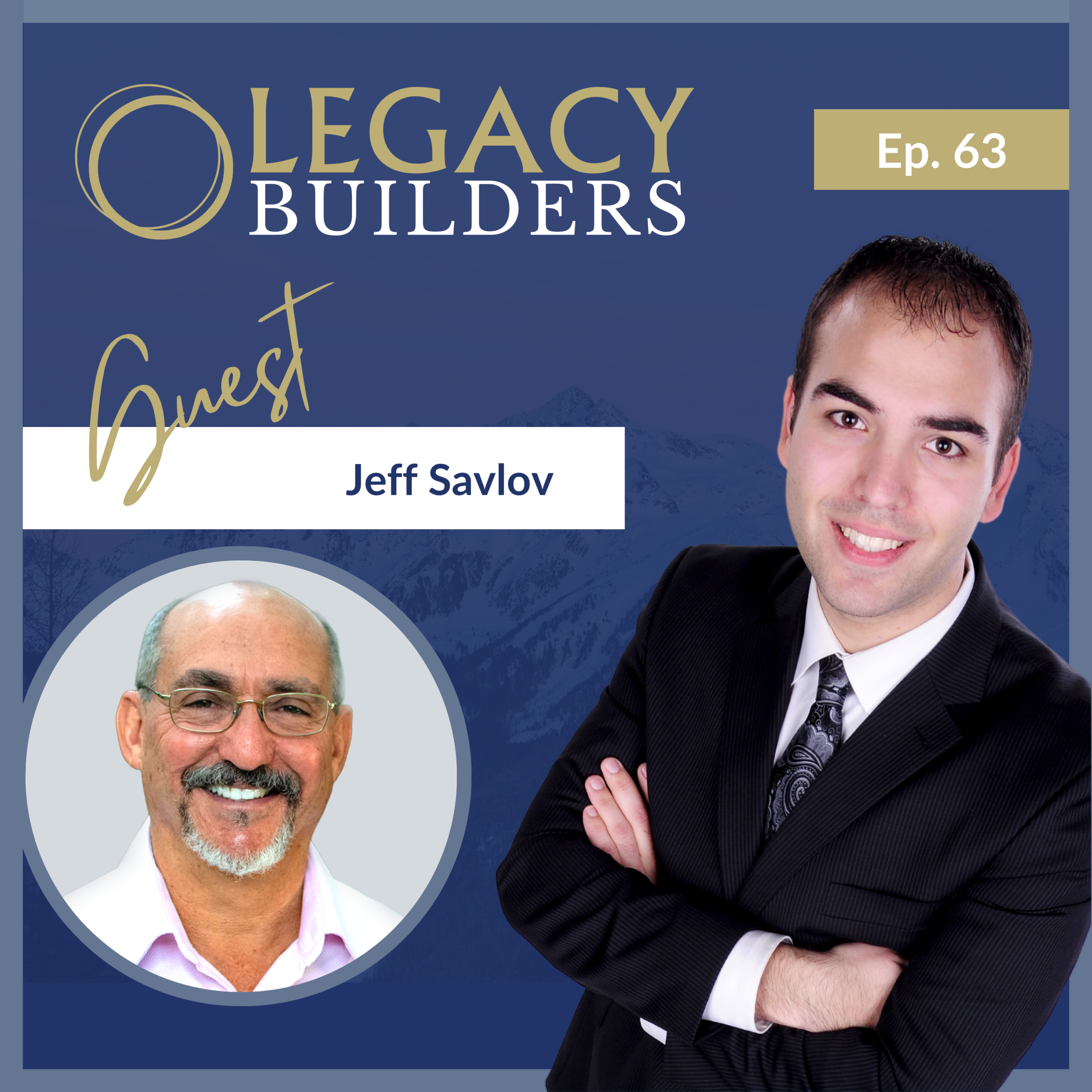
Roots of Resilience: Raising Grounded Children in Families of Wealth
LISTEN ON YOUR FAVOURITE PLATFORM
In this episode, we’re joined by Jeff Savlov, Founder of Blum & Savlov, LLP. For over 25 years, Jeff has helped family businesses, high-net-worth families, and their advisors balance family dynamics with the management of shared assets across generations. Drawing from his experience in his own family’s business, Jeff brings a grounded, common-sense perspective on how families can reduce conflict before it escalates and build healthier patterns that last. Our conversation focuses on what gets passed down beyond money: the spoken and unspoken family narratives that shape responsibility, resilience, identity, and ultimately, stewardship.
Jeff shares reflections shaped by both clinical training and real-world work with multigenerational families. We talk about intentional storytelling, optimal challenge, and early-life parenting choices, and how starting earlier can help families move from reactive regret to proactive stewardship, with more clarity and less friction.
About Jeff Savlov
Jeff Savlov is the founder of Blum & Savlov, LLP – Family Business & Wealth Consulting. He advises family businesses, high-net-worth families, and family offices on balancing family dynamics with shared ownership and management across generations. He’s especially known for helping parents raise children in a family enterprise context so wealth supports healthy, productive outcomes. Jeff speaks in the U.S. and internationally, has been quoted in The New York Times and Family Business Magazine, and writes “The Family Business Minute.”
With 25+ years spanning business leadership and advanced training in family systems, group dynamics, and psychoanalytic work, Jeff brings a practical, common-sense approach to complex family-enterprise challenges. A Fellow of the Family Firm Institute, he has also consulted with Fortune 500 companies, including Bristol-Myers Squibb, Johnson & Johnson, and Schering-Plough. He lives in New Jersey with his wife and two children and brings creativity and a sense of humour to his work.
Resources discussed in this episode:
Contact Cory Gagnon | Beacon Family Office at Assante Financial Management Ltd.
- Website: BeaconFamilyOffice.com
- LinkedIn: Cory Gagnon
- LinkedIn: Beacon Family Office
- Email: beaconfamilyoffice@assante.com
Contact Jeff Savlov | Blum & Savlov, LLP – Family Business & Wealth Consulting
- Website: blumandsavlov.com
- LinkedIn: Jeff Savlov
- Email: jsavlov@blumandsavlov.com
We’re bringing together leading experts to tackle some of the most pressing challenges facing family businesses today—from succession planning and governance structures to preparing the next generation for leadership roles. You’ll walk away with actionable strategies and fresh perspectives on building resilient family enterprises.
Haven’t caught one of our webcasts yet? No problem. All previous sessions are archived and ready to stream whenever you’re ready to dive in. Simply head over to legacybuilderswebcast.com to register for our upcoming session or explore our growing library of past conversations.
Welcome to Legacy Builders, strategies for building successful family enterprises. Brought to you by Beacon Family Office at CI Assante Wealth Management Limited. I’m your host, Cory Gagnon, Senior Wealth Advisor. And on this show, we explore global ideas, concepts, and models that help family enterprises better navigate the complexities of family wealth.
Today, we welcome Jeff Savlov, Founder of Blum & Savlov, LLP. For over 25 years, Jeff has helped family businesses, high-net-worth families, and their advisors balance family dynamics with the management of shared assets across generations. Drawing from his experience in his own family’s business, Jeff brings a grounded, common-sense approach to helping families proactively avoid conflict and thrive. He’s a Fellow of the Family Firm Institute, a faculty member at the Center for Psychoanalysis and Psychotherapy of New Jersey, and the voice behind the blog The Family Business Minute.
My goal is to be the most curious person in today’s conversation with Jeff, where we explore how family patterns, both spoken and unspoken, shape the next generation’s sense of responsibility, resilience, and identity. Jeff shares how intentional storytelling, optimal challenge, and early-life parenting choices can shape not just character, but legacy. Together, we look at how families can move from reactive regret to proactive stewardship and why doing so earlier often means doing so better.
Now, let’s dive in!
Cory: Welcome, Jeff. We’re excited to have you here today to share your wealth of knowledge and experiences with us. Let’s dive in, shall we?
Jeff: Absolutely. Thanks for the invite. Good to be here.
Cory: Jeff, imagine you’re delivering the commencement speech to the graduating class of 2026, and you have the chance to inspire them with your story. How would you begin your speech to convey the incredible lessons and expertise that you’ve gained along your career?
Jeff: So my father went from high school into the army, learned printing, making maps for the Korean War effort. My dad was in Germany, printing maps for the Korean War effort, came back, got highly skilled working for other people, highly skilled in the area of lithography, like high-end quality art prints, where they do a limited run, that kind of thing.
Really skilled working for other people, hated it, wound up taking what little savings. My folks did not have much money. They were both children of immigrants. Took what little money they had saved in a home equity loan and risked it all starting his own business. Very stressful at first, and scary. I remember my mom talking about looking into how you apply for food stamps, just in case. Careful what you wish for.
Things turned around and really exploded and got busy, and that was tricky because my dad had never run his own company, and he was really stressed out. At this point, it’s going through, like late high school into college. I’m going in evenings, weekends, trying to help however I can because he’s so stressed out.
Sometimes in a family, you take your frustration out on the ones you love, because you can’t take it out on the employees, they’ll sue you. And it was just a lot of yelling, screaming, and awful stuff, and I tried to let it slide off my back, and I kept coming in like a puppy dog the next day.
My mom sees what’s going on, and she’s like, we’ve got to do something. So, this is forty years ago, when there weren’t as many psychologists and family therapists working with family businesses as there are now, but she found one somehow.
We went, and we did this really deep experience with the family therapist. And one of the big pieces of it was my dad. She was asking him about anger in his life and his father’s. And my dad talked a lot about how his father escaped the Nazis and lost the rest of his family. And my sisters and I never really knew this story. And when the therapist was asking my dad about my dad’s father’s anger, my grandfather’s anger, his father, it got into all this stuff around getting hit with the belt and how awful it was.
And my dad stops at one second, and he said, you know, when I was going through all that, I said to myself, I know I’m going to get married one day. I know I’m going to have kids one day. I get choked up just telling this story, and I’ve told it a lot. And he said, I made a commitment back then when I was getting all that hitting with the belt. He said, I made a commitment that I will never lay a hand on my children. And the truth was, he never did. All we knew was this big six-four, two hundred and eighty-five pound maniac. When he was yelling, it was scary as hell, but he never laid a hand on us. So we just knew him as this big, scary, angry guy, and wondered, does he love us or hate us or what? And here in this moment, it was like, this guy loves us so much that he stopped a pattern that often does not get stopped for generations.
And so it seemed like this question of, does he love us? Does he really care about us?
In a split second, he turned around to “we knew what was happening.” We didn’t know what wasn’t happening. We didn’t know what was missing. And it was an incredible feeling of love, that while he might have yelled more than we would have liked, he pulled off something in stopping that generational hitting thing that was truly beautiful.
And so it was this whole other way of understanding our father, me, and both my sisters, and beautiful. And so I would say that anyone out there in a family where there’s conflict, which is basically every family has some sort of conflict, that if you sort of take a deep breath and really try to understand one another and come together as kumbaya, and corny as that might sound, it really can be beautiful. And that was a big impetus for me, going into the career that I’m in now.
Cory: Right. I think about those patterns that your father witnessed, that decision that he made, and how he stopped one behavior while continuing maybe some other behaviors. And so, where have you seen that within families where somebody said, I’m never going to do this, although there still is some of that pattern that’s still stuck with them?
Jeff: I mean, every family I work with, there’s some element of family members making requests of one another and people trying their best to stop, and then continuing or stopping one thing, and keeping on with something else that’s not ideal.
I think when someone in a family receives feedback that, hey, we’d really like you to shift this. It’s not working either for the business or for the family, or both. Even if it’s not perfect. No one’s looking for perfection. Perfection would have been if my dad never screamed and never hit. But just seeing somebody really commit when they receive feedback, even if it’s less than perfect, less than ideal, less than 100%, is super powerful. It’s a real show of love. You told me this is hurting you, and I am making clear, if not perfect, but clear progress is super valuable.
So the goal is imperfection or stopping everything, but it’s making a real effort, except in the most extreme cases where there’s violence and things like that. Then 100% needs to be expected. But sort of in the gray area world of family and emotion, just making that commitment and showing real progress is super meaningful to everyone involved in my experience.
Cory: And just thinking of those patterns, how they developed with that shared understanding of maybe why this is happening, or where this comes from, how did that change the dynamic between the family, your mom witnessing this, you and your sisters? Where was that shift just in understanding where your father was coming from and why this was showing up?
Jeff: I mean, understanding the Holocaust survival history sort of puts a little bit of a spin. He lost all his brothers and sisters, nieces and nephews, and my dad’s father. So we’re lucky to even be here at all. And that kind of makes you think, and gives you a sense of gratitude. And so, understanding my father’s pain in context, and while he was hurting us, the context of knowing he made such a leap forward, and it could have been so much worse. Like I said, if he had been a hitter, that was not going to be pleasant. So I really appreciated that. So the history and the family story make so much difference.
And I use family stories in the families I work with all the time for all kinds of ways to just put things in perspective for families, and it’s really powerful. Every family has some kind of story where there’s real pain and hardship and also some successes, and you tease those out and integrate it into helping families sort of give each other some compassion when it might be tough.
Cory: I was struck by the story of food stamps because what a great step your mother took to understand the contingency plans available. And I think of just some of that scarcity at that point, are we going to have enough to buy groceries? Is the business going to produce what we need it to do? Was there ever anything that you reflected on in your relationship with that sort of risk, or around putting groceries on the table? Because I find that sometimes those creep into the messages that young people take with them based on those experiences.
Jeff: I didn’t know at the time. My mom told me this much later when we were looking back on all this, and it really went in-depth around the shame she felt, her understanding of what it must be like for people who are from generations of poverty and the shame that must be there, and how she felt, thinking she would never be there. So that really sort of just gave me some insight into her.
But also, she and my dad, I knew there was sort of yelling in frustration. I didn’t know things were scary financially. They sort of kept it from us. The food was there. She was ready with the contingency, but we didn’t need it. So the food was there, and we went to school, and they kept it pretty normal. And I think that was a lesson I got in retrospect too. There are times to not be totally transparent as parents. Sometimes, keeping things private when kids are too young and it might be too scary. When the time comes to get food stamps, maybe they’ll explain it then. But they dodged a bullet, so we didn’t have to know about it. So there was a real loving kind of protection in that, but I had no idea.
Cory: When you think that line between building a resilient individual and protecting that child from things that are maybe just too scary for them, where in the work that you do, do you find that those lines exist or blur?
Jeff: That’s a great question, really insightful question, because resilience comes from challenge and failure. Resilience doesn’t come from having an easy life where you never fail, and everything turns out. It comes from sometimes succeeding and sometimes failing.
There’s a famous psychoanalyst, Heinz Kohut, who came up with this concept of optimal frustration. The ideal amount of frustration for just healthy development. Too much frustration, and you can become depressed and give up. And no frustration, you think life’s a breeze. And when you come into something difficult, you don’t know what to do. It’s optimal frustration.
And so, you know, I think my parents were certainly transparent about a lot. And now my wife, who’s a psychologist, and I sort of never finished this piece of the puzzle, but I left the family business because my dad and I agreed it wasn’t good for us to work together. I finished college, and I went into sales and marketing. In the corporate world, I wasn’t satisfied. And then I went back to grad school and trained as a family therapist and did postgraduate work for seven years to become a certified psychoanalyst.
I started a private practice thirty-plus years ago, and only by accident, because some of my early therapy clients had significant wealth, or operating businesses, or both, and saw that there was a need for something that’s not therapy.
I started this sort of coaching facilitation education world, but I forgot where we were right before that. I was going to this, and then I was going to get back to your last question
Cory: We were talking about resilience. That optimal frustration.
Jeff: And so a lot of the families I work with, very wealthy families, some top of the world in terms of wealth, really extreme wealth and in between, a lot more than they need for food, clothing, and shelter. The biggest concern tends to be raising kids. In my clinical training, I was trained to work with kids as young as three years old in play therapy, and I married my wife who was working with one and two-year-olds. And she’s a real pro in child development and this kind of work. And so we both brought that into raising our own kids.
In my professional work, I started something called the Purposeful Legacy Family Project, where I try to get couples and really wealthy families before they even have children, to start thinking about the opportunities they could take advantage of. And even the first three years of life, there’s a ton you could do to set up resilience, work ethic, and accountability in those first three years. So if I can get couples before they have kids or in those first five years, it’s really ideal. And a lot of it is this work-around resilience. And the earlier you start, the easier it is.
If you don’t do any of it, then you have a 17-year-old who’s easily frustrated and gives up. You’ve got a lot of work to do. But if you have a one-year-old that can do very simple tasks, maybe put a napkin next to each plate for dinner and throw them in the garbage afterwards, you’re integrating a sense of responsibility.
Work is something we all do in the family, something to feel proud of. And there are ways to do that with kids. It’s not torture for one and two-year-olds. They really enjoy chipping in. And so it’s the things you need to do to develop resilience. The earlier you start, the easier it is and the more fun the kid is having. Two-year-olds like to put a little soap tablet into the dishwasher, close the thing, shut the dishwasher, and press start, and hear it go. A two-year-old is really thrilled. A 17 year old is not so thrilled. So that’s just an example of resilience. If you start early, there are simple things you can do that are very powerful.
Cory: And so, as you think of families who believe that they are gifting an easier life to their kids. We hear that all the time. That’s not a gift, it’s a curse. So, where do you find that balance of I want that opportunity for my children to be able to have a leg up, but I also want to make sure that they can contribute, and they can steward this legacy that’s been created, and build on to where we’ve already been?
Jeff: Support them to do difficult things, sometimes fail, sometimes succeed, get that optimal frustration, and that supporting them to do those difficult things with the occasional success, occasional failure, is going to be a key element. You can certainly have nice vacations along the way. You can certainly help pay for college, or even pay for college, although my wife and I were perfectly able to pay for college, and we told our sons we wanted them to at least pay a few thousand of each semester, and they did that. They worked during college, or they worked during the summer. They knew we could afford it.
We had our sons when they were old enough for a smartphone, and they had the old flip phone that was sort of their generation was from flip phone to smartphone. We paid for the flip phone, and when it came time for a smartphone, we said, you can get a smartphone, but you’re going to pay for it with money from birthdays and working and stuff. And you’re going to pay us for the data. You’re going to pay us $30 a month for data. And they were shocked. None of their friends had parents doing anything like that. All their friends got phones, didn’t have to pay anything. And it really was only until college.
I remember our oldest guy was like a junior in college when he sat us down and thanked us for how we handled that. At the time, he was kind of angry and didn’t understand it so well. Even though we explained it, it was still, he felt like, can’t you just give it to me like my friends’ parents? Junior year in college, he said, I’m surrounded by kids that don’t have a check, they don’t know how to deal with a checking account or a credit card, and that was part of what we integrated too. We’re going to give you a checking account, teach you how to use it, and a debit card, and a credit card, and you need to pay it off. And if you don’t, here’s how the interest works. And we integrated it all in.
And so you might not get, “thank you very much, mom and dad, for some of the tougher things you do to instill resilience and character and a stewardship mindset,” but they’ll be effective. And as they get older, there might be a sense of appreciation, but don’t expect thanks in the moment. In the moment, it’s parenting, and it’s sometimes tough.
I also think you can do wonderful things, vacations. I have families that take vacations on private planes, but that’s where stories come in. This private plane is very unusual. Most families can’t afford something. It takes a lot of money to do this. Our family happens to have a lot more money than we need for the basics in life, food, clothing, and shelter. Here’s where the money came from. Grandma started this company a long time ago, and then her kids took over. That’s mom, your aunt, and your uncle. And just sort of tell the story about the business, and how hard it was at first, and put it in perspective. And in that, you can say, if you want to be part of this business one day, you’re going to have to work really hard in school. You’re going to have to show us that you can achieve and get good grades, and go out into the world, maybe separate from the family business and have some successes. And then come back to us and tell us what you bring so that you can make it better. Don’t look for us to give you a gift. You come to us and bring us a gift. How can you help us make it better?
So those are just a flurry of ideas around stewardship, entitlement, and resilience.
Cory: Right. I think that the attitude of “what can you bring” is so important. If you think of entrepreneurship at its roots, is finding problems that you can solve for others where they’re willing to pay you for that. And so, what is that that they can discover on their own? That frustration that your father felt, that there was enough resentment to his situation that he decided to take that risk and make that change. And so what can you do for your kids to allow them to realize, when you’re allowing others to to make decisions for you, what is it that you’re giving up?
Jeff: And the people that made big sacrifices before you, and even in the most successful family businesses I work with, there’s always failure along the way. Make sure the kids understand those failures. The risk people took, the failures, the fact that it could have turned out all wrong, and they they could have lost everything and been poor or middle class, and never had this extra money, and put it in context, and really an appreciation for what people did before you, and how to take care of that and be responsible with it without feeling guilty about it. Because that’s the other extreme, people feeling guilty about inheritances, trusts, and wealth. And that’s not the goal either, to shame people about it.
Cory: Yes. Many of the families that you work with probably haven’t gone through your legacy project of thinking about things ahead of time. They’re now at hindsight and saying, I wish we would have started thinking about this sooner. And so speaking to that listener who is considering how do we take from where we are, maybe we did allow things to be a little easy, didn’t give that checking account accountability, how some of those finances were used. How do families start to make that shift in the way that they operate in those behaviors?
Jeff: So I wrote a blog called the Family Business Minute, and sometime last year, wrote one called Falling on your Sword, which is all about how do you handle this kind of situation when you maybe didn’t do some of the, and look, no one’s going to be perfect. But when you really went a little too far, maybe in making life easy and not challenging.
“Falling on your sword” is about taking the blame. It’s about sitting down with your kids, not blaming them, and actually saying, hey, we’ve given a lot of thought to how mom and I, dad, and I have handled money and your lives, and what our expectations were. And we wonder sometimes if we were too generous, if we made life too easy, and we’re feeling a little bit bad about it. We feel like we could have done a better job. And some of the effects that we’re seeing are that you guys maybe get frustrated very easily and don’t push through difficult things, or you’re not motivated to go out and work in the world, find your own way, and make your own mark, because you know there’s family money coming. And we’ve been feeling a little bit bad about it. We wanted to just sit down and talk to you guys and say, we’re sorry that we didn’t do those things, because we think we think it’s had a negative effect. And we’re just hoping to have a conversation now where we can hear your point of view. Maybe we’re wrong and misperceiving it, but be open to what we’re seeing, and maybe we could just wrap our heads around it.
And that general kind of conversation too often is handled in terms of finger wagging. You kids, are too this. You’re too lazy. You’re too unmotivated. You don’t know how to work a hard day. Life’s too easy. You’re just waiting for your trust fund to come. All those, and that’s not helpful.
But if you can say, because the truth is, it is the parents and grandparents responsibility. It’s their fault. If they handle it this way, you can’t just put it all on the kids. So if you can sort of take some responsibility, and talk about it from a place of love and compassion, and wanting to see kids have productive lives, you increase the odds that it’ll be a good conversation.
Cory: Right. And do you ever see it come the other way where there’s that younger generation that’s saying, I feel like I’m trapped in this situation where I’m not as productive, motivated, or stimulated as I’d like to be, and I’d like to have that conversation with my parents.
Jeff: I’ve seen that, and I’ve seen everything from, on the extreme, completely giving away inheritances. And Barbara Blouin has a book. I think it’s The Legacy of Inherited Wealth. She was an inheritor in a very significant family, and she wrote a book telling the stories. Each story is like a few pages of inheritors and how painful it was to not see mom and dad when they were off working and traveling, and to be raised by nannies who could be fired and then disappear. And it felt like your mom or dad was fired. It’s really brutal. And those are extreme stories from the highest levels of wealth, but it’s interesting to see that having a ton of money is not just all fun and games. And a lot of times people don’t realize that.
Recently, I was in a situation. We’re talking many billions of dollars, and the grandkids are starting to learn about their inheritances, and they’re itching to give it away. There’s so much, sort of politically, that says accumulating wealth is bad and wrong, and you made this money from $15 an hour workers, maybe some of that money should go to them. And these kids in their twenties, and this generation now, it’s not unusual for them to want to get their hands on their inheritance and give it to some kinds of social action initiatives. And that’s really interesting. Their shame, like, this is terrible. We made this off the backs of hardworking people who can barely pay their medical bills. And sometimes it’s just, this is so much more than we need. We can keep some and be fine, but we could certainly make an impact for others.
So there’s a whole range from shame to pride, and sort of various levels of generosity, and keeping it, and in enjoying it, and stewarding it.
Cory: Right. I just think, as you’re telling that story of the fear that some of these families live in, the fear that this is all going to be taken away, either through some sort of litigation, or somebody coming in and preying on family, and we know families who spend a lot of money on security and thinking of that as a potential threat. We’ve had generations build this wealth, steward this wealth, and now there’s a generation that wants to just give it all away. And then we’ve got these structures to legally protect that money so that they can’t make these decisions.
And so much resentment in both ways. The “I don’t deserve this money.” And I think of it almost like playing hot potato, I haven’t developed the skin on my hands to be able to hold something hot, or I haven’t figured out how to put on the oven mitts, or whatever it is. And so they receive this money, and they just throw it away, because it’s “I haven’t figured out how to hold it.”
And so in that, very intricate amount of complexity here, where do families, as they’re seeing this generation, and maybe at the stage in life where they’ve got this social movement and want to do this, how can families look at this as an opportunity, and allow it to be a yes and versus one or?
Jeff: I think that’s to try to slow down the next generation. If you’re in your fifties and you’ve lived a good life, and you just got $100,000,000 and you want to give $95,000,000 of it away, you’ve lived enough to sort of make that decision.
When you’re in your twenties, not to say that 20-year-olds can’t make lots of wonderful decisions, but I think their brains are still developing. They’re still learning about life. And so, slowing it down enough so that they can think about it and make sure this is really the decision you want. Also, giving them the opportunity to express what’s important to them.
And even if your trust is set up so that you can’t give it all away, is there a foundation or elements of the trust that allow you to give chunks away, and to practice researching and vetting where you’re going to give this money, to come to us and tell us where you’re going to give the money. Let’s take a look. Is this as good as an organization as it seems? How do you determine the mission of the organization? Are they really following through? What are the executives getting paid? Is it fair? And so help them to voice what’s important to them, and give them opportunities to learn how to do it and to do it well. I think that’s a key that’s often lost in wealth transitions, listening to the voice of the next generation, and giving them a chance to be productive with the wealth involved.
Cory: And so, as we think of where those discussions sit, there’s so many examples of families that, at different stages where they’ve established foundations, and they’ve got detailed giving policies and how they do this. Where have you seen at the earliest stages, going back to the prior to becoming parents where some of that generosity and an awareness of some of the struggles in society can be really brought to kids at different ages?
Jeff: I’m really a believer that you can tell young children a lot more than most people believe. You can tell two and three year olds that there are animals that have nowhere to live, and people buy animals, and they don’t take care of them, and they just throw them out in the woods, and the animals run around and have nowhere to live, and other people find them, and there’s places where these animals go, and people find them and and bring them in, and it’s called a shelter. And we could go and pet these animals because they’re lonely, and we can help take care of them and feed them. And then hopefully people will come and adopt them and take them into their home. People who know how to take care of animals.
Or when when grandpa or grandma was really sick, they had an illness, kind of a sickness that we don’t really have good medicine for, but there are scientists that are working every day to figure out a medicine for that that kind of sickness, and we can find ways to make money and use the money our family has, and give it to these scientists so that they can do more research and find that medicine. You could tell that to a very young kid who’s not in kindergarten yet and connect the wealth that the family has, not just to giving money, but also to going to the shelter, finding a way to make some money with a lemonade stand, and giving it to the research along with mom and dad’s money.
So you can tell stories about all kinds of issues in the world that are important to the parents, so that the children start to have a sense. And as the children get older, help them to look around the world and see maybe they have issues out there where they want to make an impact that mom and dad aren’t focusing on, and let them really look into it. And how can we use our hands, doing work, building houses for Habitat for Humanity, and giving money. Giving money by itself falls short of giving money and being really involved with the shelter, the soup kitchen, the Habitat for Humanity, all that.
Cory: And that investment of time and energy, not only to think of this, but I think of, as you mentioned, having nannies raising children and parents away all the time, that shift to say, this is important. Do you have any stories where you’ve seen that involvement in time, money, resources from a young age really blossom into just some of that resilience where it has helped in developing that stewardship?
Jeff: A lot of them. Fifty years ago, we just had a different culture around parenting and an understanding of what kids needed. And there was, especially when you go fifty years ago and earlier, the traditionalist, the kids were just seen and not heard, and it’s much different now. So the people who are reaching out, certainly to me and the kind of services I provide, are more enlightened and are really doing a lot of this good stuff.
I mean, I know, an 11-year-old boy whose dad has really talked to him pretty openly about, along with doing all the other good, kind of enough frustration opportunities along the way, getting to 11, has been open about the money and stuff. And this 11-year-old goes with that when he meets with his team of lawyers, accounts, and wealth planners, and sits in and then asks good questions. And it’s just really wonderful to see where so many people are afraid, this 11-year-old is seeing these hundreds of millions of dollars, these numbers, and is still working hard in school. How does that happen? Well, he’s proud of what he accomplishes in school, and he’s proud of being able to sit with all these adults in suits and hear all these difficult things and start to get a sense. And he is excited to help grow it one day and make an impact in the world and help the family’s business grow and all of that. And there are a lot of stories like that more recently.
Cory: Absolutely. And, I love that word pride. It’s such a powerful driver, and something that is robbed off of people where they haven’t given themselves or haven’t been given that chance to feel that. And so, wealth doesn’t negate that innate need that we have for that sense of self. And so, are there some of those other things that we need on the deepest level as an individual that maybe are forgotten about as families navigate wealth?
Jeff: I mean, I’ve also worked with incredibly poor families, and homelessness, and almost homelessness. So I’ve seen the real spectrum of the most extreme levels of poverty and wealth, and those deepest, most important things can be overlooked or forgotten, or not prioritized anywhere in the socioeconomic spectrum. If wealth has a particular impact on that dynamic of not getting to the most important things, it has to do with how busy wealthy people often are because they’re creating wealth and they’re managing it. And even if you sell a business and come away with billions, there’s a lot to do to set up the trust, and to manage it and deal with professionals. So if you’re not intentional, it can take you away from the time needed to spend that with your spouse, your kids, and your parents. I see a lot of people, a lot of wealth creators trying hard to make sure that that doesn’t happen, that there’s still some quality time.
And so many of the new opportunities in the digital age allow you to make incredible money with sort of being at home, everything from day trading, to developing an app, or some kind of new tech thing. A lot of those come with the freedom of time. That’s pretty cool. But even in the standard old, you know, chain of chain of dry cleaners, it can be a challenge. And so it’s a matter of being intentional.
Cory: Absolutely. That’s a good theme. Intentional is so key here. And prioritizing those freedoms to align, that is also key.
And so, Jeff, as we near the end of our conversation today, there are a few questions that I ask each guest before we wrap up. Are you ready for the tough ones?
Jeff: I’m ready. Bring it on.
Cory: What is one key strategy you believe is most essential for building a successful family enterprise?
Jeff: I am going to say love. I have seen some really painful situations in families that have shared wealth of some sort, and they can be really difficult and painful and complex. And when there’s still love, and people are willing to express and act from a place of love, those are the ones that no matter how much pain there is when they come to see me, that they tend to work out relatively well, because there’s that foundation of love. And so that would be my answer on tough question number one.
Cory: And what is the most common challenge that you see family enterprises encountering when it comes to wealth transition and generational continuity?
Jeff: We hit on it somewhat. It’s communication. There’s this fear that if we tell them, they will stop trying and it will ruin them. And then when you have that mindset, you lose the chance to teach and develop. I like to say you can talk about family wealth without even talking about money at all, and then when you’re ready to talk about money, you don’t have to use numbers. And that really helps a lot of the families. Talk about family wealth without talking about money. They say, well, how do you do that? Well, that’s the stories we talked about. Grandma and grandpa or mom and dad or uncles, whoever. What do they do? How do they do it? Tell the story of even the family members before that wealth creator and the struggles they had coming to America or whatever they might have escaped, or the travails that they’ve had.
And so, I think fear of communicating, and this idea that if you tell them they will ruin them, and instead of this idea that’s very much where I live, which is there’s a whole lot you can tell without ruining anybody, without giving numbers, but putting it in context so that they’re again, it’s that pride. How do you develop pride in what the family has accomplished, and excitement, and the desire to develop yourself to be a part of it?
Cory: And for a family that hasn’t lived in that realm, what’s one way that they can think of a story or a lesson that they want to demonstrate through story?
Jeff: Well, there’s the “falling on your sword” thing if it’s that’s the scenario you’re talking about, where they didn’t do the ideal things that are happy where things are going. But I think to just look back into the family’s history and find whoever had a real hardship and survived illness, death, genocide, or poverty, and how they did it, and how they were able to help the family move along in subsequent generations. It can be hard to do without sounding preachy or corny, especially as your kids get older. But I think there are ways to do it that sort of make sense, and help trigger a sense of gratitude over the history of the family and of feeling fortunate.
Cory: That’s the word that was coming to mind as I was thinking of some of those stories, was gratitude. If you come at it from that sense, it’s genuine. It’s not corny.
And in your experience, what are the top three key qualities that successful family enterprise leaders possess?
Jeff: I think humility is really important. I mean, arrogance isn’t a big winner in most areas of life or any kind of level of wealth, but I think humility is particularly important because there are so many stakeholders. Even if people aren’t involved in an operating business, they might be nonworking owners or they’re going to inherit value from the business. And so humility, in dealing with the whole family, and then the non-family folks.
I think the mindset of servant leadership is that as a leader, you’re there to serve others, and really to see how you can make everyone else’s lives better. The family members who work in the business, the non-family members who work and grow the business, the rest of the family, to see yourself as a servant leader. There’s a lot that’s been written about servant leadership and a real trend in kind of business and family wealth today.
And the third one, I think, self-awareness is really key. Again, that’s, I think, just true in life. I would say that’s a life skill that anyone, regardless of level of finances, in the tricky world of combining family and shared wealth, self-awareness and being able to check yourself. There are so many emotional connections and then financial connections, and people are affected by each other so much. And the decisions that are being made, the more that you can really understand yourself and what makes you tick and what triggers you to sort of go off unexpectedly. All of that can really help to be a better servant leader and family member.
Cory: Fantastic. And before we conclude our discussion, I’d like to highlight where our listeners can engage in more of the conversations you’re having, along with maybe other resources that would be helpful as it relates to our conversation today.
Jeff: Thanks. My website’s a bit of a mouthful. I mean, you can certainly just search my name, Jeff Savlov. The website is blumandsavlov.com, again, a mouthful. I have a blog section I referred to. That’s where the, Falling on your Sword is, and lots of quick reads about various things related to family dynamics and family government governance around wealth, and I guess that’s it.
Cory: Okay. And, we’ll make it easy for listeners. We’ll link all of that in the show notes. And I wanted to make sure that we covered everything today. Is there anything that we didn’t get a chance to touch on that you’d like to share with our audience?
Jeff: I think we covered all the most important things in one way or another. I would just kind of reaffirm the importance of, and how easy it can be to really start young. If you have the wealth when you’re starting to have kids, if the wealth is already present, there’s a lot you can do to ensure that kids develop that sense of pride, along with accountability, work ethic, character, and stewardship mindset, all of that. And you don’t need to wait until they’re eight, or 10 or 15, but literally before five. I think that’s a missed opportunity I see too often.
Cory: Amazing. Well, thank you, Jeff. I appreciate you for taking the time to share your experiences, stories, and expertise with us today. I was enlightened, and took things away from our conversation myself professionally and personally. And so I’m grateful for your contribution, and I know our listeners will also find tremendous value for what you’ve shared.
Jeff: Thanks, Cory. I appreciate you asking me on, and it’s always fun to chat like this.
As we wrap up this episode, we invite you to reflect on Jeff’s reminder that every family carries stories worth paying attention to. What we remember and what we choose to share can influence how the next generation sees themselves and the legacy they’re part of.
Whether you’re part of a family enterprise or walk alongside one, Jeff’s reflections surface the quiet choices that shape how values are lived out through everyday moments, conversations, and how we prepare the next generation to meet the world with confidence.
Throughout our conversation, Jeff reflected on how patterns shift when families act with intention, even when the change isn’t perfect. His stories offered a grounded look at how resilience begins early: in the chores we assign, the limits we set, and the conversations we choose to have. From teaching kids about work and money to naming past struggles with honesty, Jeff reminded us that legacy is shaped not only by what we pass down, but by how we prepare others to carry it forward.
If Jeff’s perspective resonated with you, his firm, Blum & Savlov LLP, supports families navigating the complexities of wealth, business, and parenting. You’ll find more about his work and contact details in the show notes.
Disclaimer:
This program was prepared by Cory Gagnon, who is a Senior Wealth Advisor with Beacon Family Office at CI Assante Wealth Management Ltd. This is not an official program of CI Assante Wealth Management Ltd, and the statements and opinions expressed during this podcast are not necessarily those of CI Assante Wealth Management Ltd. This show is intended for general information only and may not apply to all listeners or investors; please obtain professional financial advice or contact us at BeaconFamilyOffice@Assante.com or visit BeaconFamilyOffice.com to discuss your particular circumstances before acting on the information presented.
