

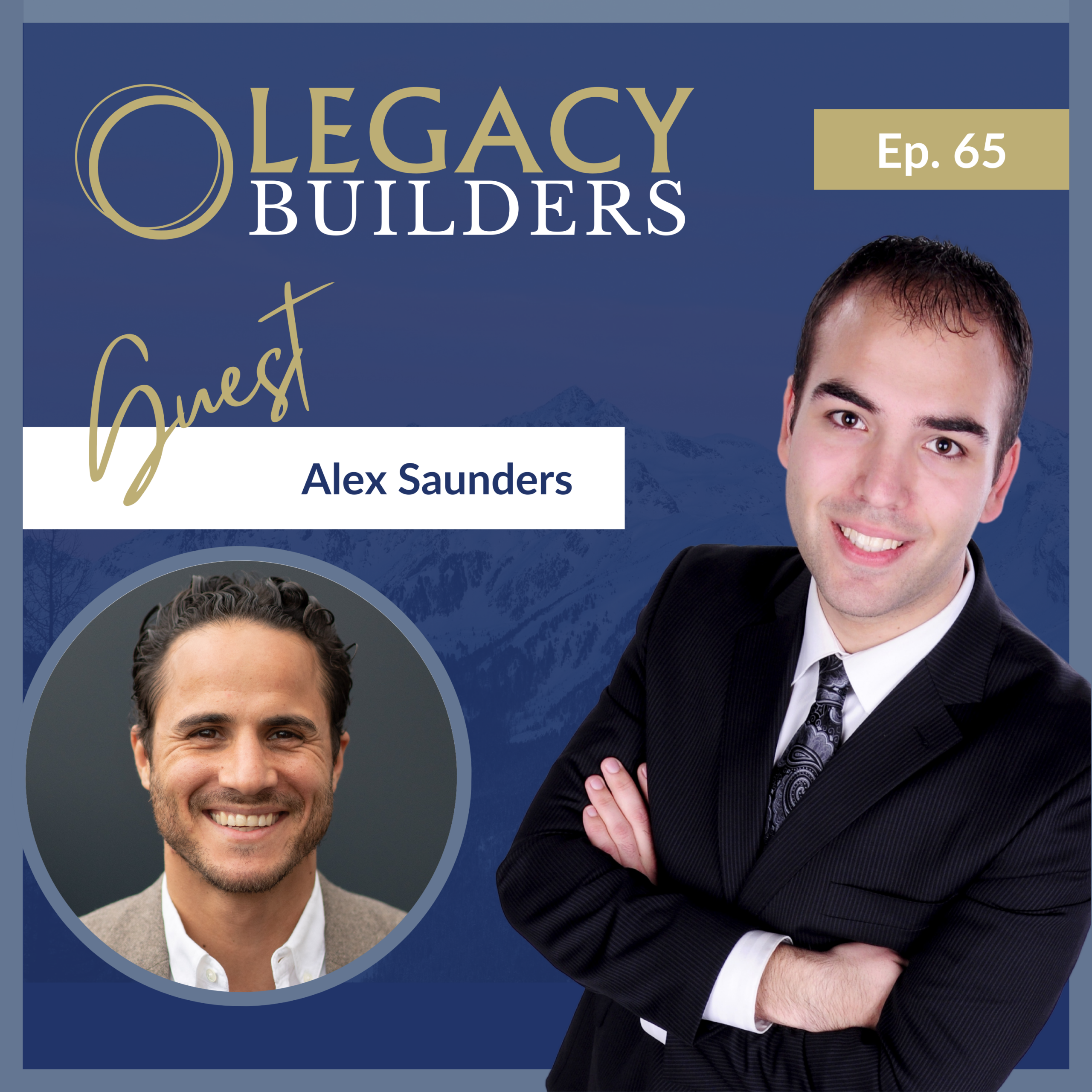
When the Role Finds You: The Tension Between Belonging and Becoming
LISTEN ON YOUR FAVOURITE PLATFORM
In this episode, we’re joined by Alexander Saunders, Practice Director at Dialogos. Alex is a generative facilitator working at the intersection of dialogue, leadership, and complex human systems. Through work across the entertainment, venture capital, and hospitality sectors, as well as his own fifth-generation family business and other family-owned enterprises ranging from single-site operations to global hospitality groups, he brings both practical experience and scholarly grounding to the challenges of leadership, transition, and belonging within family enterprise. Our conversation focuses on what it means to find your place when identity, expectation, and opportunity become deeply intertwined, and on how families can create the conditions for people to grow into responsibility with greater clarity and readiness.
We talk about the tension between being invited in and truly feeling ready, the importance of mentors and support systems during seasons of transition, and why self-awareness can be such a critical foundation for contribution and governance. Together, we explore how family enterprises can strengthen the relational fabric that helps individuals grow, lead, and navigate complexity in healthier and more sustainable ways.
About Alexander Saunders
Alex is a generative facilitator working at the intersection of dialogue, leadership, and complex human systems. He has built and supported organizations across the entertainment, venture capital, and hospitality sectors, including his own fifth-generation family business and other family-owned enterprises ranging from single-site operations to global hospitality groups. He holds a Master’s degree in Economics and Classics, bringing both practical and scholarly grounding to his work with leaders navigating complexity and transition.
Resources discussed in this episode:
- Paul Edelman
- Positive Disintegration
- David Meltzer
- International Monetary Fund
- Kolbe Index
- James Hughes
- Peter Senge
- The Art of Thinking Together
- Reading the Room
- On Dialogue
Contact Cory Gagnon | Beacon Family Office at CI Assante Financial Management Ltd.
- Website: BeaconFamilyOffice.com
- LinkedIn: Cory Gagnon
- LinkedIn: Beacon Family Office
- Email: beaconfamilyoffice@assante.com
Contact Alexander Saunders | Dialogos
- Website: dialogos.com
- LinkedIn: Alexander Saunders
- Email: alex.saunders@dialogos.com
We’re bringing together leading experts to tackle some of the most pressing challenges facing family businesses today—from succession planning and governance structures to preparing the next generation for leadership roles. You’ll walk away with actionable strategies and fresh perspectives on building resilient family enterprises.
Haven’t caught one of our webcasts yet? No problem. All previous sessions are archived and ready to stream whenever you’re ready to dive in. Simply head over to legacybuilderswebcast.com to register for our upcoming session or explore our growing library of past conversations.
Welcome to Legacy Builders, strategies for building successful family enterprises. Brought to you by Beacon Family Office at CI Assante Wealth Management Limited. I’m your host, Cory Gagnon, Senior Wealth Advisor. And on this show, we explore global ideas, concepts, and models that help family enterprises better navigate the complexities of family wealth.
Today, we welcome Alexander Saunders, Practice Director at Dialogos. Alex is a generative facilitator working at the intersection of dialogue, leadership, and complex human systems. He has built and supported organizations across the entertainment, venture capital, and hospitality sectors, including his own fifth-generation family business and other family-owned enterprises ranging from single-site operations to global hospitality groups. He brings both practical and scholarly grounding to his work with leaders navigating complexity and transition, with a Master’s degree in Organizational Development.
My goal is to be the most curious person in today’s conversation with Alex, as we explore what it means to find your place within a family enterprise when identity, expectation, and opportunity can become deeply intertwined. We talk about the tension between being invited in and truly feeling ready, the role of mentors and support systems in seasons of transition, and why self-awareness can be such an important foundation for contribution and governance. Together, we look at how family enterprises can create the kind of relational fabric that helps people grow, lead, and navigate complexity with greater clarity.
Now, let’s dive in!
Cory: Welcome, Alex. We’re excited to have you here today to share your wealth of knowledge and experiences with us. Let’s dive in, shall we?
Alexander: Let’s do it. Excited to be here.
Cory: Alex, imagine you’re delivering the commencement speech to the graduating class of 2026, and you have the chance to inspire them with your story. How would you begin your speech to convey the incredible lessons and expertise you’ve gained along your career?
Alexander: I love that question. I think just starting off with a phrase and an adage that has come to me fairly recently, but the overall kind of meta frame to it has been a part of my life for a long time, and it’s a Quaker quote, simplified as way opens. And so, what Steve Jobs said in that commencement speech was it’s not so much about knowing the path forward,
It’s more connecting the dots backwards.
And so for me, my life, and I’m not saying that this is true for everyone, but it’s been a very nonlinear path. And it’s only on the back end that I can really see, okay, this is it. It was not always the easiest, but everything served a purpose and led me to where I am today. And so what I always remind myself, especially when I’m in times of challenge, is to just trust the path, and to trust life. And it can be very difficult when, as I said, you’re in a challenging space in life.
But just to have that as kind of a foundational mentality for me, and I think for others to be able to fall back on to, it creates this internal support system, knowing that there is some order of operation in how things emerge on their own. And so that’s one piece.
And I think too there are two other pieces I want to bring back to that, but I think maybe what would be interesting as well is to dive in a little bit deeper into that nonlinear path that I mentioned, because I’m familiar with the population who might be tuning into this. And as I said, not everyone experiences life the same. For some people, the linear path is their way, and it works. And there’s others who can relate to what I’m talking about. And so, bringing it back also to this family office podcast, let me just share my background, and kind of how it relates to that adage.
So I grew up in Boston, and the family business is in hospitality, so hotels, food, and beverage. I went to university. Before that, I even worked in some more food and beverage positions, went to university. And then when I graduated, I worked for another family business, more of an international hospitality group, and was in different cities in The States. I was in Washington, DC, Indianapolis for a while, and New York. And then when I was in New York, I switched from more of an operations role to the real estate side of things. So that was kind of the first iteration of change. And then what I like to say is the first red flag that came up is that a position was created for me within the family business. It wasn’t that there was a position open needed in that I fit perfectly. That’s another conversation about what it means to have your own experience and then move into the family business from that foundation.
But, anyway, I came back to Boston. I was probably 26 or 28 at that time, and started running a hotel as a general manager. And quite frankly, it was too much too soon. And at that point in my life, I didn’t have the internal resourcing to really handle that amount of stress. I mean, even just walking into the hotel created so much anxiousness for me. I think it was because there was a sense of expectations, and maybe this combination of guilt and shame of not having earned that on my own. Again, a whole other conversation, but not going so deep into it.
So there are the issues with the self-resourcing, but then also the system itself, not necessarily being able to support me along that path. So it was both this internal and external, just a lack of support system, if you will. Not pointing fingers at myself or others, but it just wasn’t the right circumstances. And so I ended up leaving the family business then, and started a new chapter.
I moved to Austin, Texas. I had, and still have a huge passion for music, so I opened up a music venue there. And it was doing that in Austin, and then my dad got diagnosed with cancer. And so, that was a huge inflection point for me. I was living there with my wife, and so we dropped everything, and we moved back to Boston to be with him. He was diagnosed with glioblastoma, which is basically a year prognosis, and it was very much true to form. And it happened right before the pandemic came into full swing.
And so it was this kind of double arrow of him passing away, and then the world moving into that very uncertain, unpredictable, and really scary time. And so my wife and I at that point in time felt that we really have a blank slate now. She was born in Hamburg, Germany, and wanted to get back. She thought she was kind of losing her mother tongue, and so she had moved for me a couple of times. It was my turn. So we moved to Hamburg for a little bit, and then to Berlin. And I think the important thing to bring in from that experience is a couple of things. One is just the cultural exposure that I experienced there, and just really opening up my mind to what else really exists in the world culturally with other people, with other mindsets, so on and so forth. And then when I was there, facilitation also found me.
So I was a participant in a group, and then shortly thereafter, I was asked to start to facilitate and do a lot of certification training to really deepen myself in that practice. It was more on the psychosomatic side. Don’t worry, I’m going to tie this all back. And so that path really continued, and it felt very true to who I was as well. And so, again, this idea of trusting the path, it led me to that space of what I expected of myself, internally and externally, because of growing up in a family business. And I think when my dad passed away, and even going back a little bit further, when I was in the family business, I started to just question everything. Is this who I’m supposed to be? Is this what I’m supposed to be doing? And when I moved into the facilitation space, it felt more true to form.
And so when my dad passed, I started to move into the role of representing my branch. And so we had an internal inflection point within the family business when I was in Berlin, and we started our own process, of which I’ll move back to, I think, further down in the conversation, but a relational phase and a more governance phase. And because we hadn’t really addressed that in a long time, and this is another piece that we’ll come back to because it’s important, about why that all transpired. But long story short, I took the facilitative experience that I had in Berlin, the training, and I had also, at that point, gotten my master’s in organizational development leadership, and began to co-hold the process and the space with my now-boss, Bill Isaacs, at Dialogos. And so I’m now working full-time for Dialogos as a practitioner there. I’m the practice director, also wear the hat of a family business owner, and also holding that process, which we’re still moving through within the family business.
And so the thread, bringing it back to where I started, is, for me, I had no idea where everything was heading, especially when I left the family business, and it’s just very interesting now to be able to connect the dots backwards. And I think the last piece to add to that is with Joseph Campbell. He’s the hero with a thousand faces, and I love the metaphor because I’ve found it to be true for myself. It’s this idea of separation, initiation, and return.
And so it’s been really affirming for me to be in this space now where I have come full circle, and there were extremely challenging points during it, but it’s trusting the process, and trusting life, and things have worked out.
Cory: I want to go back to that comment about the red flag of a position being created for you. As our listeners are saying, me too, I’ve had a position created for me. What did that feel like at the moment? And now in hindsight, what did you learn from that?
Alexander: So I think I can use this to touch on one of the other two points I was going to mention without getting philosophical or psychological yet, because I will bring that in. Personally, it felt confusing. And I think, as I said before, it created this sense of a lack of something that I inherently earned. I think people experience that in different ways. But for me, I do have this need to feel that I’m delivering, and that I’m bringing value, and that I’m needed. Maybe it could be argued that’s not the healthiest mindset to have. But I think it simply created a sense of confusion for me. And I may have internalized the potentially questionable optics of that as it relates to non-family members within the family business. There’s the son of one of the owners. My dad at the time was the CEO of the company. My uncle was the chairman. He’s basically getting brought in. I think it’s this idea of entitlement, and it’s something that I felt. So I think that’s how it felt for me.
And I think to tie it in, so I know you had Paul Edelman on the podcast not so long ago. He and I spoke not so recently, he shared the same theory that he touched upon in the podcast with Kazimir Dabrowski, of positive disintegration. And I think it’s such a powerful framework. So it’s the idea of three phases, primitive integration, developmental integration, and immature integration.
And so the first phase, primitive, is more you internalize the external. So I experience who I am based upon the outside world, and I think growing up in a family business, and not even including a family business, but I think as children, as young adults, that can be, that is a phase that we find ourselves in. I think it goes back to, as babies, we don’t know anything other than just being exactly who we are. It’s very natural, and we move in the world without any thoughts about the implications of it. And then at some point, we’re told, no, that’s wrong, or you shouldn’t do that. And if you look back at when we were part of hunter-gatherer nomadic tribes, it got to the point where we were told that we don’t belong, or that we can’t belong, and we’re outcasts, that meant life or death. And so we immediately would shift that orientation.
And so I think up to that point, I really had no idea of who I was. And so that was my first step into the more developmental integration of starting to question, okay, what is this all about? Who am I, if I am not who I thought I was in this role? Because it didn’t feel right. And so that set me down a path of what some call the dark night of the soul. It was really this decentering time of questioning everything. And without going so deep into it, I and I think going to Berlin played a large role in understanding who I was, taking myself out of that family context and out of the cultural context of the US that I slowly began to, as the saying goes, know myself a little bit deeper.
And so now it’s more of I find myself still down that road, and it’s an endless road of knowing myself. But the third phase of the mature integration, where it’s more I show up in this world based upon who I am internally. And so I think, to bring it back to your question, the trouble is that if one comes back into a family business, or just into any situation in life that is thrust upon them, and they don’t have this more mature, individuated sense of self, it can be really destabilizing, because you don’t have that self-resourcing to really hold yourself.
Cory: And, Alex, as you said, the comment of too much too soon, what could the system have done to support you, or what do you see would be a supportive role as rising gen members are looking at these roles being created for them, and who am I relative to the system and overall? What could that look like?
Alexander: I love that question. So for me, it’s this idea of tribe I think foundationally, a tribe of mentors. I’ve been so fortunate to have that in my life. I had a mentor earlier on, David Meltzer, who he said, when it comes to something like that, just always ask. It takes intention, and it takes a little bit of luck too, but it’s really important to cultivate that. I don’t think I understood that earlier on. It relates to this idea of the system that is either in place within the family, or the family business, or that the individual creates to help guide them in those earlier phases of life, especially when the pressures can be a lot to hold. I think it’s this idea of, in life, it’s being able to hold the tension. We all have different pieces of our lives that really stretch us. And do we have that center to hold attention and to continue moving forward? So it’s this idea of self-resourcing.
But bringing it back to the mentors, I think that came online for me a little bit later on in life. I did have that when I was working in the family business, but not to the extent that I have now. And mentorship can come in so many different forms. It can come in coaching. It can come in having breakfast with someone that you look up to and who has a lot of wisdom. I think the world needs more of the wise elders in life to be holding the younger generations in times of such uncertainty in global suffering, to be honest. I mean, in this current time that you and I are having this conversation, it’s a very challenging time to be alive. There’s the macro viewpoint of that on a global scale, but there’s also the internal microcosmic adage.
And so, I think just having the right support personnel system to kind of guide you through life. And that’s part of what I’m doing now, because I’ve gone through those struggles. I know what it’s like to be able to hold the other in that process. So ultimately, they know that they’re not alone, and they have someone to hold that with them.
Cory: Now, Alex, as you departed from the family business, and, I’m curious about Austin. What did that support look like from the family, both from an individual perspective, but also from financially? Was there the use of a family bank or anything to give financial support as you created that music venue?
Alexander: No. So, Austin, I would say, was my initial separation. If we go back to the separation initiation return, that was the initial separation. So I formed my own, not quite venture capital, more angel fund. I raised outside funds for that music venue, and then also did some technology investing in there. So I was managing the fund, but then I was also working for my business partner, who owned another venue there. So I had an active management role while I was there. And so that was able to support living. And then in terms of the actual investment itself, a typical structure of kind of the sweat equity route. And as it is with investments, investors like to see some skin put into the game. So definitely put a little bit of that from my own pocket.
Cory: And that moving into your role now and understanding the importance of facilitation, was there facilitation when you were working in the family business, and your dad was there, or was it kind of initiated and held by the family through that period?
Alexander: That’s a good question. So when my when my dad was around my age, he had three brothers, but my three uncles, who are still with us today, they would meet with my grandfather, who really started the hospitality business, with one of my, still to this day, mentors, Tom Davideau, who is still at it. I mean, he still has his practice, and sorry, Tom, if I’m getting this wrong, but I think he’s 85, maybe 83, so he’s known our family for a long time. They used to have quarterly council meetings. That actually stopped before I moved back into the family business.
And so I think it’s a really important question because that’s what we’ve now implemented. So the first phase of what we did when I started doing the facilitative process in systems intervention, as part of Dialogos with my family business, was the first phase as a relational phase. And I think this is true for any system that we work in as a company. We work with private equity. We’ve done work with the World Bank, the IMF, with family business, so on and so forth.
But the relational fabric, what is it currently, and what needs to be said that’s not being said, what needs to be heard that’s not being heard. I mean, that is the space that’s required. It’s this idea of creating the container. When I was in the family business, that was not there. But I think it’s so important for that to be the case.
And I think another thing to add, there’s a Japanese term called Kintsugi. What happens is, if a plate is broken, they use a gold melding to put it back together. And so the idea is that the reformed whole piece, there’s more beauty in it than there was before because of the cracks. The cracks actually make it more whole and more beautiful. I’m bringing that up because it’s this idea of, like, the relational glue within a system. And so I think every system needs to have that, and it can be in the form of one individual, but ideally, it’s in the form of the system itself.
And so my grandfather played that role for a while. And as he started to get older, that was not as strongly in place, and then you take out the fact that we didn’t have those council meetings. And then when my father passed, I think between him and my uncle, they were both in the family business, so they were holding that together. And so that relational glue is no longer there. And so a lot of the issues that would have been brought up or been held by counsel within that container, we’re not able to. And so that’s what preempted doing the work in this current process that is still unfolding and will continue. It’s a lifelong process.
Cory: Would it be fair to say that you’re the one championing this, or are there others in the family that are championing this evolution and solidifying some of this relational fabric?
Alexander: I think it takes the system as a whole. I think at the beginning, I stepped up because I saw it just intuitively, and because of the work that I do, I knew that there needed to be an intervention. And so I initiated that, but I think it’s so important for all voices within a group to be heard, and also for roles to be clear. And I think in doing the work that we did and continue to do, it’s more of a natural organic evolution of role roles and responsibilities, as opposed to going back to that red flag of a position being created. I mean, if you ask one of my family members, maybe they would say something differently, potentially.
I think we have so at Dialogos, the majority is a dialogic practice. So it’s creating the space for both, again, this relational, but the more business governance systems and processes that occur. But we use a diagnostic lens and tools. We have three of them called Kolbey, which I know you’re familiar with, and then Canter Behavioral Assessment, David Kantor, who has since passed away, but he was a mentor of my boss, Bill Isaacs. And he came from a family systems background as well. I mean, that was his life’s work. And then we have our own behavioral assessment called Pathfinder.
So Pathfinder is more for the individual, the individual’s architecture and kind of signature, and then Kantor is more for how the individual shows up within the group. What is the structural dynamics of the individual and of the group itself? And then Kolbe is more of how one initiates action within work, within life, within a group. And so, I’m bringing that up because it helps. It’s not meant to diagnose someone and say this is who you are, but it gives a perspective of, okay, this is how an individual shows up in a group as a whole, based on the individual signatures, how do they all interact with each other, and where they could potentially be getting stuck?
And so, when you asked about championing, one of my archetypes with Pathfinder is based on the guardian. That’s a strong one for me. And so that’s championing, moving things forward, getting things done. But then you also need, within a group, you want to have a balance of the whole.
Cory: And in that light, what archetype, or what were those strengths that your uncles possessed to be able to see you in this light of facilitator, as well as representative of your branch? Because I see that generational difference can sometimes be hard to be seen as an equal.
Alexander: I think it was just more from being thrown into the fire. And I think it meant so much to me when, at one point, I was really validated in what I had brought to the table, but I don’t think they knew what, you know, I was able to bring to the group until I was actually doing it. I don’t think I honestly knew what I was capable of either. So the other, it’s based on the idea of sovereign, lover, warrior, magician.
So King, Warrior, Magician, Lover is a book in the psychological space, but this is obviously for men and women too, so we call it sovereign. I have two uncles who are more of the kind of, when I say lover, it’s more of the empathetic traits that you think. And so I have two uncles who are more like that. I’m more of a guardian, and my uncle, who is the CEO, is more of the sovereign. I mean, he’s the CEO.
And so I think I kind of came into that role naturally; it just so happened that it was a good fit, and I think what the system itself was missing. So it’s this idea of just knowing the patterns of the individuals within the group, and potentially what’s missing, or what could be too much of any one of the personalities.
Cory: And so as you use these three diagnostic tools, as a facilitator, what do you look at? And then based on that, where do you go?
Alexander: So Pathfinder is very much so for showing the individual themselves. It’s more self-referential. This is who you see yourself as, which is really important because you then work and there’s a lot to be taken just from the end user looking at the assessment itself. But the idea is it’s very much a process you do with a coach. And so we’ll look at that and say, okay, potentially, this is where you see yourself, and this is more of how you might be showing up in the world. And so what’s the gap? And maybe that is the pathway to help you move, again, going back to this idea of individuation or self-maturation to get you closer towards that more aspirational self.
Kantor is really in, so that’s more on the individual side. Kantor is very interesting. So, there are the domains, there are the action stances, and then there are the operating systems. So this is really important for group dynamics. So for operating systems, there’s open, closed. So for closed, think of more of a hierarchical system, military, or a very large, and by necessity, corporate company who has a lot of processes. It’s more “the rules are meant to be followed” type of thing. And then there’s random. Think more like a start-up. It can move through closed, open, so on and so forth. But we all have our own individual systems. So if I’m more of a closed, and someone I’m dealing with is more of an open, those can clash with each other a little bit.
And then there are the action stances, which are move, bystand, follow, and oppose. So for dialogue to be truly transformational and functional and coherent, you need all of those. If you have everyone who’s just a mover, you’re just moving a thought forward. And if you don’t have an opposer who can challenge that, then you might be missing out on an opportunity to look at other perspectives. If you don’t have a follower, it’s not in the negative sense that you’re following; it’s someone who can add on to an idea. And then the bystander is more of they’ll weigh in at the end so as not to disrupt or interject the flow of conversation, but adds on kind of, like, the wisdom. Think of, like, a wise elder at the end. And if you just have opposers, again, it’s this idea of you’re just kind of batting heads.
And then the last piece is the domains, which are power, meaning, and affect. Affect is more of the emotional vocabulary, and how you show up more empathetic, so on and so forth. Meaning is, if you can probably tell by our conversation, that’s more of my world, and it’s about purpose, identity, sense making, so on and so forth. And then power is more about moving things forward. It’s when you think of just kind of business terminology, that’s more of the power side. How do we win? How do we succeed? And none of them are better or worse than the others.
But together, between Pathfinder and Kolbe, it gives this kind of three sixty view of the individuals and the systems themselves. And it’s a really powerful lens to help shine a light on how a system might be getting stuck. And so we use that as a tool to help inform the process. It’s really fun, and most people really get a lot out of it. So that’s one of the earlier things we do in our individual coaching, as well as when we work in groups, just to get a lay of the land.
Cory: Absolutely. I think of how important it is to know yourself, and then know the system in which you’re operating, and to then create that ease within the system. What a great foundation for governance as I think now, if the system has that awareness, how much easier it is to make decisions as a collective.
Alexander: Yes. And it’s not always easier. I mean, because sometimes it takes having to, I mean, I always say, the first step to change is awareness. So that’s really important. But change can take a long time. And change is important and challenging, but not changing can be even harder. The first step is awareness, like you said.
Cory: And then creating that vocabulary as well. I’m sure it’s powerful to then be able to refer back to certain terms and have that as a shared understanding.
Alexander: Yes, it’s habit-formation. It takes a little while to get a hold of it and to grasp it. But over time, it becomes more second nature for the group itself, more of an unconscious, subconscious pattern recognition about how the individual might be showing up in moving the group towards more cohesiveness, or bringing it towards more fragmentation. So yes, it’s a process. Patterning and pattern recognition are how we grow. And so it’s a really important lens as one tool to put into the mix.
Cory: Absolutely. Now, Alex, as we begin to wrap up our conversation, there are a few questions that I ask each guest before we wrap up. Are you ready for the tough ones?
Alexander: Okay. Bring it on. Let’s see how we can do it.
Cory: Awesome. What is one key strategy that you believe is most essential for building a successful family enterprise?
Alexander: I think going back to that fundamental idea of the two phases, of the relational and the governance. And James Hughes, who I think a lot of your listeners will recognize, I think for me, his most important teaching is the idea that the capital of a family lies in its relationships. And that all occurs in that first phase of building the container so that all voices can be heard, can be respected, so that what wants to emerge from that space can. And it really paves the way for that second phase of governance. In the relational piece, it doesn’t just have to be in the form of council meetings. It can come in family gatherings and formal rituals, and those are more kinds of shared meaning-making opportunities.
And then the governance side is really important, because I think it shifts the idea of what could be mislabeled as expectations, like unspoken agreements or spoken, but it shifts them to agreements. And so, within my family and when we work with other families, the idea of having a family agreement is very important. It puts down into words on paper a nonbinding set of principles, everything from values to how often we get together, so on and so forth. And then certain portions of that, we’ll put into the binding operating agreements. I think just tying it back to the question, it’s the relational fabric of the family of the system.
Cory: And what is the most common challenge that you see family enterprises encountering when it comes to wealth transition and generational continuity?
Alexander: I think two things come to mind. One of the themes we talked about earlier is a lack of shared understanding of purpose, identity, and roles. And I think tied to that is what does money mean to the family? I think money and wealth can be seen as a generative energy, a creative force for good. And I think that comes in the form of what we talked about earlier, like role-modeling, and also explicit conversations about values and the purpose of money. And also just this idea of slow exposure instead of just thrusting it, having it thrust upon you because of some unfortunate incident where maybe someone passes away.
And I think that’s why some of the work that other practitioners in this field do with younger generations is so important, to just slowly do some exposure, which I think falls on the responsibility of the family of the parents. But, again, going back to mentors and guidance, it doesn’t all have to be from that side. There are other support systems that you can rely upon.
Cory: And in your experience, what are the top three key qualities that successful family enterprise leaders possess?
Alexander: So I think, for me, the most important thing is the idea of a beginner’s mind, no matter where you are in life. And I think even more importantly, as you become more experienced, and further down in life. Peter Senge has really brought to light the idea of mental models, and those are built up over time. But I think it’s important to challenge them, especially in the role of a leader of a family business. I mean, again, that’s how the individual grows, but it’s also how the system grows. If you’re leading but you’re staying very tight to what you believe in, then it’s not going to allow what needs to emerge from the group.
And tied to that is the idea, I think, as a facilitator, one of the most important things is the inclusivity of all voices. A leader is not always, but they’re facilitating the group and the dialogue as well. And I think for a group to be most successful, it’s important that all voices are heard, because the wisdom of the group as a whole is what brings the ultimate truth to the surface.
And then I think the last one is just going back to the idea earlier on in the conversation of being able to hold attention. And I think especially within a family business, you’re dealing with relationships, and you’re dealing with the business. And I have had some mentors say it’s a family business, and I have had others say it’s a business family. But no matter what, you’re having to deal with family and business. So can one hold that whole, both realities?
Cory: Amazing. And before we conclude, I’d like to highlight where listeners can engage in more of the conversations you’re having, as well as any materials that might be supportive to others in their learning journey.
Alexander: You can find me in our company at dialogos.com. And then you can also just find me on LinkedIn, just Alexander Saunder. For better or worse, I’m not too active on social media. LinkedIn’s probably the most active, and it’s still not so active. But those are the best places to find me, and you can reach out to me there. I’m very happy to speak to the listeners.
And I do a lot of work with next gen coaching, and then also with some of the other family businesses that we work in. And our company as a whole, we kind of travel the whole universe as it relates to the business side. But I’m more in charge of the family office, family business space.
Bill Isaacs, our founder, wrote a book called The Art of Thinking Together, thinking and acting together, and that’s a really seminal book in this space. Also, David Kantor wrote a book called Reading the Room, and that goes into the whole we’d spoken about in terms of the structural dynamics. It’s a bit of a deeper read. And then, there was a psychologist, David Bohm, and he had a book called On Dialogue, which I also highly recommend. I mean, there are so many books I would love to throw at the listeners, but I think that’s really the next conversation. But those come to mind, and those are the best places to find me and find Dialogos.
Cory: Awesome. Well, my Visa card appreciates it because every book recommendation shows up on my shelf.
Alexander: Nice. Well, I’ll throw the other ones at you.
Cory: There you go. After the conversation.
Alexander: I don’t want to overload everybody.
Cory: Love it. Great. And I wanted to make sure that we covered everything today. Is there anything else that we may have just didn’t get a chance to touch on that you’d love to share with our audience before we wrap up?
Alexander: I think just tying it back to the beginning of the conversation, again, not everyone has the linear path, and some do, and it’s not right or wrong, but it’s just it’s trusting the path, questioning it, doing it all over again, and ultimately, just enjoying life. Life is short. And not to lose sight that it’s a family, first and foremost, and just to keep that in mind. Again, this idea of a support system and cultivating that with it within and without. So within yourself, and also externally as well.
Otherwise, I really enjoyed the conversation. The territory is very important to me just from lived experience, but also in terms of the work that I do, and the meaning I ascribe to life. So I appreciate you having me on.
Cory: Yes. Thank you, Alex. I think there’s so much that you touched on that we haven’t had a chance to touch on in the podcast. Previous guests have definitely covered similar territory, but I sure appreciate your lens on things, as well as those lived experiences, extremely valuable to listeners. I learned quite a bit from you today. So, I personally think that I want to share that gratitude as well as on behalf of the listeners. Thank you so much for sharing your time, your wisdom, and all your experiences that you’ve lived so far.
Alexander: Thank you, Cory. Likewise. I enjoyed it a lot.
As we wrap up this episode, we invite you to reflect on Alex’s reminder that finding your place in a family enterprise often involves more than stepping into a role. It can mean working through questions of identity, contribution, and belonging, especially when opportunity and expectation arrive at the same time.
Whether you’re part of a family enterprise or walk alongside one, this conversation highlights the value of thoughtful support. When families create space for mentorship, honest dialogue, and deeper self-understanding, it becomes easier for rising-generation leaders to grow with greater clarity and steadiness.
Throughout our conversation, Alex spoke about what it takes to develop a stronger sense of self within the context of family, business, and transition. We talked about the tension of stepping into roles that may not feel fully earned, the importance of mentorship and self-support, and how stronger relational foundations can help both individuals and families make better decisions over time. When those elements are in place, it becomes easier to move through complexity with more confidence and a clearer sense of direction.
If this conversation sparked next steps around dialogue, governance, or family relationships, you’ll find more about Alex’s work and ways to connect in the show notes.
Disclaimer:
This program was prepared by Cory Gagnon, who is a Senior Wealth Advisor with Beacon Family Office at CI Assante Wealth Management Ltd. This is not an official program of CI Assante Wealth Management Ltd, and the statements and opinions expressed during this podcast are not necessarily those of CI Assante Wealth Management Ltd. This show is intended for general information only and may not apply to all listeners or investors; please obtain professional financial advice or contact us at BeaconFamilyOffice@Assante.com or visit BeaconFamilyOffice.com to discuss your particular circumstances before acting on the information presented.
