

Redefining Wealth in the Sandwich Generation Years
“Wealth is the ability to fully experience life.”
~ Henry David Thoreau
Retirement is often perceived as a period when life expands, allowing for greater choice, flexibility, and meaning after years of effort. For many, though, this season brings a different kind of richness.
Consider David and Claire. They’ve built a successful life, steady careers, strong savings, and children on promising paths. Yet alongside this foundation, they find themselves supporting aging parents while still guiding their children into independence. Their days are full, not in the way they once expected, but in ways that reflect care, connection, and continued purpose.
Their story is just one version of this stage. The details may differ, but the experience is familiar: just as life begins to open up, many discover themselves meaningfully needed in multiple directions at once.
Where the Strain Begins
Money is often valued for the freedom it can create, the ability to shape one’s time, decisions, and peace of mind. It represents not just financial security, but the life that security is meant to enable.
However, there are times when that freedom seems unattainable. Not because resources are lacking, but because the demands on a person extend beyond what money alone can solve.
In our example, David and Claire. They possess the resources to provide assistance to both their aging parents and their children who are still establishing their independence. But what’s asked of them now goes beyond financial contribution. It calls for time, presence, judgment, and emotional steadiness. The strain they feel is less about money and more about how many directions their energy is needed in at once.
This is why a family can appear well-prepared on paper, yet feel stretched in daily life. Time is finite. Attention is divided. And the freedom people hope for wealth to create can feel unexpectedly limited.”
Perhaps the real question is not whether the numbers work, but why, even when they do, life doesn’t always feel as settled as expected.
How These Demands Take Shape
In most families, this tension doesn’t manifest all at once. It develops through accumulated needs, ongoing decisions, and the gradual realization that support is still required on more than one front. A parent’s changing health may not create an immediate financial emergency, but it can introduce new logistics and a growing awareness that someone is becoming more vulnerable. Adult children may no longer be dependent in the traditional sense, but they may still need help with tuition, housing, professional transitions, or simply more time to establish themselves.
Much of this situation grows out of beneficial things: love, loyalty, hope, and a genuine desire to see the people closest to us do well.
For couples, the strain is usually about more than just how much to spend. It is also about how to think together. David may feel somewhat more protective of what Claire’s mother needs. Claire may feel more patient about the extra time their children need to become established. In another family, those instincts may be reversed. At this stage, the shared reality of making life decisions together, even from different emotional starting points, matters more than the particulars.
That is where the pressure begins to feel personal. One person may be ready for travel, renewal, generosity, or a different pace of life, while the other finds it harder to step away from responsibilities that still feel unfinished. Neither is wrong. Both may be responding to something real. Over time, a couple can begin to feel the distance between what their finances suggest is possible and what their actual lives allow.
When Capital and Wealth Part Ways
At some point, it becomes worthwhile to question the true nature of wealth.
For David and Claire, that question is not abstract. They have financial capital. They have prepared responsibly. Yet there are days when life still feels crowded, even with planning. The crowding comes from obligations of love, from the emotional weight of being dependable, and from the fact that family needs do not always follow the timetable people imagined for retirement.
That is why it helps to distinguish between financial capital and wealth. Financial capital can be measured. Wealth, in the deeper sense, is often felt through freedom. It is felt in the ability to rest without guilt. It is felt in the ability to be generous without turning generosity into an open-ended obligation. Having enough clarity as a couple allows for thoughtful support for parents and children, without letting family momentum dictate every decision.
Many readers will recognize some version of that. The names may change. The family dynamics may change. The level of financial capacity may change. Yet the underlying concern remains familiar. At what point does preparation begin to feel like freedom? What obstacles often arise when preparation fails to feel like freedom?
The Work of Enjoying What Has Been Built
For many in the sandwich generation, retirement becomes a time of reflection when long-held assumptions are gently tested. It’s a chance to see whether preparation has created the freedom they imagined or whether ongoing responsibilities are still shaping daily life. While that realization can feel unexpected, it often brings valuable clarity.
For David and Claire, as for many couples, the real work begins with conversation. Creating space to discuss parents and independence, children and the balance between support and self-sufficiency, and what they want this stage of life to feel like becomes essential. These conversations may not remove every tension, but they help bring alignment, allowing financial preparedness to translate more fully into a life that feels both intentional and fulfilling.
Concluding Thoughts
Over time, many families realize that wealth encompasses more than just what they have accumulated. It is also about whether life holds enough room for presence, choice, and peace of mind. Without those things, a family may have significant financial capital and still feel that something essential remains out of reach. With them, financial capital can support a fuller life.
If these are the kinds of questions your family is beginning to face, we would be glad to speak with you. Book a conversation with us.

ABOUT THE AUTHOR
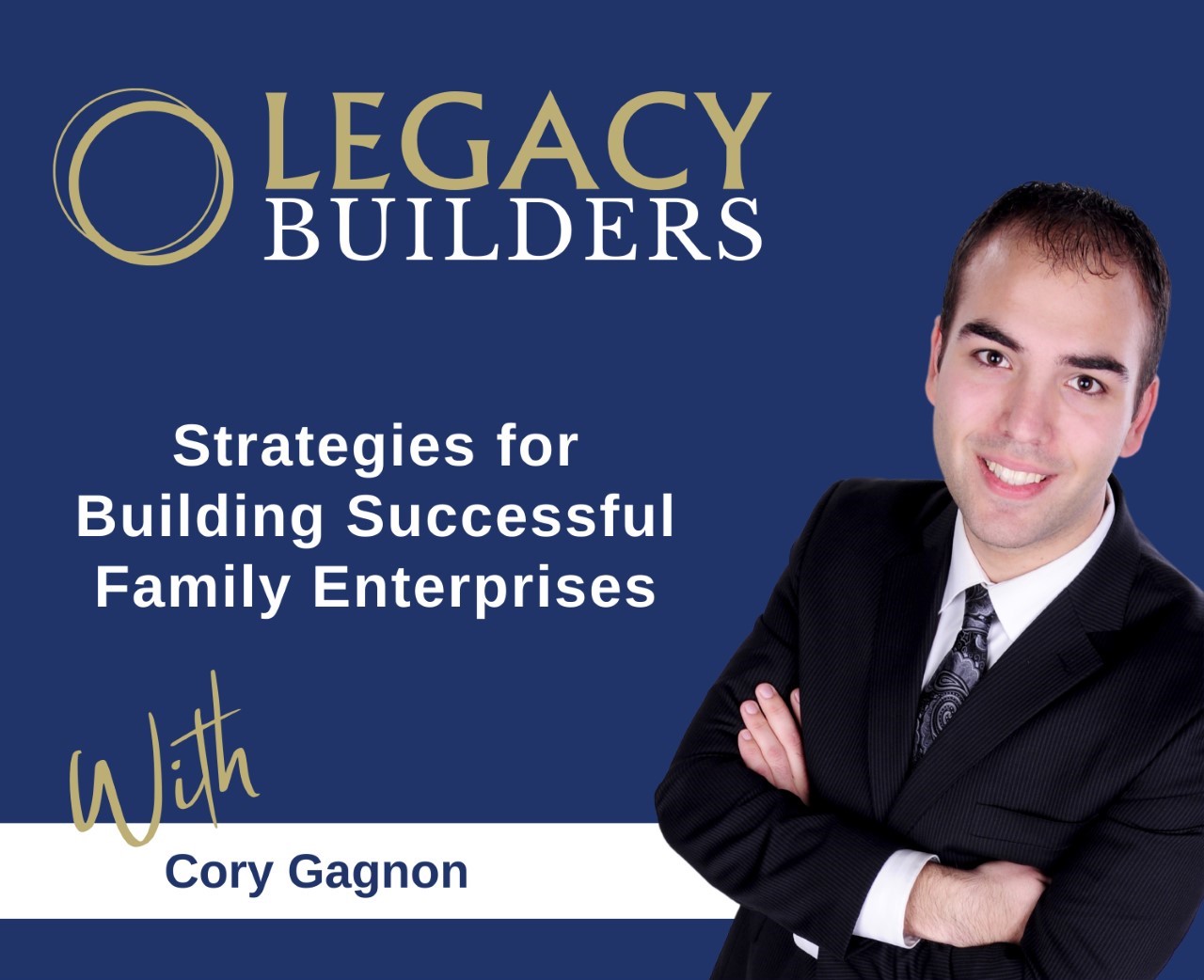
As the Senior Wealth Advisor at Beacon Family Office at CI Assante Wealth Management Ltd., Cory Gagnon has supported successful family enterprises to preserve, protect and transition their wealth since 2011.
Cory’s personal objective as a Wealth Advisor is simple. He is committed to supporting families to take control of the areas of their lives that truly matter to them. This commitment revolves around using specific tools and strategies that enable families to take action with confidence which will support them through life’s critical transitions.
ABOUT THE AUTHOR
As the Senior Wealth Advisor at Beacon Family Office at CI Assante Wealth Management Ltd., Cory Gagnon has supported successful family enterprises to preserve, protect and transition their wealth since 2011.
Cory’s personal objective as a Wealth Advisor is simple. He is committed to supporting families to take control of the areas of their lives that truly matter to them. This commitment revolves around using specific tools and strategies that enable families to take action with confidence which will support them through life’s critical transitions.
Share this post:
KEEP READING?

Beacon Family Office at CI Assante Wealth Management Ltd.
Suite 519, 10333 Southport Road S.W.,
Calgary, AB T2W 3X6
DISCLAIMER
Mutual fund products, investment services and recommendations are offered through Assante Financial Management Ltd. Insurance products and services are provided through Assante Estate and Insurance Services Inc.
Assante Financial Management Ltd. is a member of the Canadian Investment Regulatory Organization.
Wealth planning services may be provided by an accredited Assante advisor or through CI Assante Private Client, a division of CI Private Counsel LP, or a non-affiliated third party.
