
Rethinking Leadership in Enterprising Families
“The strength of a family business lies in the balance between family, ownership, and management.”
~ Peter Leach
Families that build significant wealth across generations spend a great deal of time thinking about ownership. How it is held, transferred, and structured across generations. These are essential conversations, and most families approach them with care.
What receives less focus, particularly early on, is a different question: who should lead and whether ownership and leadership are truly the same?
In earlier stages, they often are. The person who builds the wealth typically holds both roles, making the connection feel natural. In later generations, however, the two can start to diverge. Ownership is often shared and transferred, while leadership may need to be developed and intentionally entrusted.
When this distinction goes unexamined, families may create structures that work well on paper but feel less aligned in practice. Recognizing the difference leads to more thoughtful, effective leadership across generations.
Belonging, Trust, and the Burden of Expectation
Ownership carries a sense of belonging. In that context, separating ownership from leadership can feel personal, less about roles and more about perceived value.
That is where these conversations can become challenging. When ownership and leadership are closely tied, distinctions may be experienced as judgment rather than practicality, leading families to avoid them in order to preserve harmony.
Over time, however, these factors can reduce clarity. Structures that don’t fully distinguish between holding and leading may slow decisions and blur accountability. Addressing these questions earlier, with openness and care, often allows families to navigate them more smoothly and with greater alignment.
How Structures Reveal the Confusion
This dynamic often becomes most visible during transitions. As the founding generation steps back, ownership and leadership are frequently assumed to pass together. Such dynamics, when left unexamined, can place individuals in roles they’ve inherited rather than in those they’re best suited to lead. Often, this dynamic is understood but not openly addressed.
A similar pattern can emerge in governance. When ownership and leadership are closely linked, shareholding may influence more than experience or accountability does. This approach can be effective when interests align, but it may become limiting when they do not.
It’s also worth noting that capable rising leaders may not always hold the largest ownership stakes. In such cases, clarity around roles creates an opportunity to recognize leadership based on capability, ensuring that both ownership and leadership are aligned with the long-term strength of the family and the enterprise.
Separating the Right to Own from the Mandate to Lead
“Families who navigate these challenges well often arrive at a clear distinction: ownership carries privilege and responsibility, but it does not, on its own, confer the mandate to lead.”
Introducing that distinction can feel uncomfortable at first, yet it ultimately strengthens both roles. Ownership continues to shape governance, participation, and alignment, while leadership is defined by capability, judgment, and commitment. When held separately, each is better supported and more clearly understood.
For families willing to engage in this conversation, it creates space for more thoughtful decisions about leadership based not just on shareholding but on readiness. Over time, this clarity often leads to stronger structures and more enduring continuity.
Closing Thoughts
Sustainable ownership across generations rarely comes from structure alone. It reflects families willing to ask the right questions early about who leads, on what basis, and how that evolves over time.
While distinguishing ownership from leadership may feel nuanced, it often leads to stronger alignment and more enduring outcomes.
When families begin to look at ownership and leadership differently, the conversations that follow often change things. If that would be helpful, we are always available. Book a conversation with us.

ABOUT THE AUTHOR
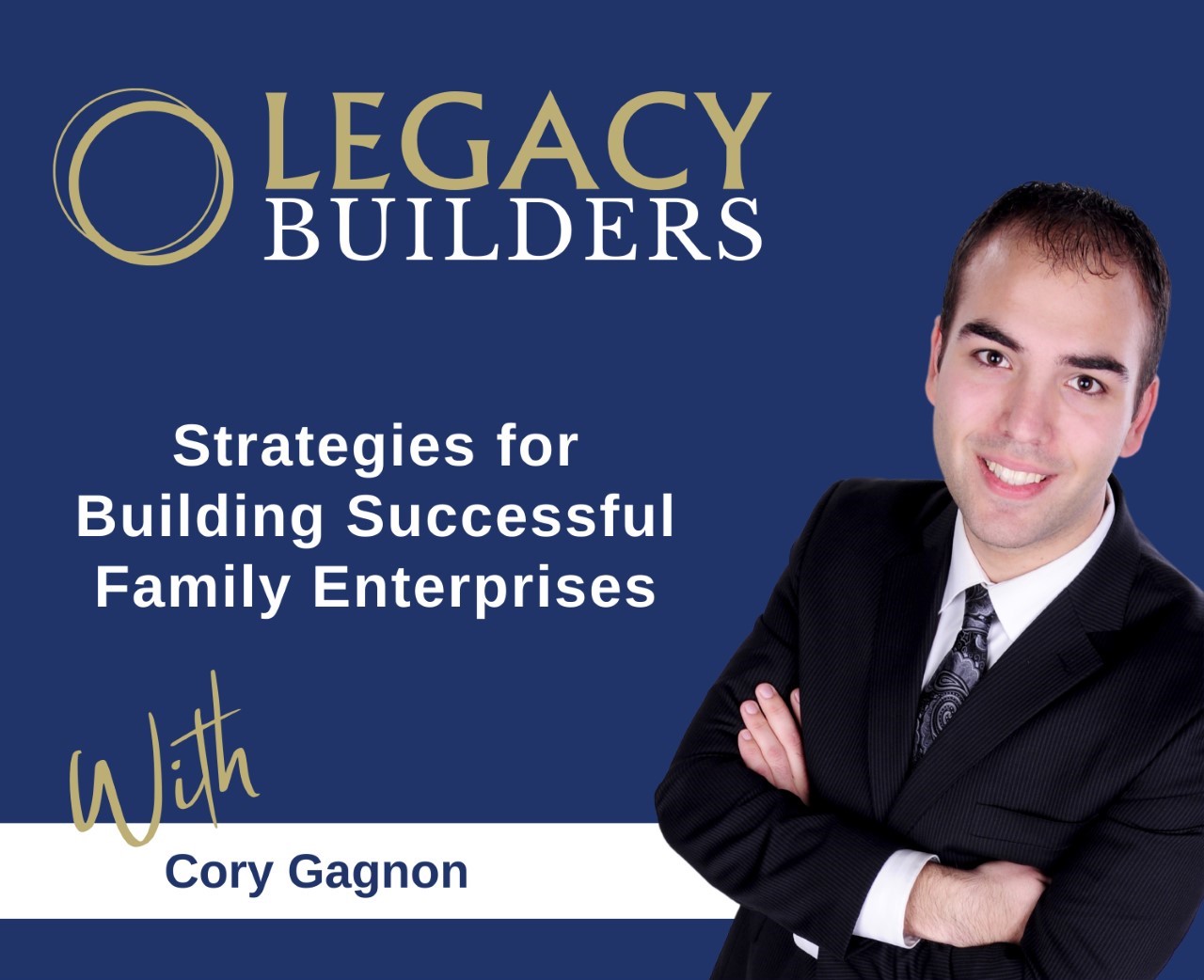
As the Senior Wealth Advisor at Beacon Family Office at CI Assante Wealth Management Ltd., Cory Gagnon has supported successful family enterprises to preserve, protect and transition their wealth since 2011.
Cory’s personal objective as a Wealth Advisor is simple. He is committed to supporting families to take control of the areas of their lives that truly matter to them. This commitment revolves around using specific tools and strategies that enable families to take action with confidence which will support them through life’s critical transitions.
ABOUT THE AUTHOR
As the Senior Wealth Advisor at Beacon Family Office at CI Assante Wealth Management Ltd., Cory Gagnon has supported successful family enterprises to preserve, protect and transition their wealth since 2011.
Cory’s personal objective as a Wealth Advisor is simple. He is committed to supporting families to take control of the areas of their lives that truly matter to them. This commitment revolves around using specific tools and strategies that enable families to take action with confidence which will support them through life’s critical transitions.
Share this post:
KEEP READING?

Beacon Family Office at CI Assante Wealth Management Ltd.
Suite 519, 10333 Southport Road S.W.,
Calgary, AB T2W 3X6
DISCLAIMER
Mutual fund products, investment services and recommendations are offered through Assante Financial Management Ltd. Insurance products and services are provided through Assante Estate and Insurance Services Inc.
Assante Financial Management Ltd. is a member of the Canadian Investment Regulatory Organization.
Wealth planning services may be provided by an accredited Assante advisor or through CI Assante Private Client, a division of CI Private Counsel LP, or a non-affiliated third party.
